Trump administration releases long-awaited global health strategy
It emphasizes direct relationships and coinvestments with aid-receiving countries, boosting front-line health supplies and workers, protecting Americans from outbreaks originating abroad, and promoting American-made health products.
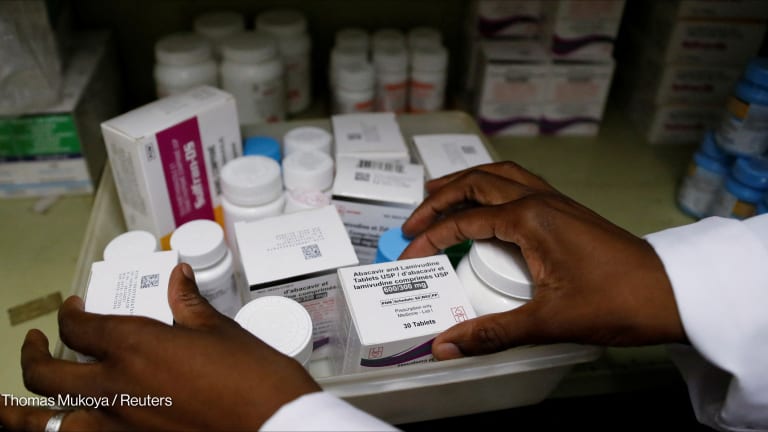
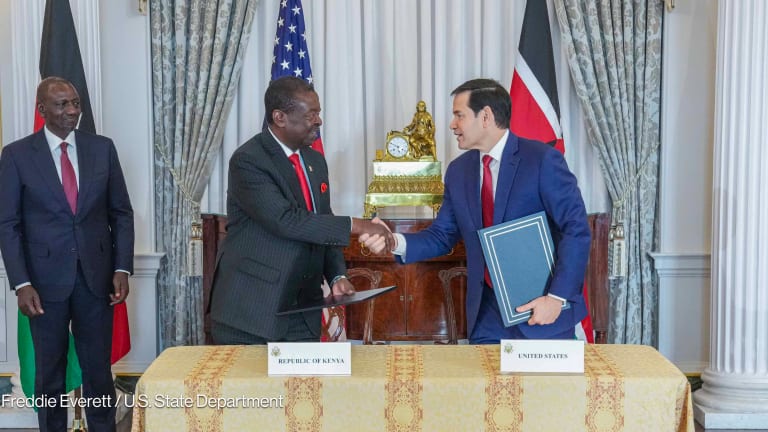
By Sara Jerving // 19 September 2025The U.S. government has published its new “America First” global health strategy, providing the greatest level of detail so far on the Trump administration’s priorities in the sector. It emphasizes direct relationships and coinvestments with aid-receiving countries, boosting frontline health supplies and workers, protecting Americans from outbreaks originating abroad, and promoting American-made health products. The strategy, which the U.S. Department of State released on Thursday, signifies a shift away from the decades-old role of health aid delivery by nongovernmental organizations, or NGOs, and emphasizes more collaborations with the private sector and faith-based organizations. U.S. Secretary of State Marco Rubio wrote in the strategy’s introduction that there’s been little progress made on transitioning global health programs to local governments because of “perverse incentives that encourage NGOs to self-perpetuate.” “We will continue to be the world’s health leader and the most generous nation in the world, but we will do so in a way that directly benefits the American people and directly promotes our national interest,” he wrote, adding that the administration aims to keep what’s “good,” while “rapidly fixing what is broken.” The U.S. government has provided more than $204 billion in foreign health assistance since 2001 — nearly one-third of the total global health assistance over that period, the document says. This strategy comes in the wake of a tumultuous year in global health, after the Trump administration dismantled the U.S. Agency for International Development — once a major funder and partner for global health NGOs around the world. The majority of USAID programs were also cut, and what remained transitioned to management under the U.S. State Department, with a fraction of USAID's former global health staff rehired to manage them. Global health makes up nearly two-thirds of the programming that survived the government’s USAID cull. “It’s good to see them put on paper that they want to continue to be a leader in global health. Whether or not this strategy meets that goal is the question,” Elisha Dunn-Georgiou, president and chief executive officer of the Global Health Council, a U.S.-based membership organization, told Devex. Her organization brought a lawsuit against the Trump administration for its suspension of congressionally-appropriated foreign aid. While touting U.S. past successes in global health — such as helping contain thousands of disease outbreaks and saving over 26 million lives through the President’s Emergency Plan for AIDS Relief, or PEPFAR — Rubio wrote about a “deeply broken” system with “inefficient and wasteful” health programs. He said this created “parallel healthcare delivery systems and a culture of dependency.” The newly released strategy also includes political roles the administration considers global health to play, such as strengthening military alliances and countering Chinese influence. This is especially true in Africa, it said, which is “a continent of strategic importance to U.S. national interests,” in part because of “the largest deposits of key minerals and rare earth elements” that fuel the U.S. military and commercial sector. The administration is also reportedly increasing health investments in the Western Hemisphere and the Asia-Pacific region. For example, the administration plans to allocate $250 million in new public health assistance to the Philippines. Other health priorities of the Biden administration, such as family planning and climate change impacts, are absent from the new strategy — areas the Trump administration has already worked to defund. Country-to-country support The Trump administration said it will enter multiyear bilateral agreements with countries “that lay out clear goals and action plans” for health programs. It aims to finalize many of these agreements by year’s end, with plans to start implementation next April. Between October and March, the U.S. government would have a “bridge funding plan” for “life-saving activities” as the longer-term plans are developed. The strategy said a key component of agreements will be “staying committed” to goals set over past decades for HIV/AIDS, tuberculosis, malaria, and polio — but that countries hold increased ownership over the outcomes. For PEPFAR, the strategy acknowledges that the program often relied on parallel structures, such as its own commodity procurement mechanisms and distribution networks, as well as program-specific health care workers and data systems. "This parallel infrastructure is one of the reasons that outcomes improved so quickly but also will not be sustainable for recipient countries to maintain long-term. Going forward, where possible, U.S. health assistance will integrate with national health systems to deliver HIV, TB, malaria, and polio services," it states. Governments are being asked to coinvest in programming and work “to align on performance benchmarks” that will determine the release of future U.S. funding. “While the United States will start with a preference for bilateral relationships, the U.S. government will also engage in multilateral relationships for targeted purposes,” the strategy states. The majority of 71 countries receiving support“will transition to full self-reliance during the term of the agreement,” it said. These agreements track with legislation lawmakers introduced this month that called for creating a “global health compact” model aimed at shifting responsibility for funding and implementing health programs from the U.S. to countries. According to the bill, compacts would detail requests from countries, a proposed funding amount, a plan for phasing out funding, metrics and benchmarks to monitor progress, and a strategy for private sector involvement. These compacts would also “perpetuate the wind-down” of PEPFAR on a country-by-country basis through “a phase-out of funding,” which would be reduced each fiscal year. Front-line commodities and workers The strategy lamented that less than 40% of foreign health aid goes to frontline supplies and health care workers, including purchasing commodities such as diagnostics and drugs, whereas the remaining 60% is spent on technical assistance, management, and overhead. And it noted that implementing partners have “significant overhead costs,” and this included displaying the chief executive officer salaries of eight U.S.-funded health partners, two of which it stated had compensation surpassing $1 million a year. “The United States will work to rapidly decrease this funding that is not focused on commodities or frontline healthcare workers,” it stated. In fiscal year 2026, the U.S. plans to cover all frontline costs it’s currently supporting, it stated. After that, it will cover a proportion as countries will be required to coinvest based on income levels. The document noted that the U.S. supports 270,000 doctors, nurses, and community health workers, and in fiscal year 2026, it will continue to cover these costs. After this, they will work to integrate these staff into country budgets. On health products, it noted its intention to continue supporting American companies’ entry into emerging markets through procurement, and when congressional appropriations exceed funds needed to support country agreements, it said the U.S. will “seek to invest some of these funds in innovative, breakthrough technologies from American companies.” Outbreak surveillance The strategy said it will continue to support a global surveillance system for detecting outbreaks within seven days of their emergence through bilateral country relationships “that include having a U.S. government staff presence on the ground where possible, with a larger number of staff dedicated to geographies within the highest risks of outbreaks.” And it said it will mobilize responses to outbreaks that threaten the U.S. within 72 hours of detection and surge diagnostic, vaccines, therapeutics, personal protective equipment, and other commodities to aid in the response, when necessary, and maintained centrally by the U.S. “with contract mechanisms in place in each country or region onto which we can rapidly deploy resources for outbreak response as needed.” “The U.S. government’s global health strategy is aimed at quickly detecting and responding to outbreaks that are the deadliest, cause the most severe symptoms, are the most transmissible, and are most likely to cause a global pandemic or severe economic disruptions,” it stated. It touted its Field Epidemiology Training Program as “one of our highest returns on investments in this area,” having trained locally employed public health experts across a number of countries who have served as frontline responders. “The United States has historically invested in laboratory capacity and data systems across multiple global health programs. We will now consolidate these investments into a single surveillance, data, and laboratory investment strategy that can serve all aspects of our global health strategy in a country including outbreak surveillance, HIV / AIDS, tuberculosis, malaria, and polio,” it stated. Staffing All employees lost their jobs when USAID was dismantled, and the State Department’s Bureau of Global Health Security and Diplomacy hired former USAID employees for only 80 positions. But more broadly, the strategy noted that the Department of State and the Department of Health and Human Services have more than 1,700 global health professionals working abroad. It said that the U.S. will assign government staff with a health portfolio to every country with an American mission. “Countries with a higher burden of infectious disease or a higher likelihood of being the source of a future outbreak will have a larger number of U.S. government staff dedicated to the health portfolio. These staff will come from across the U.S. government including the State Department, Department of Health and Human Services, and the Department of Defense,” it stated. Additionally, it said it will employ dedicated staff to focus on validating and auditing data around country financial contributions and benchmarks, who will also work to ensure funding isn’t spent on abortion access. A long-awaited strategy “We've all been waiting for this strategy. It's very high level and so it does not provide much about the how or when any of this happens,” the Global Health Council’s Dunn-Georgiou said, adding that it’s still unclear whether the administration has the structure to carry out this strategy or will need to build it out. She added that she’s not aware that the Trump administration has sought input on it from recipient countries or other donors. “I think it's an initial foray into the conversation, but what it's going to mean long-term is not clear to me,” she said. Malaria No More called the strategy "a critical step toward rebuilding American foreign assistance capacity in line with U.S. strategic priorities and laying the groundwork for increasing endemic country ownership." "Success will depend on execution," the organization wrote. "Building endemic country capacity to take on greater ownership will take time and require close collaboration with partner countries, which should be possible through the proposed compact model. It is not enough to plan for a handover; we must have realistic plans and make sustained investment in the local systems and capacity to transition responsibly."
The U.S. government has published its new “America First” global health strategy, providing the greatest level of detail so far on the Trump administration’s priorities in the sector.
It emphasizes direct relationships and coinvestments with aid-receiving countries, boosting frontline health supplies and workers, protecting Americans from outbreaks originating abroad, and promoting American-made health products.
The strategy, which the U.S. Department of State released on Thursday, signifies a shift away from the decades-old role of health aid delivery by nongovernmental organizations, or NGOs, and emphasizes more collaborations with the private sector and faith-based organizations.
This article is free to read - just register or sign in
Access news, newsletters, events and more.
Join usSign inPrinting articles to share with others is a breach of our terms and conditions and copyright policy. Please use the sharing options on the left side of the article. Devex Pro members may share up to 10 articles per month using the Pro share tool ( ).
Sara Jerving is a Senior Reporter at Devex, where she covers global health. Her work has appeared in The New York Times, the Los Angeles Times, The Wall Street Journal, VICE News, and Bloomberg News among others. Sara holds a master's degree from Columbia University Graduate School of Journalism where she was a Lorana Sullivan fellow. She was a finalist for One World Media's Digital Media Award in 2021; a finalist for the Livingston Award for Young Journalists in 2018; and she was part of a VICE News Tonight on HBO team that received an Emmy nomination in 2018. She received the Philip Greer Memorial Award from Columbia University Graduate School of Journalism in 2014.