The US signs first bilateral health deal with Kenya for $1.6 billion
U.S. Secretary of State Marco Rubio called the East African nation a "perfect partner" to serve as a proof-of-concept in efforts to create "a sustainable U.S. health assistance model." Kenya's Ministry of Health called it "quite a departure from the past."
The U.S. State Department signed the first of its overarching bilateral health agreements — as part of its ongoing efforts to overhaul how it provides global health assistance. The United States said it will invest up to $1.6 billion over five years in Kenya, with the Kenyan government cofinancing the agreement with $850 million. This is part of the country’s new “America First” global health strategy, where it places greater emphasis on direct country-to-country relationships, as opposed to funneling money through nongovernmental organizations. The U.S. aims to ultimately position countries as customers as opposed to aid recipients. At the signing ceremony on Thursday, U.S. Secretary of State Marco Rubio said Kenya is the “perfect partner” to serve as a proof-of-concept for this new mode of American health assistance. He said his country chose Kenya to lead the way because the U.S. already has a close partnership with the East African nation, and it has “stable and strong institutions, both in government and in the health care sector.” He said Kenya is “the perfect place to prove that it’s going to work — because it is going to work.” “It will allow us, first of all, to leverage the private sector, to create a sustainable U.S. health assistance model around the world,” he added. Dr. Ouma Oluga, principal secretary for the state department for medical services at Kenya’s Ministry of Health, said the agreement promotes the “best interests of our people.” The agreement includes a gradual transition of management of procurement of health commodities from the U.S. to Kenya, as well as a transition of U.S.-funded front-line worker salaries onto the Kenyan government’s payroll. Additionally, the U.S. will support the scale-up of Kenya’s health data systems. In the “America First” strategy, the U.S. outlined its intentions to leverage the private sector and faith-based organizations. As part of the agreement, the U.S. will support the Kenyan government in developing reimbursement mechanisms for working with them. “This cooperation framework is quite a departure from the past and will have a lasting impact on health for all,” Oluga said. The negotiations around this agreement between the U.S. and Kenya began in late August. The Trump administration has been redefining how it approaches foreign aid. In the wake of U.S. President Donald Trump’s inauguration in January, his administration halted aid programs and dismantled the U.S. Agency for International Development. It then terminated the majority of USAID programs and moved those that remained to be managed under the State Department. In September, the U.S. launched its new global health strategy, and in recent weeks, teams from the State Department have been negotiating these new deals with African countries. They are expected to take effect next April. “Why are we hiring American and international NGOs to go into other countries and run health care systems that are parallel and sometimes in conflict with the health care systems of the host country,” Rubio said. “We are not going to spend billions of dollars funding the NGO industrial complex while close and important partners like Kenya either have no role to play or have very little influence over how healthcare money is being spent.” The U.S. plans to sign 50 memorandums of understanding around health assistance with low- and middle-income countries, Rubio said. It expects to sign dozens of agreements in the coming weeks. He said the money his country plans to commit won’t be spent solely on providing medicine and health care services, but also on efforts to improve broader domestic health care infrastructure so that in five to eight years, countries will no longer need these levels of foreign assistance, if any. At that point, Kenya might be in a position to teach other countries how to improve their own health care provision, he said. “This is a very real possibility, and it’s something we believe in,” he said. “This is the way we should be doing assistance around the world. True assistance is self-sustainability, building the ability to sustain yourself in the long term.” The U.S. provided $440 million in health aid to Kenya last year. And the U.S. aid cuts hit hard. In March, Kenya’s Ministry of Health sent a memo to President William Ruto warning of a “domino effect that imperils every link in the healthcare chain.” While many have praised the Trump administration’s new approach to working more closely with governments through bilateral agreements, others are concerned about power imbalances as countries negotiate directly with the U.S. as opposed to leveraging negotiating power as a continental bloc. Critics have also expressed concerns that a template of the agreement outlined lengthy data-sharing agreements, where country governments would share sensitive data with the U.S. And the “America First” global health strategy is more narrowly focused than that of previous administrations. It focuses on specific diseases, including HIV, polio, tuberculosis, and malaria. While family planning was absent from the strategy, the Associated Press reported that Jeremy Lewin and Brad Smith, two State Department officials involved in the negotiations, said that family planning programs that comply with U.S. restrictions on the provision of abortion services will also be eligible, and they also said the agreement wouldn’t discriminate against LGBTQ+ individuals or sex workers. The strategy also emphasises creating plans to shift responsibility from the U.S. to partner governments annually and ensuring those governments commit to coinvest from their own national budgets as opposed to using funds from other donors or multilateral organizations.
The U.S. State Department signed the first of its overarching bilateral health agreements — as part of its ongoing efforts to overhaul how it provides global health assistance. The United States said it will invest up to $1.6 billion over five years in Kenya, with the Kenyan government cofinancing the agreement with $850 million.
This is part of the country’s new “America First” global health strategy, where it places greater emphasis on direct country-to-country relationships, as opposed to funneling money through nongovernmental organizations. The U.S. aims to ultimately position countries as customers as opposed to aid recipients.
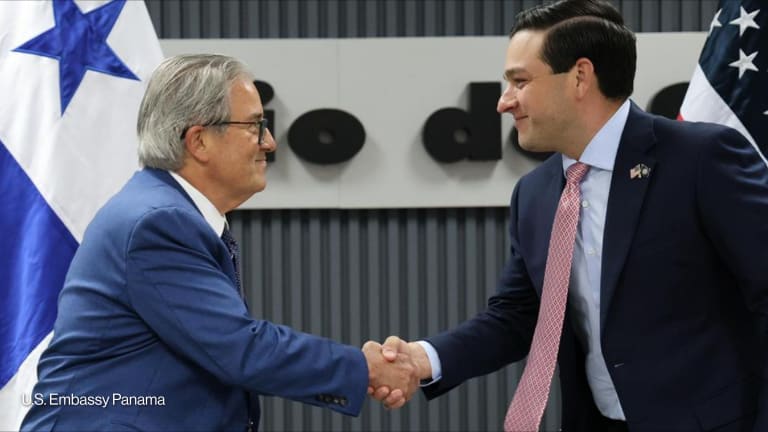
At the signing ceremony on Thursday, U.S. Secretary of State Marco Rubio said Kenya is the “perfect partner” to serve as a proof-of-concept for this new mode of American health assistance. He said his country chose Kenya to lead the way because the U.S. already has a close partnership with the East African nation, and it has “stable and strong institutions, both in government and in the health care sector.”
This article is free to read - just register or sign in
Access news, newsletters, events and more.
Join usSign inPrinting articles to share with others is a breach of our terms and conditions and copyright policy. Please use the sharing options on the left side of the article. Devex Pro members may share up to 10 articles per month using the Pro share tool ( ).
Sara Jerving is a Senior Reporter at Devex, where she covers global health. Her work has appeared in The New York Times, the Los Angeles Times, The Wall Street Journal, VICE News, and Bloomberg News among others. Sara holds a master's degree from Columbia University Graduate School of Journalism where she was a Lorana Sullivan fellow. She was a finalist for One World Media's Digital Media Award in 2021; a finalist for the Livingston Award for Young Journalists in 2018; and she was part of a VICE News Tonight on HBO team that received an Emmy nomination in 2018. She received the Philip Greer Memorial Award from Columbia University Graduate School of Journalism in 2014.