• News
    • Latest news
    • News search
    • Health
    • Finance
    • Food
    • Career news
    • Content series
    • Focus areas
    • Try Devex Pro
  • Jobs
    • Job search
    • Post a job
    • Employer search
    • CV Writing
    • Upcoming career events
    • Try Career Account
  • Funding
    • Funding search
    • Funding news
  • Talent
    • Candidate search
    • Devex Talent Solutions
  • Events
    • Upcoming and past events
    • Partner on an event
  • Post a job
  • About
      • About us
      • Membership
      • Newsletters
      • Advertising partnerships
      • Devex Talent Solutions
      • Contact us
Join DevexSign in
Join DevexSign in

News

  • Latest news
  • News search
  • Health
  • Finance
  • Food
  • Career news
  • Content series
  • Focus areas
  • Try Devex Pro

Jobs

  • Job search
  • Post a job
  • Employer search
  • CV Writing
  • Upcoming career events
  • Try Career Account

Funding

  • Funding search
  • Funding news

Talent

  • Candidate search
  • Devex Talent Solutions

Events

  • Upcoming and past events
  • Partner on an event
Post a job

About

  • About us
  • Membership
  • Newsletters
  • Advertising partnerships
  • Devex Talent Solutions
  • Contact us
  • My Devex
  • Update my profile % complete
  • Account & privacy settings
  • My saved jobs
  • Manage newsletters
  • Support
  • Sign out
Latest newsNews searchHealthFinanceFoodCareer newsContent seriesFocus areasTry Devex Pro
    • News
    • Global health

    Uganda’s anti-gay bill will criminalize HIV programs, activists warn

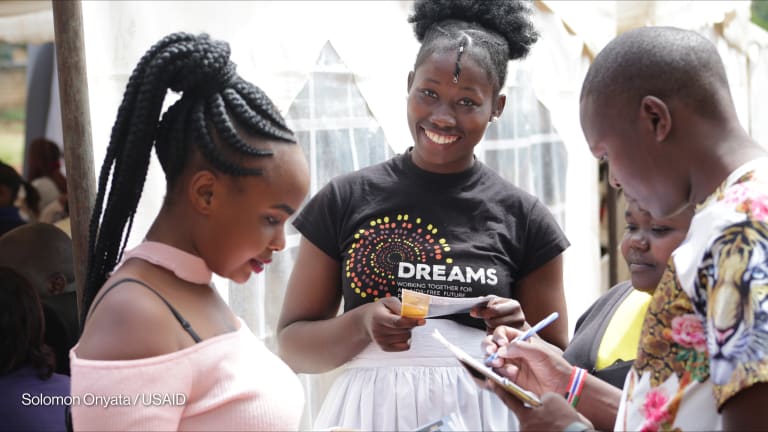
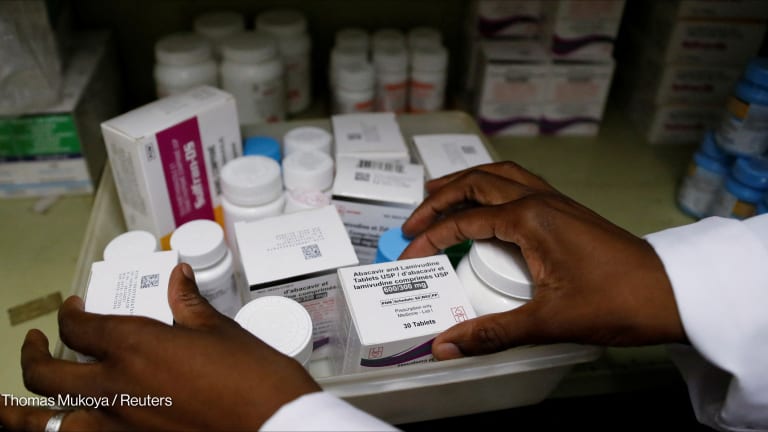
    A new anti-gay bill in Uganda, labeled as “among the worst in the world,” will essentially criminalize inclusive HIV programs and undermine the country’s efforts to end AIDS by 2030, activists warn.

    By Amy Fallon // 30 March 2023
    A new anti-gay bill in Uganda, labeled as “among the worst in the world” by the United Nations would “devastate” the HIV response in the east African country, activists warn. The Anti-Homosexuality Act, which was passed by the nation’s Parliament on March 21, prescribes life imprisonment for homosexual acts and the death penalty for “aggravated offences” such as those involving minors or people with disabilities. The bill also includes a duty to report same-sex acts and imposes up to six months in prison for the failure to do so. The new bill is “probably among the worst of its kind in the world,” said Volker Türk, the U.N. high commissioner for human rights, who also called it a “deeply troubling development,” in a statement. Activists warn that the new legislation will essentially criminalize inclusive HIV programs and undermine the country’s efforts to end AIDS by 2030. Richard Lusimbo, national director of Uganda Key Populations Consortium, based in Kampala, told Devex that the “LGBTI community will be pushed into a corner” by the new bill. “This bill really pushes for policing, increased stigma and discrimination, but also reporting of LGBTI identifying persons, which will create a very precarious state where people go into hiding and it will be very difficult for people to even access services because they'll be scared the doctor will report them,” he said. Lusimbo added that “presently no donor has cut aid, but we are concerned that if this bill becomes law, it will be difficult to operate, as that will be termed ‘promotion’ [of homosexuality].” ‘Completely illegal’ In 2014, the United States cut aid to Uganda, imposed visa restrictions, and scrapped a regional military exercise after an anti-gay bill was signed into law by the country’s president, Yoweri Museveni. The World Bank also withheld a $90 million health loan while Norway and Denmark cut their aid spending. The bill was nullified by a court on a technicality six months later. The U.S. government is the single largest donor to Uganda’s health sector. It contributes 32% of total health spending in Uganda annually, comprising 76% of all overseas contributions to the sector. Through U.S. Agency for International Development, the U.S. has invested about $39 million over six years. The U.S. has expressed alarm over the new bill, with national security council spokesperson John Kirby warning of economic “repercussions” for Uganda on March 22. On the same day, Dr. John Nkengasong, who leads The U.S. President's Emergency Plan for AIDS Relief, highlighted that PEPFAR invests around $400 million annually to support Uganda’s HIV response and this bill “jeopardizes efforts to end HIV/AIDS, achieve health equity & risks the lives of LGBTQI+ individuals & other key populations.” UNAIDS also warned that the bill would “undermine Uganda’s efforts to end AIDS by 2030, by violating fundamental human rights including the right to health and the very right to life.” Executive Director of NGO Health GAP Asia Russell said the bill would essentially make some PEPFAR-funded programs “completely illegal.” Currently, PEPFAR provides treatment and prevention services through inclusive clinics that are supposed to uphold the rights and freedoms of all Ugandans. "According to this bill, that is ‘promotion of homosexuality.’ The bill would make implementation of a lifesaving HIV program a criminal act," Russell said. She added that PEPFAR-funded implementers would be "risking prison time, steep fines, and the ethical nightmare of having to report fellow Ugandans, simply for doing their job.” Russell said there are also concerns that UNAIDS wouldn't be able to do its work since it openly advocates for decriminalization and that the bill would also affect other donors who fund human rights work beyond HIV programs. It criminalizes everyone from the social worker who is providing HIV information, to the LGBTQ+ community, she said. A U.S. State Department spokesperson told Devex that they are “investigating the potential impact of the [Anti-Homosexuality Act] on foreign assistance, specifically nearly $500 million the United States provides in annual health assistance as well as assistance in other sectors.” “The impact of our PEPFAR funding, which is aiding Uganda to end HIV/AIDS as a public health threat by 2030, would be severely compromised if we were not able to provide services to Ugandan citizens,” they said. Adding that U.S. health assistance to Uganda sought to ensure all who needed access to health care receive those services, including the LGBTQ+ community. “The Anti-Homosexuality Act will lead to stigmatization and discrimination of LGBTQ+ individuals and other key populations, deterring those who need HIV prevention and treatment services from seeking and receiving care,” they said. Shantal Mulungi, executive director of Coloured Voice Truth, told Devex that 6 friends who all identify as LGBTQ+ were arrested on March 17 and that the signing of the bill would amount to a “grand massacre of anyone suspected to be homosexual.” “Many LGBTQ individuals are going to lose their lives to mob justice, suicide, and blackmail,” she said. If UNAIDS and the U.S. were to stop all their HIV and AIDS services in Uganda, “then automatically all patients on ARVs will be sentenced to death since our government is full of corruption and can’t buy those ARVs to freely supply them to patients.” Mulungi said the U.N. should pass a universal law protecting LGBTQ+ people’s rights around the world or force its member states to comply with the international human rights treaties they signed. “That is the permanent solution,” she said. “Sanctions and all that will not solve this problem.” Moving backward Marijke Wijnroks, from the Global Fund to Fight AIDS, Tuberculosis and Malaria, said the bill could harm Museveni’s legacy in successfully tackling HIV and AIDS. In 1992, Uganda had a 16% rate of infection, but by 2003 this had reduced by 4% to 6%. Although incident rates are now shooting up, Wijnroks said that Museveni was “really one of the first leaders in Africa who took a very active response on HIV.” “He was driven by evidence and science,” Wijnroks, the fund’s head of strategic investment and impact division, told Devex in an interview. “There’s all the evidence in the world that legislation like this will make HIV prevention so much more difficult.” Museveni now has 30 days to sign the bill or veto it. If he approves it, it becomes law. If vetoed, it returns to Parliament, which will be able to enact it as law — without the president’s approval — if a third round of voting passes it with a two-thirds majority vote. Russell said the bill will have serious implications for a country with an ongoing HIV crisis. In 2012, HIV incidence rates shot up to 7.3% from 6.4% in 2005, according to the Joint U.N. Program on HIV/AIDS. There are now 1.4 million Ugandans living with HIV in the country and “millions more who are at greatest risk of infection” she said, adding that approximately 25% of new HIV infections are members of criminalized populations and their partners. These include sex workers, men who have sex with men, people who inject drugs, and people in prisons. A ‘ripple effect’ Maureen Milanga, associate director of international policy and advocacy at Health GAP, based in Kenya, warned of a “ripple effect” that was already being seen there and that would be felt in Tanzania. “In Kenya, we are hearing that they’re writing a bill now and we are trying to find it but the reason that they're probably not sharing it in public is because they're waiting for trade deals to go through,” she told Devex. U.S. Ambassador to Kenya Meg Whitman raised eyebrows after she told reporters that every country “has to make their own decisions about LGBTQ [and intersex] rights” earlier this month. Thirty-three of the 69 countries that criminalize homosexual acts are in Africa, according to Human Rights Watch. A November 2022 UNAIDS report showed how criminalization is stalling prevention outcomes, indicating that in East and southern Africa, HIV incidence among adult men aged 15 to 49 years has fallen by 62% overall since 2010, but there had been no significant decline among gay men and other men who have sex with men during that time. Russell said that speaking out on LGBTQ+ rights should be a top foreign policy priority for U.S. Vice President Kamala Harris — who is currently on an Africa tour that will include visits to Ghana, Tanzania, and Zambia — “not only for those countries but for the region.” But the Ugandan government remains defiant. Uganda’s Information Minister Chris Baryomunsi, who is acting as a government spokesperson on the issue, told Devex that “our partnership with donors should not mean we cannot make independent decisions as a country.” He added that “we reject that blackmail.” “I don't think the law will in any way undermine the national HIV/AIDS response,” he said. “This is a far-fetched fear with no justification.” Update, March 31, 2023: This article has been updated to clarify that the Anti-Homosexuality Act prescribes the death penalty for “aggravated offences” such as those involving minors or people with disabilities.

    Related Stories

    HIV prevention services hit hardest by funding cuts, UNAIDS warns
    HIV prevention services hit hardest by funding cuts, UNAIDS warns
    In Malawi, the fight to get HIV services back on track post-USAID cuts
    In Malawi, the fight to get HIV services back on track post-USAID cuts
    Unexpected global health wins in the US foreign aid bill
    Unexpected global health wins in the US foreign aid bill
    How will America's new global health strategy change PEPFAR?
    How will America's new global health strategy change PEPFAR?

    A new anti-gay bill in Uganda, labeled as “among the worst in the world” by the United Nations would “devastate” the HIV response in the east African country, activists warn.

    The Anti-Homosexuality Act, which was passed by the nation’s Parliament on March 21, prescribes life imprisonment for homosexual acts and the death penalty for “aggravated offences” such as those involving minors or people with disabilities. The bill also includes a duty to report same-sex acts and imposes up to six months in prison for the failure to do so.

    The new bill is “probably among the worst of its kind in the world,” said Volker Türk, the U.N. high commissioner for human rights, who also called it a “deeply troubling development,” in a statement.

    This article is free to read - just register or sign in

    Access news, newsletters, events and more.

    Join usSign in

    More reading:

    ► Opinion: The HIV response must put people first

    ► Living and loving with HIV: Are young Zimbabweans unprepared?

    ► ‘Revolutionary’ HIV prevention jab set to expand choices for consumers

    • Funding
    • Democracy, Human Rights & Governance
    • Global Health
    • Social/Inclusive Development
    • PEPFAR
    Printing articles to share with others is a breach of our terms and conditions and copyright policy. Please use the sharing options on the left side of the article. Devex Pro members may share up to 10 articles per month using the Pro share tool ( ).

    About the author

    • Amy Fallon

      Amy Fallon@amyfallon

      Amy Fallon is an Australian freelance journalist currently based in Uganda. She has also reported from Australia, the U.K. and Asia, writing for a wide range of outlets on a variety of issues including breaking news, and international development, and human rights topics. Amy has also worked for News Deeply, NPR, The Guardian, AFP news agency, IPS, Citiscope, and others.

    Search for articles

    Related Stories

    Global healthRelated Stories - HIV prevention services hit hardest by funding cuts, UNAIDS warns

    HIV prevention services hit hardest by funding cuts, UNAIDS warns

    Global healthRelated Stories - In Malawi, the fight to get HIV services back on track post-USAID cuts

    In Malawi, the fight to get HIV services back on track post-USAID cuts

    The Future of Global HealthRelated Stories - Unexpected global health wins in the US foreign aid bill

    Unexpected global health wins in the US foreign aid bill

    The Future of Global HealthRelated Stories - How will America's new global health strategy change PEPFAR?

    How will America's new global health strategy change PEPFAR?

    Most Read

    • 1
      Why NTDs are a prime investment for philanthropy
    • 2
      When business moves faster than politics
    • 3
      Why are 3.4 billion people still offline?
    • 4
      Climate change mandates more innovation in yellow fever vaccines
    • 5
      Why a new partnership model is key to future of development finance
    • News
    • Jobs
    • Funding
    • Talent
    • Events

    Devex is the media platform for the global development community.

    A social enterprise, we connect and inform over 1.3 million development, health, humanitarian, and sustainability professionals through news, business intelligence, and funding & career opportunities so you can do more good for more people. We invite you to join us.

    • About us
    • Membership
    • Newsletters
    • Advertising partnerships
    • Devex Talent Solutions
    • Post a job
    • Careers at Devex
    • Contact us
    © Copyright 2000 - 2026 Devex|User Agreement|Privacy Statement