• News
    • Latest news
    • News search
    • Health
    • Finance
    • Food
    • Career news
    • Content series
    • Focus areas
    • Try Devex Pro
  • Jobs
    • Job search
    • Post a job
    • Employer search
    • CV Writing
    • Upcoming career events
    • Try Career Account
  • Funding
    • Funding search
    • Funding news
  • Talent
    • Candidate search
    • Devex Talent Solutions
  • Events
    • Upcoming and past events
    • Partner on an event
  • Post a job
  • About
      • About us
      • Membership
      • Newsletters
      • Advertising partnerships
      • Devex Talent Solutions
      • Contact us
Join DevexSign in
Join DevexSign in

News

  • Latest news
  • News search
  • Health
  • Finance
  • Food
  • Career news
  • Content series
  • Focus areas
  • Try Devex Pro

Jobs

  • Job search
  • Post a job
  • Employer search
  • CV Writing
  • Upcoming career events
  • Try Career Account

Funding

  • Funding search
  • Funding news

Talent

  • Candidate search
  • Devex Talent Solutions

Events

  • Upcoming and past events
  • Partner on an event
Post a job

About

  • About us
  • Membership
  • Newsletters
  • Advertising partnerships
  • Devex Talent Solutions
  • Contact us
  • My Devex
  • Update my profile % complete
  • Account & privacy settings
  • My saved jobs
  • Manage newsletters
  • Support
  • Sign out
Latest newsNews searchHealthFinanceFoodCareer newsContent seriesFocus areasTry Devex Pro
    • News
    • Humanitarian

    UN charts Syria aid course in nation run by terrorists

    For the United Nations relief sector, elation gives way to fears of chaos in Syria.

    By Colum Lynch // 12 December 2024
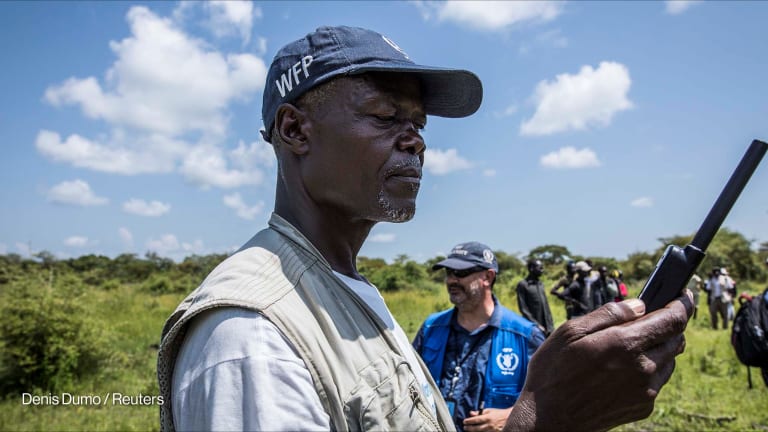
    For the United Nations and other humanitarian relief workers, the elation that followed the fall of Syrian dictator Bashar al-Assad has been quickly overtaken by the grim reality of aiding a traumatized country that witnessed 500,000 killed in more than a decade of civil war, and which remains militarily torn at the seams. The Syrian rebel’s lightning march on Damascus may have added as many as a million displaced Syrians to a population of 3.5 million homeless in northern Syria alone. Hundreds of thousands of Syrian refugees in Lebanon have crossed the border into Syria, testing whether it’s safe to return to their homes. The de facto authority in Damascus, Hayat Tahrir al-Sham, or HTS, is on a U.N. Security Council list of sanctioned terrorist organizations. Making matters worse, some 90% of the Syrian population is living in poverty, winter is settling in, and the U.N. relief agency claims they are short on cash. “Most Syrians inside the country are dependent on humanitarian aid and needs are increasing with the harsh winter weather,” said Amy Pope, the director-general of the International Organization for Migration, who issued an appeal for $30 million for the next four months to purchase winter relief supplies, after sanitation and health services and emergency shelters. “We urgently need to boost our humanitarian response and ensure that the Syrian people are supported at this time of renewed hope and opportunity.” The humanitarian crisis is unfolding against a background of political and military uncertainty. Israel has moved its troops across the Golan Heights and launched a massive wave of air strikes against Syrian military installations, destroying the country’s navy and degrading its military and national security institutions. Armed groups with links to the United States, Turkey, Ukraine, and regional Arab powers are all vying for influence and territory, filling a vast security vacuum in a country that possessed chemical weapons before its military crumbled and its chief military backers, Iran and Russia, took flight. The demise of Assad’s regime is part of a broader reshaping of the balance of power in the Middle East, one that has resulted in “the immense tragedy of the Palestinian people” and which has also shown “some signs of hope with the fall of a dictator,” U.N. Secretary-General António Guterres told reporters in Pretoria, South Africa. “The U.N. is totally committed to supporting a smooth transition of power, with an inclusive political process in which the rights of all minorities will be fully respected, and paving the way towards a united sovereign Syria with its territorial integrity fully reestablished,” Guterres said. In a closed-door meeting with key powers in the U.N. Security Council on Monday, the U.N.’s special envoy to Syria, Geir Pedersen of Norway, said the U.N. was determined to expand its humanitarian relief operations. He appealed to key powers to exhibit pragmatism and flexibility in the uncertain days ahead, ensuring that all of Syria’s critical military and civilian players are given a seat at the negotiating table over the future of the country. Pedersen singled out Israel, saying its military “movements and bombardments into Syrian territory … need to stop.” “We are still in what we call a very fluid period. Things are not settled,” Pedersen said in a press conference on Tuesday in Geneva. “There is real opportunity for change, but this opportunity needs to be grasped by the Syrians themselves and supported by the U.N. and the international community.” In his closed-door meeting with the 15-nation council, Pedersen urged the world’s powers to demonstrate pragmatism and to soften the political red lines they have drawn during the conflict. For players such as Turkey, which backs armed groups in northwestern Syria and is reported to have greenlighted the HTS offensive, it means accepting a role for the Kurds in the future of Syria. For Western powers, like the U.S., which backs the Kurds and other forces fighting the Islamic State, or ISIS, it means accepting a role for a terrorist organization that now runs the country. HTS is a Sunni Islamist group with prior links to Al Qaeda and the Islamic State terrorist organizations. Its leader, Abu Mohammed al-Jolani, has been designated a terrorist by the U.S. State Department, which has offered up to $10 million in reward money for information on his whereabouts. Human Rights Watch detailed allegations that HTS tortured critics of its movement. Jolani claims to have severed relations with the Islamic State and Al Qaeda in 2016, but it remains unclear whether he maintains contact. His movement has clashed with the Islamic State, which once ruled over an extensive self-described caliphate in Syria. The U.S., in collaboration with Syrian armed groups, had largely decimated the movement during the Obama and Trump administrations. The U.S. maintains a military presence in northeastern Syria to prevent the movement from reasserting itself. Pedersen didn’t say that the council should ease or lift sanctions on the terror group, but one council member told Devex that message appears to be part of the subtext of his remarks. “He said ‘no group should be excluded from the political process’,” the diplomatic said Pedersen told the council, noting that the U.N. was prepared to help Syria establish a transitional government. Pedersen added: “There is a new dawn in Syria, there is a short window to act, and everyone should be around the table, including the armed groups,” the source added. Syria in the wake of Assad’s rule remains under an extensive web of U.S., European, and U.N. sanctions that are likely to weigh heavily on its efforts to manage the transition. The rebel movement in control of Damascus is also the target of a range of U.N. and Western sanctions. Their impact on the Syrian transition is a “huge issue” that threatens to “pull the rug from out under the Syrians just when they are trying to stand up on their own,” said Delaney Simon, a senior analyst in the International Crisis Group’s U.S. Program. The Syrian sanctions, combined with HTS’ U.N. and U.S. terror designations, are likely to not only hamper international efforts to deliver humanitarian assistance but to undercut the country’s ability to engage in normal commercial and economic activities. “One of the difficulties is this chilling effect,” she told Devex in a phone interview, even in situations where charities have received a license allowing them to operate in territory under sanctions. “The private sector and sometimes humanitarian organizations are just too squeamish about delivering to an area controlled by a terrorist group.” Still, she added, “governments can make a huge change now with a stroke of the pen by issuing a broad general license that allows for commercial and economic activity. It would inject a huge amount of confidence into a serious transition if Western governments started to prepare a road map for sanctions relief.” Humanitarian needs in Syria were massive even before the latest round of violence. In early 2024, the U.N. estimated that nearly 13 million Syrians — more than half of the country’s population of 24 million — were considered food insecure. In the same period, 16.7 million Syrians were dependent on humanitarian assistance. Pedersen assured the council that the U.N.’s relief agency — which had “relocated” some nonessential staff from Syria to Lebanon, Syria, and Turkey during the rebel offensive — had no plans to evacuate staff, and remained committed to scaling up its humanitarian response. The U.N. relief agencies, already struggling to fully fund its Syria operations, are clamoring for more money. Even before the current crisis, the U.N. had secured less than one-third of the more than $4 billion needed to fund its relief operations in Syria through 2024. The U.N. migration agency, meanwhile, has received only 14% of its Syria emergency relief funding needs. In north-west Syria, where the rebellion has its roots, humanitarian organizations continued to truck supplies in through three border crossings on the Turkish border, and aid operations in Idlib and northern Aleppo have resumed operations. The World Food Programme, meanwhile, has a “strong footprint in Syria and can deliver across front lines and in all areas of control,” and has delivered more than 1 million people with food this year, said Abeer Etefa, WFP’s spokesperson for the Middle East, North Africa, and Eastern Europe. During the latest round of fighting, the Rome-based food agency has worked to negotiate new safe supply corridors. “Since the situation in Syria escalated on Nov. 27, WFP and partners have already served over 40,000 people across all of Syria — with ready-to-eat rations, as well as hot and fresh meals,” she said. “However, the current unrest has created some access challenges; operations are currently suspended in certain parts of the country.” “Lawlessness and looting could potentially jeopardize WFP’s food stocks,” she added. Prices are also increasing, the result of panic shopping and supply chain disruptions. “WFP’s worried about the implications this will have on food security in Syria, considering even before the current crisis, 3 million people were severely food insecure inside the country.” In Lebanon, Edem Wosornu, director of the operations and advocacy division at the U.N. Office for the Coordination of Humanitarian Affairs, said earlier this week that Syrian refugees “have returned faster than they even left the conflict; more than 600,000 people have begun to go back home, and as we speak, I’m sure they are settling back. The problem is what they would find when they go back home and the need for our response to pivot very quickly.”

    Related Stories

    A window for US engagement with Syria has opened — but not for long
    A window for US engagement with Syria has opened — but not for long
    Qatar’s quiet rise as a development powerhouse
    Qatar’s quiet rise as a development powerhouse
    Aftermath of Afghan quake shows fallout of USAID withdrawal
    Aftermath of Afghan quake shows fallout of USAID withdrawal
    Exclusive: US-backed Haiti anti-gang force in search of lead battalion
    Exclusive: US-backed Haiti anti-gang force in search of lead battalion

    For the United Nations and other humanitarian relief workers, the elation that followed the fall of Syrian dictator Bashar al-Assad has been quickly overtaken by the grim reality of aiding a traumatized country that witnessed 500,000 killed in more than a decade of civil war, and which remains militarily torn at the seams.

    The Syrian rebel’s lightning march on Damascus may have added as many as a million displaced Syrians to a population of 3.5 million homeless in northern Syria alone. Hundreds of thousands of Syrian refugees in Lebanon have crossed the border into Syria, testing whether it’s safe to return to their homes.

    The de facto authority in Damascus, Hayat Tahrir al-Sham, or HTS, is on a U.N. Security Council list of sanctioned terrorist organizations. Making matters worse, some 90% of the Syrian population is living in poverty, winter is settling in, and the U.N. relief agency claims they are short on cash.

    This article is free to read - just register or sign in

    Access news, newsletters, events and more.

    Join usSign in
    • Democracy, Human Rights & Governance
    • Global Health
    • Humanitarian Aid
    • World Food Programme (WFP)
    Printing articles to share with others is a breach of our terms and conditions and copyright policy. Please use the sharing options on the left side of the article. Devex Pro members may share up to 10 articles per month using the Pro share tool ( ).

    About the author

    • Colum Lynch

      Colum Lynch

      Colum Lynch is an award-winning reporter and Senior Global Reporter for Devex. He covers the intersection of development, diplomacy, and humanitarian relief at the United Nations and beyond. Prior to Devex, Colum reported on foreign policy and national security for Foreign Policy Magazine and the Washington Post. Colum was awarded the 2011 National Magazine Award for digital reporting for his blog Turtle Bay. He has also won an award for groundbreaking reporting on the U.N.’s failure to protect civilians in Darfur.

    Search for articles

    Related Stories

    Opinion: SyriaRelated Stories - A window for US engagement with Syria has opened — but not for long

    A window for US engagement with Syria has opened — but not for long

    Development FinanceRelated Stories - Qatar’s quiet rise as a development powerhouse

    Qatar’s quiet rise as a development powerhouse

    HumanitarianRelated Stories - Aftermath of Afghan quake shows fallout of USAID withdrawal

    Aftermath of Afghan quake shows fallout of USAID withdrawal

    HaitiRelated Stories - Exclusive: US-backed Haiti anti-gang force in search of lead battalion

    Exclusive: US-backed Haiti anti-gang force in search of lead battalion

    Most Read

    • 1
      Exclusive: Former Iraqi president picked to lead UN Refugee Agency
    • 2
      Invest in diagnostics to win the health fight
    • 3
      Future forward: Closing infrastructure gaps for climate innovation
    • 4
      Financing Asia’s transformation: How to plug the trillion-dollar gap
    • 5
      Opinion: A blueprint for country ownership and transition
    • News
    • Jobs
    • Funding
    • Talent
    • Events

    Devex is the media platform for the global development community.

    A social enterprise, we connect and inform over 1.3 million development, health, humanitarian, and sustainability professionals through news, business intelligence, and funding & career opportunities so you can do more good for more people. We invite you to join us.

    • About us
    • Membership
    • Newsletters
    • Advertising partnerships
    • Devex Talent Solutions
    • Post a job
    • Careers at Devex
    • Contact us
    © Copyright 2000 - 2025 Devex|User Agreement|Privacy Statement