Change is coming to Syria. Can the aid sector seize the opportunity?
As Syria reopens to the world, development experts warn that donor retreat, and regulatory delays threaten to stall the country’s fragile recovery.
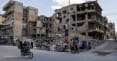
By Jesse Chase-Lubitz // 29 May 2025It has been almost six months since the Assad regime fell in Syria and former al-Qaeda member Ahmed Al-Sharaa assumed leadership. After 14 years of war, Syrians took to the streets in celebration. With the country looking to emerge from its dark decade, there is a window for the aid sector to deliver much-needed urgent assistance. As Syria works to rebuild its institutions and style of governance, there is an opportunity to ensure that development is embedded in the country’s culture and that robust humanitarian systems are put in place to help bring the population out of poverty. But development professionals warn that the window is already narrowing — and a host of political and financial barriers stand in the way. “I think we all recognize that this is going in the right direction, that all signals are turning green, but there is a timing aspect to those signals translating into those political and funding decisions that we need to see,” Mathieu Rouquette, country director for Syria at Mercy Corps, told Devex. The overthrow has brought international support. Qatar and Saudi Arabia paid off around $15 million of Syria’s World Bank debt, clearing the way for new grants and loans. The Trump administration also eased restrictions, allowing U.S. citizens and companies to conduct financial transactions with Syrian citizens and banks. Although a full lifting of sanctions still requires Congressional approval, these changes sparked optimism. But development experts caution that there are structural issues that threaten the ability of aid organizations to take advantage of the moment. Chief among them is the sudden decline in official development assistance, or ODA, as the U.S. and European Union shift priorities and cut foreign assistance — a problem which affects many countries, but is acutely felt in Syria right now. NGOs search for alternative funding For years, Syria has been uniquely dependent on aid. Last year, before the fall of the Assad regime, the United Nations had said more funding was needed to support Syria than any other country in the world. According to the UN Refugee Agency, more than 90% of the country’s population lives below the poverty line. As of March 2025, 81% of electricity grids, 61% of water networks, and nearly 50% of health infrastructure in Syria were destroyed. The country also ranks as the fourth most food-insecure in the world. Syria was also heavily dependent on the United States, in particular. The U.S. has provided more than $18 billion in humanitarian assistance to Syria since 2011, making it the largest foreign aid provider in the country. “The U.S. funding cuts have been a terrible blow to most of the international NGOs,” Sudipto Mukerjee, a resident representative of the U.N. Development Programme in Syria. “Not to mention that there have been collateral effects on even other traditional European donors, who are possibly spending more on defense and cutting down on ODA levels.” With traditional donors pulling back, both international and local NGOs are scrambling to secure new sources of support. Organizations are now turning to philanthropies, private foundations, and other countries, but they are skeptical about whether these sources can yield the funding Syria needs. “I think it’s going to be patchy,” said Robert Beschel, a senior nonresident fellow at the Middle East Council on Global Affairs. “I think this is an area where what happened with the USAID is really going to hurt.” A turn toward the Gulf Some experts point to the Gulf countries as potential new donors. Relations between Syria and the Persian Gulf States are warming. In addition to paying off the World Bank debt, Saudi Arabia hosted Syria’s interim president on his first foreign trip. Qatar has also offered to pay some public expenses in the country. “There are a few Gulf countries which seem to be ahead of the game in terms of their immediate offers to support Syria,” said Mukerjee. “Qatar is definitely one of them, but in real terms, except for one or two small things, nothing has happened.” One NGO, which asked to stay off the record due to the evolving nature of the situation, told Devex that it is seeking support from Gulf countries. In early May, U.S. President Trump visited the Gulf and met with Al-Sharaa. He also announced the easing of sanctions on Syria. The European Union, meanwhile, announced that it would lift some sanctions on May 28. While restrictions on exporting goods and technology remain, financial investment in Syria is more viable. Experts believe these relaxed sanctions could encourage greater Gulf engagement. “Based on Donald Trump's visit to the Middle East earlier this week or last week, it does seem like there's some transactional situation going on in which the Gulf is interested, willing and able to get more involved in long term investments in Syria,” said Daryl Grisgraber, humanitarian policy lead for Oxfam America. “Without the U.S. sanctions, those are going to become much easier to make happen.” Zaki Mehchy, a researcher at the London School of Economics and Political Science and co-founder of the Syrian Center for Policy Research, agreed that Gulf countries may now be more likely to invest. But he expressed concern that large-scale investors will prioritize business interests over humanitarian needs. “There is a huge gap in funding development projects inside Syria or humanitarian projects inside Syria,” Mehchy said. “In general, the development process in Syria seems to focus a lot on big investors and business people.” Grisgraber said that NGOs are likely to be very careful about getting funds from Gulf countries, but she added, options are slim. “The problem, in many cases, won't be the sanctions anymore. It'll just be the U.S. backing away from doing foreign assistance generally,” said Grisgraber. “So where that's not happening, there will be a lot less money flowing. What was already grossly inadequate for Syria is very likely going to shrink even more. I think we're all hoping that sympathetic countries would get together, maybe offer more funding.” There are also concerns that a shift to Gulf donors could mean less transparency about what is being funded. “There was always a gap between rhetoric and reality in American aid, certainly under George W. Bush,” said Beschel. “And then it faded a bit until you came to Trump, who honestly didn't care about these issues at all. But there were values and transparency, and a lot of support for civil society and organizations involved in good governance. I think 80% to 90% of that will disappear.” Bureaucratic delays threaten operations In addition to financial uncertainty, NGOs must also navigate a bureaucratic hurdle: the new Syrian government has required them to re-register, but the process is proving extremely slow. While most organizations continue to operate, particularly in the northeast under Kurdish administration and in the northwest, no group has yet received formal reauthorization, according to a development professional based in Syria, who spoke to Devex on condition of anonymity due to the sensitivity of the development landscape in the country right now. Experts are concerned that this could further hinder development funding from flowing. “While it's not impacting us directly, because we haven't heard from any donor, that registration is preventing us from accessing some specific funding,” said the development professional. “We are advocating for development donors to get into Syria and to start investing. And there might be a bit of a chicken and egg thing where it's important to demonstrate that we are legally able to receive this funding and to be legally able to implement it.” Grisgraber said that the government is essentially “turning its head and looking the other way because the needs are so great, they know that operations need to continue on.” Most organizations are understanding of this requirement, saying that it’s the right of the country to go through who is operating in the country. But there is a fear that this will take a long time. Mukerjee said that the Syrian government has “very limited operation capacity” right now. The primary question moving forward is how long it will take for them to get re-registered. Until registration is complete, he said, many NGOs are technically not licensed to operate, leaving millions in donor money frozen. “Some of them are sitting on money which they can't spend,” he said. “Which donor in this sort of uncertain environment is going to give you more money when they still don't know whether you can operate or not?” For now, aid marches on, but the situation is constantly evolving. Development officials say time is running out to respond to the needs of the country.
It has been almost six months since the Assad regime fell in Syria and former al-Qaeda member Ahmed Al-Sharaa assumed leadership. After 14 years of war, Syrians took to the streets in celebration.
With the country looking to emerge from its dark decade, there is a window for the aid sector to deliver much-needed urgent assistance.
As Syria works to rebuild its institutions and style of governance, there is an opportunity to ensure that development is embedded in the country’s culture and that robust humanitarian systems are put in place to help bring the population out of poverty.
This article is free to read - just register or sign in
Access news, newsletters, events and more.
Join usSign inPrinting articles to share with others is a breach of our terms and conditions and copyright policy. Please use the sharing options on the left side of the article. Devex Pro members may share up to 10 articles per month using the Pro share tool ( ).
Jesse Chase-Lubitz covers climate change and multilateral development banks for Devex. She previously worked at Nature Magazine, where she received a Pulitzer grant for an investigation into land reclamation. She has written for outlets such as Al Jazeera, Bloomberg, the Organized Crime and Corruption Reporting Project, and The Japan Times, among others. Jesse holds a master’s degree in Environmental Policy and Regulation from the London School of Economics.