

• News
    • Latest news
    • News search
    • Health
    • Finance
    • Food
    • Career news
    • Content series
    • Focus areas
    • Try Devex Pro
  • Jobs
    • Job search
    • Post a job
    • Employer search
    • CV Writing
    • Upcoming career events
    • Try Career Account
  • Funding
    • Funding search
    • Funding news
  • Talent
    • Candidate search
    • Devex Talent Solutions
  • Events
    • Upcoming and past events
    • Partner on an event
  • Post a job
  • About
      • About us
      • Membership
      • Newsletters
      • Advertising partnerships
      • Devex Talent Solutions
      • Contact us
Join DevexSign in
Join DevexSign in

News

  • Latest news
  • News search
  • Health
  • Finance
  • Food
  • Career news
  • Content series
  • Focus areas
  • Try Devex Pro

Jobs

  • Job search
  • Post a job
  • Employer search
  • CV Writing
  • Upcoming career events
  • Try Career Account

Funding

  • Funding search
  • Funding news

Talent

  • Candidate search
  • Devex Talent Solutions

Events

  • Upcoming and past events
  • Partner on an event
Post a job

About

  • About us
  • Membership
  • Newsletters
  • Advertising partnerships
  • Devex Talent Solutions
  • Contact us
  • My Devex
  • Update my profile % complete
  • Account & privacy settings
  • My saved jobs
  • Manage newsletters
  • Support
  • Sign out
Latest newsNews searchHealthFinanceFoodCareer newsContent seriesFocus areasTry Devex Pro
    • News
    • Global health

    US health strategy aims to position African governments as customers

    Under the ‘America First’ global health strategy, African governments “won’t be aid recipients, but customers who recognize value,” said the State Department's Jeff Graham.

    By Sara Jerving // 18 November 2025
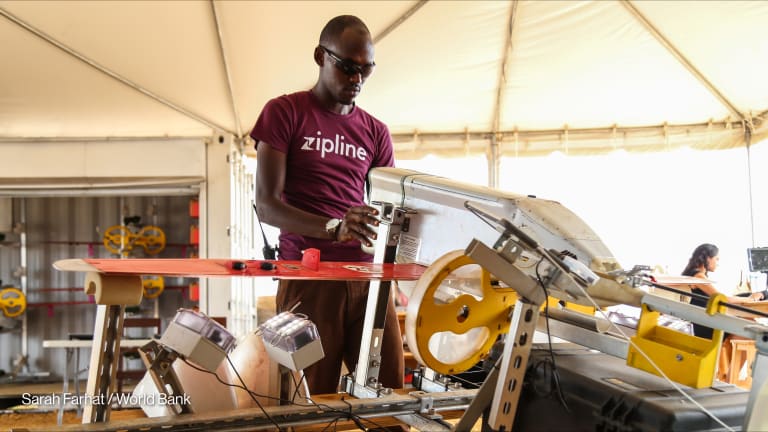
    The United States’ new global health strategy will work to position American companies to lead in African markets — home to the world’s fastest growing populations — with African governments serving as customers of American products. That’s according to Jeff Graham, senior bureau official for the State Department’s Bureau of Global Health Security and Diplomacy. In this vision, the role of donors is to support innovation, he said, as opposed to focusing on responding to emergencies. “American companies are largely absent from the world’s fastest growing consumer market,” Graham said in a speech on Tuesday at the Global Health Supply Chain Summit in Kigali. Graham is part of a team of roving State Department officials traveling across the African continent to negotiate bilateral agreements with countries as part of the new ‘America First’ global health strategy. This strategy marks a shift from previous administrations, which leaned heavily on funneling money to implementing partner NGOs to deliver programming. The Trump administration has criticized these NGOs for having high overhead costs, and is planning to lean heavily on recipient governments, the private sector and faith-based organizations moving forward. “We’re not abandoning global health leadership — we’re transforming it,” Graham said. “The strategy isn’t about withdrawal, it’s about smarter partnerships that leverage American technological leadership to create sustainable health systems while opening markets for innovation.” The U.S. has started its negotiations with 16 African governments. Graham said there are currently two American teams simultaneously negotiating with countries and Rwanda is the third country in his own five-country tour of negotiations. He said two new flagship deals with the private sector “demonstrate this new approach in action.” This includes the U.S.’s new $150 million investment in Zipline — an American company that delivers medical supplies to remote areas by drone. Graham referred to this new investment — which was announced at the Kigali conference — as a “down payment” on the Trump administration’s vision and said that over the next 36 months “you’ll watch American technology deliver life-saving medicines to 130 million people on the continent. You’ll see African governments paying for that service.” “We’'re doing a seed investment, but the actual payment will come from the governments. Those governments won’t be aid recipients, but customers who recognize value,” he said. Graham pointed to another deal that reflects the administration’s new approach: A September agreement with U.S. pharmaceutical company Gilead and the Global Fund to Fight AIDS, Tuberculosis and Malaria to roll out the HIV prevention drug lenacapavir, which he described as an innovative product. The first doses are being delivered this week in Eswatini and Zambia. Graham criticized previous U.S. investment in African health care as having “created dependency, not capacity,” adding that “despite billions in donor funding, we’re still seeing chronic stockouts.” He said for decades the U.S. has “subsidized emergency response.” He criticized the current state of health supply chains as being built for emergency response rather than long-term sustainability, with African companies representing a minuscule portion of the global pharmaceutical market. He said programs such as the U.S. President’s Emergency Plan for AIDS Relief and the U.S. President's Malaria Initiative, as well as organizations such as the Global Fund and Gavi, the Vaccine Alliance, have created fragmentation of different diseases and multiple parallel supply chains. He added that over 80% of essential medicines are secured through international mechanisms, with minimal participation from Africa’s private sector. The Trump administration’s vision is a “significant mindset shift for many of our public health experts on our teams, but one that they’re quite excited about,” he said. Graham outlined a vision where an ever-increasing number of pharmaceutical products are manufactured in Africa, where private sector companies are responsible for most of their distribution rather than governments, and where company-wide supply chains are facilitated by cross-border regulatory harmonization. “We want to leverage America’s unmatched technological advantages in robotics, artificial intelligence, manufacturing, and innovation. We want to create commercial partnerships that survive changes in political leadership on both sides, whether that’s both sides of the aisle in Washington, or both sides of the Atlantic, with our friends here in Africa,” he said. He called upon the supply chain conference attendees to support in designing “the infrastructure that this transformation is going to require.” “Your expertise bridges public health goals and commercial viability,” he said, adding that the Trump administration is serious about making “trade not aid” a reality. The new ‘America First’ strategy has been met with mixed reviews. Some are praising the potential it carries to integrate foreign aid into national health systems as opposed to creating siloed programs and parallel systems. Others have questioned the State Department’s ability to execute it, given the widespread dismantling of the country’s global health expertise and infrastructure, as well as criticized proposed pathogen sharing deals in a template of the bilateral agreements. But Graham is hopeful the changes will pay off. “The next several years of U.S.-Africa health partnerships will look fundamentally different from the last two decades,” he said. “We’re transforming the way the United States does business with Africa and the health sphere, and we feel very confident it’s going to work.”

    Related Stories

    Devex Newswire: New US health strategy positions African governments as customers
    Devex Newswire: New US health strategy positions African governments as customers
    Devex CheckUp: US pivots to market-first health approach in Africa
    Devex CheckUp: US pivots to market-first health approach in Africa
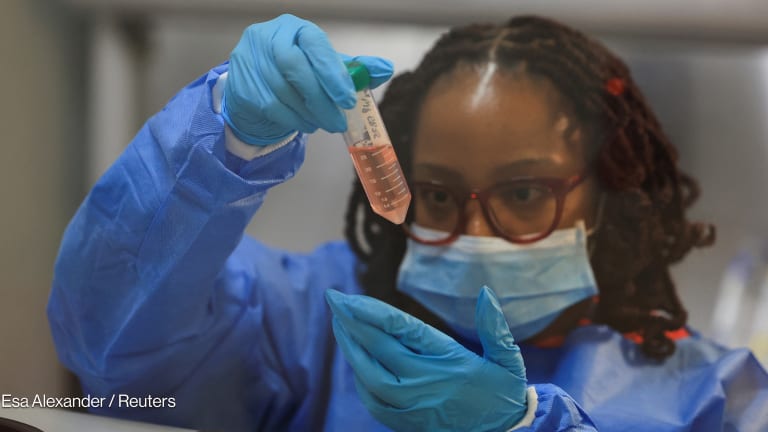
    Will African nations lose their leverage in an ‘America First’ health plan?
    Will African nations lose their leverage in an ‘America First’ health plan?
    State Dept grants $150M to Zipline to triple African drone operations
    State Dept grants $150M to Zipline to triple African drone operations

    The United States’ new global health strategy will work to position American companies to lead in African markets — home to the world’s fastest growing populations — with African governments serving as customers of American products. That’s according to Jeff Graham, senior bureau official for the State Department’s Bureau of Global Health Security and Diplomacy. In this vision, the role of donors is to support innovation, he said, as opposed to focusing on responding to emergencies.

    “American companies are largely absent from the world’s fastest growing consumer market,” Graham said in a speech on Tuesday at the Global Health Supply Chain Summit in Kigali.

    Graham is part of a team of roving State Department officials traveling across the African continent to negotiate bilateral agreements with countries as part of the new ‘America First’ global health strategy.

    This article is free to read - just register or sign in

    Access news, newsletters, events and more.

    Join usSign in

    More reading:

    ► US template for bilateral health deals bypasses WHO pandemic negotiations

    ► ‘America First’ in global health: Oxymoron or opportunity?

    ► US has begun bilateral health negotiations with 16 African nations

    • Funding
    • Democracy, Human Rights & Governance
    • Humanitarian Aid
    • Global Health
    • Private Sector
    • Trade & Policy
    • The Global Fund to Fight AIDS, Tuberculosis and Malaria (GFATM)
    • Gilead
    Printing articles to share with others is a breach of our terms and conditions and copyright policy. Please use the sharing options on the left side of the article. Devex Pro members may share up to 10 articles per month using the Pro share tool ( ).

    About the author

    • Sara Jerving

      Sara Jervingsarajerving

      Sara Jerving is a Senior Reporter at Devex, where she covers global health. Her work has appeared in The New York Times, the Los Angeles Times, The Wall Street Journal, VICE News, and Bloomberg News among others. Sara holds a master's degree from Columbia University Graduate School of Journalism where she was a Lorana Sullivan fellow. She was a finalist for One World Media's Digital Media Award in 2021; a finalist for the Livingston Award for Young Journalists in 2018; and she was part of a VICE News Tonight on HBO team that received an Emmy nomination in 2018. She received the Philip Greer Memorial Award from Columbia University Graduate School of Journalism in 2014.
    Search for articles

    Related Stories

    Devex NewswireRelated Stories - Devex Newswire: New US health strategy positions African governments as customers

    Devex Newswire: New US health strategy positions African governments as customers

    Devex CheckUpRelated Stories - Devex CheckUp: US pivots to market-first health approach in Africa

    Devex CheckUp: US pivots to market-first health approach in Africa

    The Future of Global HealthRelated Stories - Will African nations lose their leverage in an ‘America First’ health plan?

    Will African nations lose their leverage in an ‘America First’ health plan?

    The Future of Global HealthRelated Stories - State Dept grants $150M to Zipline to triple African drone operations

    State Dept grants $150M to Zipline to triple African drone operations

    Most Read

    • 1
      Why NTDs are a prime investment for philanthropy
    • 2
      The silent, growing CKD epidemic signals action is needed today
    • 3
      Trump withdraws, defunds dozens of international orgs and treaties
    • 4
      Why capital without knowledge-sharing won't solve the NCD crisis
    • 5
      Why are 3.4 billion people still offline?
    • News
    • Jobs
    • Funding
    • Talent
    • Events

    Devex is the media platform for the global development community.

    A social enterprise, we connect and inform over 1.3 million development, health, humanitarian, and sustainability professionals through news, business intelligence, and funding & career opportunities so you can do more good for more people. We invite you to join us.

    • About us
    • Membership
    • Newsletters
    • Advertising partnerships
    • Devex Talent Solutions
    • Post a job
    • Careers at Devex
    • Contact us
    © Copyright 2000 - 2026 Devex|User Agreement|Privacy Statement