
‘We do not lack qualified women:’ Why the next UN leader must be a woman
By Abdulla Shahid // 26 November 2025
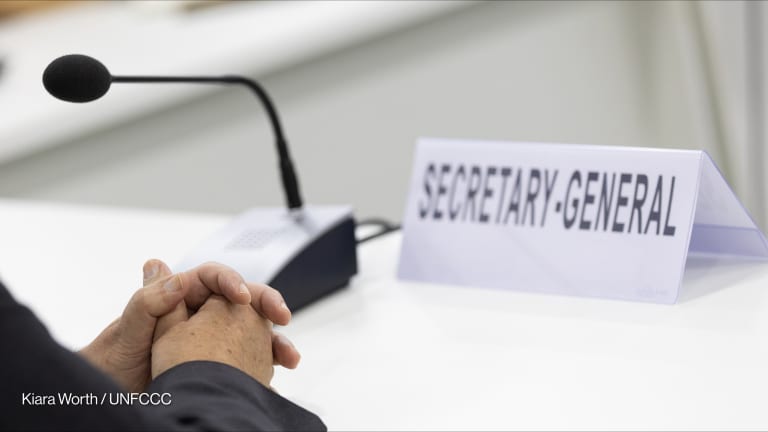
As the United Nations marks its 80th year, a sobering reality persists: Every secretary-general has been a man. Despite the organization’s commitment to equality and empowerment, it is not just a matter of historical oversight; it is a symptom of a chronic anomaly that has plagued the U.N. since its inception — the sidelining of women in leadership. Merit is not at odds with equality. I support choosing the best candidate, period. But after eight decades without a woman secretary-general, it strains credulity to claim the absence of qualified women. The more plausible explanation is the persistence of habits, networks, and biases that default to the familiar. The cost is real: We forfeit leadership styles, policy instincts, and lived experience that could change outcomes on the world’s toughest problems. During my presidency of the 76th session of the United Nations General Assembly, I initiated the discussions that led to the adoption of Resolution 76/269, which proclaimed June 24 every year as the International Day of Women in Diplomacy. My aim was simple: We must spotlight the contributions women already make across our system. I also pledged that every panel I joined would be gender-balanced. Skeptics warned it would be impractical. It wasn’t. When you set a standard and hold yourself to it, the world quickly adjusts. That is the point: We must stop treating parity as an aspiration and start treating it as a norm. History has never lacked capable women in statecraft. From Vijaya Lakshmi Pandit, an early steward of the U.N. and a former president of the General Assembly, to Mary Robinson’s moral authority on human rights, the record is clear: Women have shaped global affairs with judgment, steadiness, and strategic vision. The question is not whether a woman can lead the U.N. — it is why the U.N. has never let one try. “We must stop treating parity as an aspiration and start treating it as a norm. … If we allow another selection cycle to pass us by, we normalize the idea that parity is optional.” --— During my presidency, I met with young people everywhere, girls and boys, who will inherit our decisions. I saw hope in their eyes, a future they yearn for, and a desire for a United Nations that truly represents them. They ask, in essence: If the U.N. believes in equality, how can it explain that no woman has ever been considered “the most qualified” to lead it? There is no satisfying answer. If we allow another selection cycle to pass us by, we normalize the idea that parity is optional. We would fail the next generation, and the principles of equality enshrined in the U.N. Charter. The U.N. faces cascading crises, climate, conflict, pandemics, debt distress, food insecurity — interlocked in ways that afflict the most vulnerable. The leadership we need now rewards collaboration across silos, empathy rooted in evidence, and an instinct for inclusive coalitions. Those qualities are not biologically determined, but women leaders around the world have demonstrated them to profound effect. Bringing that perspective to the secretary-general’s office on the 38th floor would strengthen, not soften, the U.N.’s hand. Progress is possible. Across 80 years, only five women have ever presided over the General Assembly — a stark reminder of how limited representation has been. However, three of those five were elected in the past 20 years, showing that momentum is finally building. That momentum must not stall at the door of the secretary-general’s office. We can, and should, translate our commitments under the Sustainable Development Goals — especially goal 5 on gender equality — into the most visible leadership choice the U.N. can make. The U.N.’s founding promise was universal: equal dignity, equal rights, equal chances to shape our common future. Choosing a woman as the next secretary-general would not fulfil that promise on its own, but it would show that we are serious about living it. It would tell every young person watching that the world’s most global institution reflects the people it serves. We do not lack qualified women. We lack the will to nominate them, champion them, and appoint them. Eighty years on, that is a failure we can correct. The time to act is now, before habit becomes history once again.



As the United Nations marks its 80th year, a sobering reality persists: Every secretary-general has been a man.
Despite the organization’s commitment to equality and empowerment, it is not just a matter of historical oversight; it is a symptom of a chronic anomaly that has plagued the U.N. since its inception — the sidelining of women in leadership.
Merit is not at odds with equality. I support choosing the best candidate, period. But after eight decades without a woman secretary-general, it strains credulity to claim the absence of qualified women.
Printing articles to share with others is a breach of our terms and conditions and copyright policy. Please use the sharing options on the left side of the article. Devex Pro members may share up to 10 articles per month using the Pro share tool ( ).
About the author
Abdulla Shahid
Abdulla Shahid serves as the international ambassador of the International Communities Organisation, and was the president of the 76th session of the United Nations General Assembly where he championed multilateral action, climate diplomacy, and human rights. He has held several senior positions in the government of the Maldives, including minister of foreign affairs. A seasoned diplomat with more than four decades of experience, Shahid has devoted his career to strengthening multilateral cooperation and inclusive global governance.
Search for articles


Most Read
- 1
- 2
- 3
- 4
- 5