

• News
    • Latest news
    • News search
    • Health
    • Finance
    • Food
    • Career news
    • Content series
    • Focus areas
    • Try Devex Pro
  • Jobs
    • Job search
    • Post a job
    • Employer search
    • CV Writing
    • Upcoming career events
    • Try Career Account
  • Funding
    • Funding search
    • Funding news
  • Talent
    • Candidate search
    • Devex Talent Solutions
  • Events
    • Upcoming and past events
    • Partner on an event
  • Post a job
  • About
      • About us
      • Membership
      • Newsletters
      • Advertising partnerships
      • Devex Talent Solutions
      • Contact us
Join DevexSign in
Join DevexSign in

News

  • Latest news
  • News search
  • Health
  • Finance
  • Food
  • Career news
  • Content series
  • Focus areas
  • Try Devex Pro

Jobs

  • Job search
  • Post a job
  • Employer search
  • CV Writing
  • Upcoming career events
  • Try Career Account

Funding

  • Funding search
  • Funding news

Talent

  • Candidate search
  • Devex Talent Solutions

Events

  • Upcoming and past events
  • Partner on an event
Post a job

About

  • About us
  • Membership
  • Newsletters
  • Advertising partnerships
  • Devex Talent Solutions
  • Contact us
  • My Devex
  • Update my profile % complete
  • Account & privacy settings
  • My saved jobs
  • Manage newsletters
  • Support
  • Sign out
Latest newsNews searchHealthFinanceFoodCareer newsContent seriesFocus areasTry Devex Pro
    • News
    • Humanitarian aid

    What it's like to be an aid worker in Gaza now

    Stuck at home and without electricity most of the time, aid workers from international organizations in Gaza have suspended a number of their development projects and are focusing on emergency humanitarian response largely delivered by local partners. We learn more from an Oxfam staff member.

    By Jenny Lei Ravelo // 23 July 2014
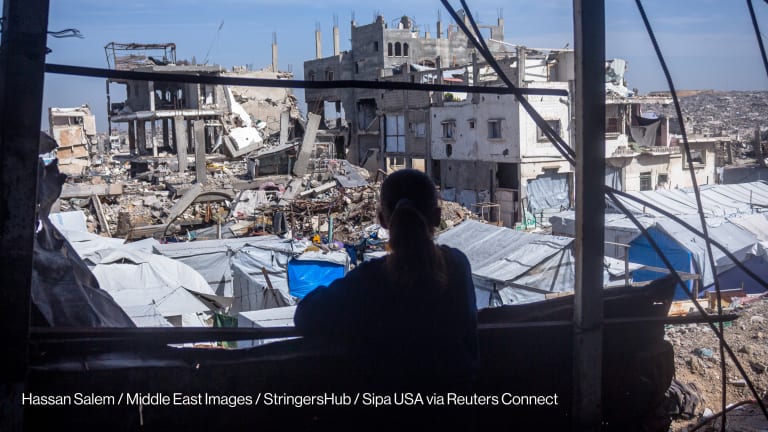
    These days, in the middle of summer, the sun shines bright over Gaza, but few people are able to enjoy it. Airstrikes force the majority of the population to seek refuge in shelters or stay at home behind closed shutters, including aid workers that have instructions to work remotely and avoid going to their offices. But in such a challenge environment, how can organizations actually deliver aid and continue to implement their projects? How are they able to get a parcel of food from point A to B? How can one possibly coordinate operations not knowing where the next projectile will land? In Gaza, Oxfam relies largely on its local partners, we learned from Arwa Mhanna, a media and communications officer who in the past few days has also taken part in ensuring operations continue for the organization. The airstrikes, she explained, are a constant threat for everyone — including aid workers. At present, all Oxfam staff in Gaza are working from home after a projectile landed very near its office just a few days ago, and several beneficiaries died when they were trying to access food via vouchers at a local market. The situation has forced the organization to suspend all its long-term economic development programs — like helping locals start their own businesses — and focus exclusively on humanitarian assistance like water and food distribution until the bombings stop, to not put its personnel in more danger. But it’s not even safe at home, she said. Housing blocks get hit by projectiles too, and electricity is cut off for about 18 hours a day, leaving aid workers struggling even more than usual to do their job. "Having your computer turned on all the time is like a luxury now," she pointed out, adding that they try to keep charged phones solely for work purposes. In Gaza, Oxfam delivers its humanitarian aid through local partners, so what Mhanna and her colleagues do is coordinate the response via phone, making sure that there are enough supplies and operations are always running despite the lack of power, which is starting to have a severe impact for instance on access to clean water because the desalination stations are turned off most of the time and many pipelines have been destroyed in the bombings. Also, now they must trust local partners even more than usual, as they cannot go out into the field and check on projects. As for supplies, the organization relies on available items in the local markets, which despite the airstrikes still have enough stock, at least for now. In case of a supply shortage, they are drafting contingency plans to procure supplies from abroad, but getting these into Gaza will be practically impossible until the borders reopen or humanitarian airlifts are cleared by Israel. Mhanna hopes they never reach that stage before there is a ceasefire. Are you an aid worker in Gaza? Please share your story by leaving a comment below or sending an email to news@devex.com. You may also visit Oxfam’s Gaza emergency response page to find out more. Read more development aid news online, and subscribe to The Development Newswire to receive top international development headlines from the world’s leading donors, news sources and opinion leaders — emailed to you FREE every business day.

    Related Stories

    Hurricane Melissa tests a US disaster system without USAID
    Hurricane Melissa tests a US disaster system without USAID
    Devex Newswire: The Gaza aid relief split screen
    Devex Newswire: The Gaza aid relief split screen
    The split screen of the Gaza Humanitarian Foundation
    The split screen of the Gaza Humanitarian Foundation
    Are UK aid commitments to equality and localization failing in Sudan?
    Are UK aid commitments to equality and localization failing in Sudan?

    These days, in the middle of summer, the sun shines bright over Gaza, but few people are able to enjoy it.

    Airstrikes force the majority of the population to seek refuge in shelters or stay at home behind closed shutters, including aid workers that have instructions to work remotely and avoid going to their offices.

    But in such a challenge environment, how can organizations actually deliver aid and continue to implement their projects? How are they able to get a parcel of food from point A to B? How can one possibly coordinate operations not knowing where the next projectile will land?

    This article is free to read - just register or sign in

    Access news, newsletters, events and more.

    Join usSign in
    • Humanitarian Aid
    Printing articles to share with others is a breach of our terms and conditions and copyright policy. Please use the sharing options on the left side of the article. Devex Pro members may share up to 10 articles per month using the Pro share tool ( ).

    About the author

    • Jenny Lei Ravelo

      Jenny Lei Ravelo@JennyLeiRavelo

      Jenny Lei Ravelo is a Devex Senior Reporter based in Manila. She covers global health, with a particular focus on the World Health Organization, and other development and humanitarian aid trends in Asia Pacific. Prior to Devex, she wrote for ABS-CBN, one of the largest broadcasting networks in the Philippines, and was a copy editor for various international scientific journals. She received her journalism degree from the University of Santo Tomas.

    Search for articles

    Related Stories

    HumanitarianRelated Stories - Hurricane Melissa tests a US disaster system without USAID

    Hurricane Melissa tests a US disaster system without USAID

    Devex NewswireRelated Stories - Devex Newswire: The Gaza aid relief split screen

    Devex Newswire: The Gaza aid relief split screen

    HumanitarianRelated Stories - The split screen of the Gaza Humanitarian Foundation

    The split screen of the Gaza Humanitarian Foundation

    UK aidRelated Stories - Are UK aid commitments to equality and localization failing in Sudan?

    Are UK aid commitments to equality and localization failing in Sudan?

    Most Read

    • 1
      Why NTDs are a prime investment for philanthropy
    • 2
      The silent, growing CKD epidemic signals action is needed today
    • 3
      Trump withdraws, defunds dozens of international orgs and treaties
    • 4
      Why capital without knowledge-sharing won't solve the NCD crisis
    • 5
      Why are 3.4 billion people still offline?
    • News
    • Jobs
    • Funding
    • Talent
    • Events

    Devex is the media platform for the global development community.

    A social enterprise, we connect and inform over 1.3 million development, health, humanitarian, and sustainability professionals through news, business intelligence, and funding & career opportunities so you can do more good for more people. We invite you to join us.

    • About us
    • Membership
    • Newsletters
    • Advertising partnerships
    • Devex Talent Solutions
    • Post a job
    • Careers at Devex
    • Contact us
    © Copyright 2000 - 2026 Devex|User Agreement|Privacy Statement