
WHO expects it will reach half of $7.1 billion fundraising goal at G20
By Jenny Lei Ravelo // 18 November 2024
The World Health Organization has been on a campaign to woo donors to contribute to its first-ever investment round. So far the agency has received over $1.1 billion in confirmed pledges but expects more this week during the G20 summit in Brazil. WHO officials expect it will secure at least half of its $7.1 billion fundraising target — for its work in the next four years — by this week. Part of the money will come from the public pledges made by donors through WHO’s investment round events. But there will also be funding from WHO agreements with other donors and partnerships, including grant funding from the Gates Foundation. WHO also expects more pledges after this week, including from France, Japan, and Portugal, but not much from its biggest donor country, the United States. “The United States has been very clear from the get-go when we started the investment round that due to the timing of their elections, they will not be able to make a pledge in this current cycle. So we've never taken that into account or into our calculations for the success of the investment round,” said Catharina Boehme, WHO assistant director-general for external relations and governance. But WHO has existing grant agreements with the United States, and Boehme said their “partnership with America is vital for WHO” and hopes it continues. During Donald Trump’s first term as U.S. president, he initiated a U.S. withdrawal from the WHO. Some fear this may happen again in his second term, but Boehme said they’ve “not had any signals from the new incoming administration in the U.S. for any withdrawal.” “The U.S. is an important donor to WHO and any money that we would not get from the U.S. would have to be compensated for. Either that or we look for cuts and efficiencies in the organization,” she said. This fundraising period marks a significant shift in the way WHO secures resources for its work. WHO is funded by assessed contributions — dues paid by member states — and voluntary contributions, the latter comprising a large chunk of its budget. Much of that is unpredictable and can be tied to certain programs, preventing WHO from allocating it across priority areas or using it when needed to respond in case of emergencies. According to Boehme, historically 50% or more of WHO funding consisted of one-year commitments, making it hard for them to plan long-term. The agency doesn’t have figures yet for how much of the current pledges it has received are flexible. It will know more as the pledges turn into signed agreements, but officials are positive they’re making progress on their goal to secure more flexible funds. Some donors, for example, may say the funding is for climate change and health, but do not put restrictions on how that money is spent within that, Boehme said. “For the last period, we had 35 donors giving more flexible funding. And as of now … we've got 52 donors that have pledged more flexible funding,” said Daniel Thornton, WHO director for coordinated resource mobilization. Fixing WHO’s financial situation has been a priority of Tedros Adhanom Ghebreyesus since becoming director-general in 2017. In 2020, WHO welcomed the creation of a WHO Foundation, an independent grant-making organization that would help broaden WHO’s donor base. Tedros sought an increase in assessed contributions for WHO, which member states agreed to do over several years. Boehme said the investment round has been successful in three ways. It received political commitment from the level of heads of state, expanded the number of donors that are providing WHO with voluntary contributions, and created more predictability in WHO’s funding. A total of 64 donors have contributed so far to WHO’s investment round, including 37 countries providing voluntary contributions to WHO for the first time. There are also 20 new middle-income countries — although that doesn’t include yet the likes of China. WHO also received a “firm commitment” from South African President Cyril Ramaphosa to help in fully meeting WHO’s funding needs for its program of work for the next four years during South Africa’s Group of 20 major economies presidency next year, Boehme said.



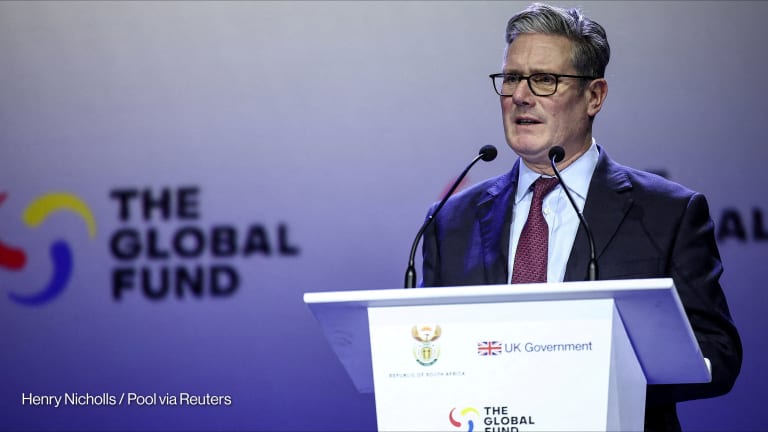
The World Health Organization has been on a campaign to woo donors to contribute to its first-ever investment round. So far the agency has received over $1.1 billion in confirmed pledges but expects more this week during the G20 summit in Brazil.
WHO officials expect it will secure at least half of its $7.1 billion fundraising target — for its work in the next four years — by this week.
Part of the money will come from the public pledges made by donors through WHO’s investment round events. But there will also be funding from WHO agreements with other donors and partnerships, including grant funding from the Gates Foundation.
Printing articles to share with others is a breach of our terms and conditions and copyright policy. Please use the sharing options on the left side of the article. Devex Pro members may share up to 10 articles per month using the Pro share tool ( ).
About the author

Jenny Lei Ravelo@JennyLeiRavelo
Jenny Lei Ravelo is a Devex Senior Reporter based in Manila. She covers global health, with a particular focus on the World Health Organization, and other development and humanitarian aid trends in Asia Pacific. Prior to Devex, she wrote for ABS-CBN, one of the largest broadcasting networks in the Philippines, and was a copy editor for various international scientific journals. She received her journalism degree from the University of Santo Tomas.
Search for articles


Most Read
- 1
- 2
- 3
- 4
- 5