
A golden opportunity to reform aid for the world's poorest
By Isabelle De Lichtervelde // 14 October 2014
The development Ghana has enjoyed in recent years has been impressive, with the country on track to halve extreme poverty by 2015. Development assistance played an important part in this. Through organizations such as the GAVI Alliance and The Global Fund to Fight AIDS, Tuberculosis and Malaria, the number of people receiving vaccines and anti-malarial bed nets has rocketed. Unfortunately, though, there is a cloud on the Ghanaian horizon. Public debt has recently spiked and the country’s risk of debt distress has worryingly increased over the past few years. Despite this concerning trend, loans make up over one-third of what Ghana receives in official development assistance. Aid in the form of loans does play an important role particularly in investments such as infrastructure. Another advantage of loans is that repayments can be reinvested in aid, making development programs more sustainable. But this sort of ODA has significant caveats that donors must be aware of. These include the country’s level of income and indebtedness, as well as the purpose of the funding. In Ghana’s case, for example, donors must ensure their lending doesn’t add to levels of unsustainable debt. The risks to Ghana’s progress due to irresponsible lending are not unusual. These dangers become even more acute for least developed countries. With a greater dependence on aid and a limited ability to sustain debt, aid in the form of grants — rather than loans — are more appropriate for the poorest countries. It is crucial that the rules governing ODA loans are fit for purpose. According to a new report from the ONE Campaign, the guidelines on which loans can be counted as aid are outdated and fail to reflect today’s market conditions. If more realistic rules had been in place, up to $19 billion would not have been counted as aid in 2012 alone. Under current rules, donors can report unsubsidized or even profitable loans as aid. This can create perverse incentives for donors to choose loans over grants even when it is inappropriate. Moreover, no effective safeguards exist to protect against irresponsible lending to countries clearly unable to sustain debt or already facing risk of defaulting on existing debt. This is important for all countries, particularly the world’s most impoverished countries that struggle to repay debt and are most in need of aid. Existing rules also allow donors to report money that isn’t transferred to poor countries as aid. Some $250 billion, or 17 percent of total aid, since 2000 was spent within donor countries or on debt relief but was actually counted as aid, giving an artificial boost to ODA levels. Debt relief has been crucial to allow increased domestic spending on education or health in developing countries. Ghana used it to abolish primary school fees, helping increase child enrollment up to 88 percent in 2013. The problem is that how we measure debt relief overestimates its true value. And debt cancellation should be provided in addition to aid, as agreed in the Monterrey Consensus of 2002. The new set of international goals to be agreed next year will aim to eradicate extreme poverty by 2030 and put sustainable development at its heart. All forms of finance will be central to achieve this ambition, but ODA — the only external flow explicitly aimed at promoting development — will be vital, particularly for people living in the world’s poorest countries. As a concept, though, ODA is in urgent need of reform. ONE’s 2014 DATA Report lays out recommendations underlining the relevance of aid in this changing development landscape. These include a commitment by donors to channel at least half of their total ODA to those countries most in need. To avoid imposing a burden of debt, donors should also provide at least 90 percent of their aid to LDCs in the form of grants. Rules governing aid must contain more realistic guidelines on loans and take into account countries’ ability to repay. Although donors should get credit for them, debt relief and the majority of in-donor costs should no longer be counted as development aid. The current discussions on the financing strategy for the post-2015 goals — including the third International Financing for Development Conference in Ethiopia next year and the ongoing OECD-DAC process of modernizing the definition of ODA — present a golden opportunity to reform aid. Through these processes, governments have a genuine chance to ensure the quality and credibility of ODA beyond 2015. Let’s hope they seize it. Join the Devex community and access more in-depth analysis, breaking news and business advice — and a host of other services — on international development, humanitarian aid and global health.



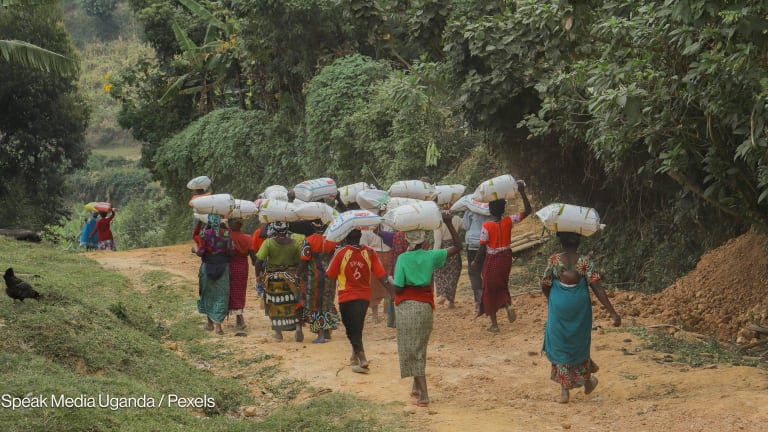
The development Ghana has enjoyed in recent years has been impressive, with the country on track to halve extreme poverty by 2015.
Development assistance played an important part in this. Through organizations such as the GAVI Alliance and The Global Fund to Fight AIDS, Tuberculosis and Malaria, the number of people receiving vaccines and anti-malarial bed nets has rocketed. Unfortunately, though, there is a cloud on the Ghanaian horizon. Public debt has recently spiked and the country’s risk of debt distress has worryingly increased over the past few years.
Despite this concerning trend, loans make up over one-third of what Ghana receives in official development assistance.
Printing articles to share with others is a breach of our terms and conditions and copyright policy. Please use the sharing options on the left side of the article. Devex Pro members may share up to 10 articles per month using the Pro share tool ( ).
About the author

Isabelle De Lichtervelde
Isabelle De Lichtervelde works on the policy team in The ONE Campaign's London office. In her current role, she focuses on development finance beyond 2015, and was a contributing writer of ONE's 2014 DATA Report. De Lichtervelde previously worked in the ONE Brussels office on development assistance in the EU budget, and before joining the organization was a researcher at the Brussels Institute of Contemporary China Studies and for the Europe China Research and Advice Network.
Search for articles



Most Read
- 1
- 2
- 3
- 4
- 5