• News
    • Latest news
    • News search
    • Health
    • Finance
    • Food
    • Career news
    • Content series
    • Focus areas
    • Try Devex Pro
  • Jobs
    • Job search
    • Post a job
    • Employer search
    • CV Writing
    • Upcoming career events
    • Try Career Account
  • Funding
    • Funding search
    • Funding news
  • Talent
    • Candidate search
    • Devex Talent Solutions
  • Events
    • Upcoming and past events
    • Partner on an event
  • Post a job
  • About
      • About us
      • Membership
      • Newsletters
      • Advertising partnerships
      • Devex Talent Solutions
      • Contact us
Join DevexSign in
Join DevexSign in

News

  • Latest news
  • News search
  • Health
  • Finance
  • Food
  • Career news
  • Content series
  • Focus areas
  • Try Devex Pro

Jobs

  • Job search
  • Post a job
  • Employer search
  • CV Writing
  • Upcoming career events
  • Try Career Account

Funding

  • Funding search
  • Funding news

Talent

  • Candidate search
  • Devex Talent Solutions

Events

  • Upcoming and past events
  • Partner on an event
Post a job

About

  • About us
  • Membership
  • Newsletters
  • Advertising partnerships
  • Devex Talent Solutions
  • Contact us
  • My Devex
  • Update my profile % complete
  • Account & privacy settings
  • My saved jobs
  • Manage newsletters
  • Support
  • Sign out
Latest newsNews searchHealthFinanceFoodCareer newsContent seriesFocus areasTry Devex Pro
    • News
    • Food systems

    As USAID is dismantled, Republicans fight to save a food aid program

    Republicans have proposed moving Food for Peace from USAID to the U.S. Department of Agriculture. Can it work?

    By Ayenat Mersie // 26 February 2025
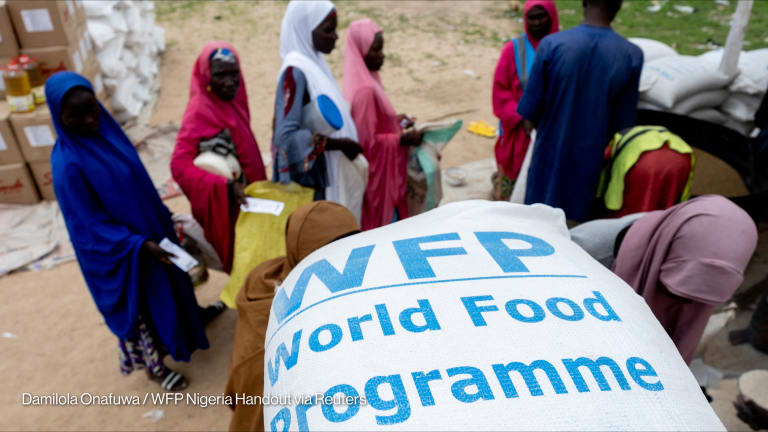
    As the U.S. President Donald Trump administration dismantles USAID, major questions remain about which of its programs will survive, which will be eliminated, and who will be responsible for what. The list of USAID programs and resources that have been gutted or gone offline is long: Feed the Future, which boosted agricultural production and market access; FEWS Net, an early warning system tool for predicting famine, to name just two. As those programs await answers as to whether they even have a future after the State Department’s 90-day review, USAID’s flagship in-kind food aid initiative, Food for Peace, has been thrown a lifeline. Earlier this month, a pair of Kansas Republicans sponsored legislation in Congress that could preserve the program by transferring it from USAID to the U.S. Department of Agriculture, or USDA. Food for Peace has fed more than 4 billion people since it was established by President Dwight D. Eisenhower, himself a Republican and Kansan, in the aftermath of World War II. The program purchases surplus food commodities grown by American farmers and distributes them to those in need abroad, primarily in emergency settings such as conflicts or natural disasters. In fiscal year 2023, Food for Peace provided around $2 billion of assistance and reached 45 million people in 35 countries, with about three-quarters of its operations focused on Africa. Much of the U.S.-grown food aid comes from Republican-leaning states where agriculture is big business. The program is administered by USAID, and USDA purchases food from farmers. On the ground, aid is distributed in partnership with organizations such as the U.N. World Food Programme. “This … gift from the American people is more than food. It’s diplomacy and feeds the most vulnerable communities while helping them recognize the freedom, prosperity, and good America can establish across the globe,” Rep. Tracey Mann, who sponsored the House bill, said in a statement. “By moving Food for Peace to USDA, the program can continue to equip American producers to serve hungry people while providing more transparency and efficiency as to how taxpayer dollars are stewarded.” Kansas Sen. Jerry Moran sponsored a similar bill in the U.S. Senate. Devex spoke to experts who have worked with Food for Peace, including humanitarian partners, former USAID staff, and sources familiar with U.S. agricultural interests. While there is broad agreement that preserving the program is essential to both American farmers and the people who rely on that aid, many experts question whether USDA has the capacity and expertise to manage such a large and complex initiative. USDA oversees U.S. food and nutrition programs, supports farmers, and promotes rural development. While it does oversee some international aid programming, its primary focus internationally is promoting trade. Experts are therefore concerned about USDA’s lack of emergency and humanitarian experience, the logistical challenges of transferring the program to USDA, and the loss of USAID’s specialized knowledge. Food for Peace is not just a humanitarian aid program — it is also a significant market for American farmers. It purchases U.S.-grown commodities — about $713 million worth in 2023 — providing a steady market for products such as wheat, which makes up more than 40% of all in-kind food aid from the United States each year, according to the National Association of Wheat Growers. In fact, if food aid were considered a single export market for wheat, it would rank among its top 10 export destinations. The legislation is light on details but proposes transferring all “functions, duties, responsibilities, assets, liabilities, orders, determinations, rules, regulations, permits, grants, loans, contracts, agreements, certificates, licenses, and privileges” related to Food for Peace to USDA. Dozens of U.S. agriculture trade groups representing beans, corn, soybeans, rice, sorghum, peanuts, and dairy support the proposal. Losing USAID’s expertise But managing food assistance at the scale at which Food for Peace operates requires specialized expertise. Its programming was designed to marry emergency food aid with broader emergency assistance efforts — so that people would receive not just USAID-stamped bags of food, but also water, shelter, and health care. Food for Peace was previously administered by USAID’s Office of Food for Peace and the Office of U.S. Foreign Disaster Assistance. In 2020, the two merged to create the Bureau for Humanitarian Assistance, or BHA, to make responses more streamlined and efficient. “USAID staff working on food assistance — both in the U.S. and around the world — possess a variety of specialized skills. They are experts in logistics and supply chains, price forecasting, food safety, monitoring, and grant and contract management,” Marcia Wong, former deputy assistant administrator of BHA, told Devex. This expertise includes monitoring food distributions, quality control, risk assessments of waste and fraud, and ensuring government oversight. BHA works with partners including the World Food Programme and Catholic Relief Services in distributing emergency food and also provides on a smaller scale resources to enable the local procurement of food. In fiscal year 2023, BHA supported humanitarian operations in some of the world’s most challenging environments. In Sudan, for example, BHA provided nearly $492 million in emergency funding, including more than $162 million to deliver in-kind food assistance through Food for Peace, according to its 2023 report to Congress. USAID and its largest partner, the World Food Programme, reached nearly 3 million people across 18 states in Sudan, despite immense security and logistical challenges. Ongoing fighting has severely restricted access, and according to the U.N., more than 110 aid workers have been killed, wounded, kidnapped, or remain missing. Beyond security risks, bureaucratic hurdles and fuel shortages have further complicated operations in Sudan. Navigating obstacles like these requires a high level of expertise, coordination, and adaptability — skills USAID has honed over years of experience in complex humanitarian crises. USDA’s existing international programs Although USDA primarily focuses on domestic agricultural policy, it has some experience managing international aid programs, such as Food for Progress and the McGovern-Dole International Food for Education and Child Nutrition Program. These programs are managed by USDA’s Foreign Agricultural Service, or FAS, whose mission is to enhance U.S. export opportunities and improve global food security. Food for Progress, which had a budget of $225 million in 2023, supports agricultural development in emerging markets, with the aim of “introducing and expanding private enterprise in the agricultural sector.” In some countries, the donated American commodity is often sold into local markets and proceeds in turn help fund an agricultural development program. In Cambodia, for example, American-grown soybean meal helped serve as feed for nascent fish farms in the country. The McGovern-Dole program, established in 2002, provides U.S.-donated commodities for school meal programs, aiming to keep children — especially girls — in school. In 2023, it had $197 million in funding, which supported projects in 34 countries and reached more than 4.5 million children and community members. Given this track record, some believe USDA is well-positioned to take over Food for Peace. “USAID is going away, or it won’t be resurrected anytime soon. The State Department doesn’t have the technical expertise to administer Food for Peace,” said a representative from a U.S. farm group who spoke on condition of anonymity. “We figured USDA at least has the knowledge of supply chains.” Challenges ahead USDA faces significant structural and staffing challenges that could hinder its ability to oversee and implement food assistance programs. “USDA has only six agricultural attaché offices across 53 sub-Saharan African countries. They do not have the people on the ground to provide proper oversight for a program as large and important as Food for Peace,” said one source familiar with USDA operations. FAS has a staff of 1,100 staff worldwide, although the exact number who work on international aid programs is not clear. USAID’s BHA, by contrast, employed around 1,300 people all over the world, according to a former BHA staffer. Additionally, USDA’s programs are not designed for emergency settings. “USDA doesn’t have mission staff like USAID used to have,” said one humanitarian worker. “I don’t know what USDA’s experience with diplomatic engagement in difficult humanitarian settings is. That’s a big concern.” Complicating matters further, USDA is not itself immune to the mass layoffs ripping through the U.S. government since U.S. President Donald Trump and his ‘efficiency’ czar Elon Musk have come into power. Meanwhile, Trump’s pick to lead USDA, Brooke Rollins, who was confirmed earlier this month, has seemed to embrace his agenda. “USDA is pursuing an aggressive plan to optimize its workforce by eliminating positions that are no longer necessary, bringing its workforce back to the office, and relocating employees out of the National Capital region into our nation’s heartland to allow our rural communities to flourish,” the agency said in a statement. While USDA did not respond to Devex’s questions about the number of staff affected by cuts, the U.S. cable news network News Nation reported that 2,000 USDA jobs have been axed so far. To understand whether USDA can truly take on Food for Peace, it would be especially important to understand how its FAS has been affected by staff cuts. Politico reported that 17 FAS employees have been placed on leave, and more cuts could be coming. In Project 2025 — the conservative blueprint for Trump’s return to office — FAS is specifically called out. The document argues that while FAS should help open markets for American farmers, it shouldn’t assist businesses in promoting exports, saying the industry should handle that itself. It also calls for legislation to repeal export promotion programs. All of this suggests that USDA and FAS specifically could face even more shake-ups. A return to a siloed approach? One of the key arguments for merging USAID’s food assistance programs into BHA was the need for an integrated response to emergencies. The proposed transfer to USDA could reverse this progress. “It’s important to recognize that food aid is just one part of emergency response,” said Wong. “You need to have water, medicine, shelter. You need a holistic approach in fast-moving crises,” which becomes more difficult when different government agencies are responsible for different aspects of humanitarian assistance. While the bill outlines various aspects of the transition, such as contracts and loans, it fails to address if and how personnel would be transferred to USDA or hired anew. “If it moves — at least be sure that the emergency skill sets move with it,” Wong said. There is also the broader question of what happens to the rest of USAID’s food assistance, such as the separate Feed the Future program which was run by the agency’s Bureau for Resilience, Environment and Food Security. In fiscal year 2023, USAID provided more than $5 billion in humanitarian food assistance, reaching 134 million people in 61 countries. Food for Peace is only part of that. As Congress debates the future of Food for Peace, this shift could serve as a test case for how USAID programs could be saved even as the agency itself is decimated.

    Related Stories

    The US is breaking a lifesaving global food aid system
    The US is breaking a lifesaving global food aid system
    Scoop: State Department ends support for some food security programs
    Scoop: State Department ends support for some food security programs
    A successful US food aid program needs agriculture investment, experts say
    A successful US food aid program needs agriculture investment, experts say
    What good is in-kind food aid?
    What good is in-kind food aid?

    As the U.S. President Donald Trump administration dismantles USAID, major questions remain about which of its programs will survive, which will be eliminated, and who will be responsible for what.

    The list of USAID programs and resources that have been gutted or gone offline is long: Feed the Future, which boosted agricultural production and market access; FEWS Net, an early warning system tool for predicting famine, to name just two. As those programs await answers as to whether they even have a future after the State Department’s 90-day review, USAID’s flagship in-kind food aid initiative, Food for Peace, has been thrown a lifeline.

    Earlier this month, a pair of Kansas Republicans sponsored legislation in Congress that could preserve the program by transferring it from USAID to the U.S. Department of Agriculture, or USDA. Food for Peace has fed more than 4 billion people since it was established by President Dwight D. Eisenhower, himself a Republican and Kansan, in the aftermath of World War II. The program purchases surplus food commodities grown by American farmers and distributes them to those in need abroad, primarily in emergency settings such as conflicts or natural disasters.

    This article is free to read - just register or sign in

    Access news, newsletters, events and more.

    Join usSign in
    • Agriculture & Rural Development
    • Funding
    • Humanitarian Aid
    • Democracy, Human Rights & Governance
    • Trade & Policy
    • World Food Programme (WFP)
    Printing articles to share with others is a breach of our terms and conditions and copyright policy. Please use the sharing options on the left side of the article. Devex Pro members may share up to 10 articles per month using the Pro share tool ( ).

    About the author

    • Ayenat Mersie

      Ayenat Mersie

      Ayenat Mersie is a Global Development Reporter for Devex. Previously, she worked as a freelance journalist for publications such as National Geographic and Foreign Policy and as an East Africa correspondent for Reuters.

    Search for articles

    Related Stories

    Opinion: Food systemsRelated Stories - The US is breaking a lifesaving global food aid system

    The US is breaking a lifesaving global food aid system

    Food SystemsRelated Stories - Scoop: State Department ends support for some food security programs

    Scoop: State Department ends support for some food security programs

    Devex Pro LiveRelated Stories - A successful US food aid program needs agriculture investment, experts say

    A successful US food aid program needs agriculture investment, experts say

    Food SystemsRelated Stories - What good is in-kind food aid?

    What good is in-kind food aid?

    Most Read

    • 1
      Why women’s health innovation needs long-term investment
    • 2
      Turning commitments into action: Financing a healthier future after HLM4
    • 3
      How country-led ecosystems drive sustainable health impact
    • 4
      State Department scrambles to rebuild foreign aid workforce
    • 5
      Building hope to bridge the surgical access gap
    • News
    • Jobs
    • Funding
    • Talent
    • Events

    Devex is the media platform for the global development community.

    A social enterprise, we connect and inform over 1.3 million development, health, humanitarian, and sustainability professionals through news, business intelligence, and funding & career opportunities so you can do more good for more people. We invite you to join us.

    • About us
    • Membership
    • Newsletters
    • Advertising partnerships
    • Devex Talent Solutions
    • Post a job
    • Careers at Devex
    • Contact us
    © Copyright 2000 - 2025 Devex|User Agreement|Privacy Statement