British Council could go bust, boss of peace-building veteran warns
The 90-year-old development and anti-disinformation institution contemplates its pull-out from 40 countries — and worse — because of an unrepayable COVID-19 loan.
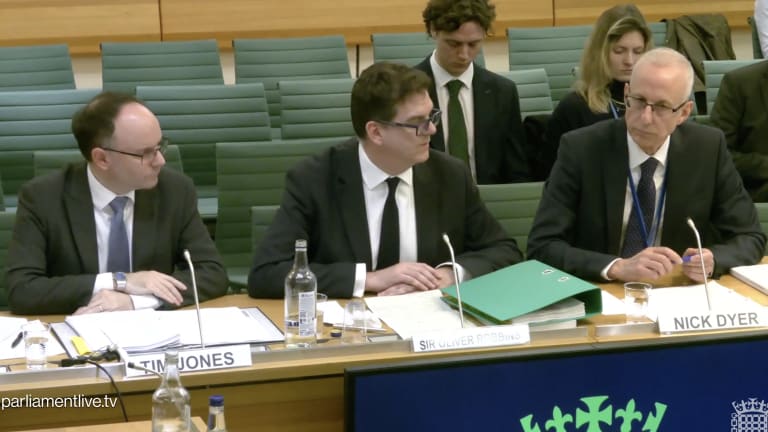
The world-famous British Council, which receives £126.5 million ($154.8 million) of annual United Kingdom aid funding for development and anti-disinformation work overseas, is in danger of going bust, its boss is warning. The institution — which spends almost £1 billion a year on charitable activities — is in “real financial peril” because it must start paying back a £197 million emergency government loan from the start of the new financial year in April, Chief Executive Scott McDonald told a parliamentary inquiry. McDonald described the loan — provided to ensure survival through the COVID-19 pandemic – as impossible to repay “in the near term,” warning the Council is faced with pulling out of up to 40 of the 200 countries in which it works, having already left 18 countries, including Afghanistan and South Sudan, in its urgent search for savings. Giving evidence to MPs, he also raised the prospect that “the British Council will not be here in a year or two,” saying: “It would be an enormous blow to the UK. It would be a retreat and a massive win for Putin’s Russia if the British Council disappeared.” McDonald added: “We have had a one-year loan extension, but unless that is also extended next year, we will be insolvent next year. So we are living under the constant threat of insolvency.” The chief executive painted a bleak picture even if ministers avert the immediate crisis by rolling over the 2021 loan, telling MPs the organization is planning another significant cut to its expenditures: “Probably £250 million over the next five years.” The Council was launched amid the rise of fascism in the 1930s to support peace and prosperity, and specifically to reduce the risk of countries going to war with the U.K. by encouraging their citizens to visit, study, and trade with the U.K. Its work focuses on culture, promotion of the English language, and education — including helping countries design their education systems — as well as tackling disinformation in, McDonald said, countries where “the U.K. government struggle[s] to be effective: Venezuela, Myanmar, Cuba, Yemen, Iraq.” “The world is a more dangerous place than it has been for some time: 70% of people live in autocratic states, and 1 in 7 people has experienced conflict in the last year,” he argued, adding: “Disinformation is spreading everywhere, threatening democracy. There is a real competition for the engagement and minds of young people, who will be the leaders of the future.” The crisis is a potential embarrassment for David Lammy, the U.K. Foreign Secretary, just days after he launched a “Soft Power Council” to “build relationships, deepen trust, enhance our security.” “Soft power is fundamental to the U.K.’s impact and reputation around the world,” Lammy said, “but we have not taken a sufficiently strategic approach to these huge assets as a country.” The announcement did not mention the British Council. The government granted the Council £165 million in the 2023-24 financial year, of which £126.5 million came from the aid budget, but it generates 85% of its income itself from, for example, teaching, examinations, and corporate or government partners. Ministers came under pressure to reconsider the loan repayment specifics in the House of Commons, when Monica Harding, the Liberal Democrat party’s international development spokesperson, proposed “reviewing the terms of the Council’s loan, extending the date for beginning repayments, reducing the commercial rate of interest, or redesignating the loan.” Hamish Falconer, a Foreign, Commonwealth & Development Office minister, played down the threat to the Council’s future, saying: “Ministers are aware of the issues.” He said the £197 million loan had to be made “on commercial terms” to comply with the law. Lammy met with the Council’s leadership earlier in January. A rescue package, including less onerous repayment terms, is dependent on the Council putting forward a long-term sustainable business plan to avoid repeated crises, Devex understands.
The world-famous British Council, which receives £126.5 million ($154.8 million) of annual United Kingdom aid funding for development and anti-disinformation work overseas, is in danger of going bust, its boss is warning.
The institution — which spends almost £1 billion a year on charitable activities — is in “real financial peril” because it must start paying back a £197 million emergency government loan from the start of the new financial year in April, Chief Executive Scott McDonald told a parliamentary inquiry.
McDonald described the loan — provided to ensure survival through the COVID-19 pandemic – as impossible to repay “in the near term,” warning the Council is faced with pulling out of up to 40 of the 200 countries in which it works, having already left 18 countries, including Afghanistan and South Sudan, in its urgent search for savings.
This article is free to read - just register or sign in
Access news, newsletters, events and more.
Join usSign inPrinting articles to share with others is a breach of our terms and conditions and copyright policy. Please use the sharing options on the left side of the article. Devex Pro members may share up to 10 articles per month using the Pro share tool ( ).
Rob Merrick is the U.K. Correspondent for Devex, covering FCDO and British aid. He reported on all the key events in British politics of the past 25 years from Westminster, including the financial crash, the Brexit fallout, the "Partygate" scandal, and the departures of Boris Johnson and Liz Truss. Rob has worked for The Independent and the Press Association and is a regular commentator on TV and radio. He can be reached at rob.merrick@devex.com.