
Devex Newswire: UK aid cuts hit Sudan and Sierra Leone front-line efforts



Presented by Pivotal

U.K. funding shifts are straining front-line efforts in both Sudan and Sierra Leone. Sudanese responders have no protection, while a British NGO in Sierra Leone says cuts are having a devastating effect on education in the country.
Also in today’s edition: U.S. President Donald Trump dismissed a government peace agency — but now he’s putting his name on its building.
System under strain
The United Kingdom doubled its aid to Sudan this year — £231 million — and billed it as proof that Sudan is a top-tier priority. But a wave of recent reviews and testimony tells a tougher story: a system struggling to keep up with “the world’s worst humanitarian crisis,” even as violence against women surges and local responders are pushed to the margins.
At a parliamentary hearing, Sudanese activist Hanin Ahmed described women-led groups running shelters and evacuation routes with “no protection plan or protection mechanism” and said that when funding was cut, “We could no longer keep people alive.”
The Independent Commission for Aid Impact, a U.K. aid watchdog, echoed these concerns, finding that the U.K.’s compliance-heavy model makes localization “very limited” and that gender commitments aren’t translating into meaningful protection for women and girls. Even ministers have acknowledged the limits of international influence, writes Devex contributor Susannah Birkwood. As development minister Jenny Chapman told members of Parliament, prevention “seems to be beyond the international community’s ability at the moment.”
Read: Are UK aid commitments to equality and localization failing in Sudan?
School’s out
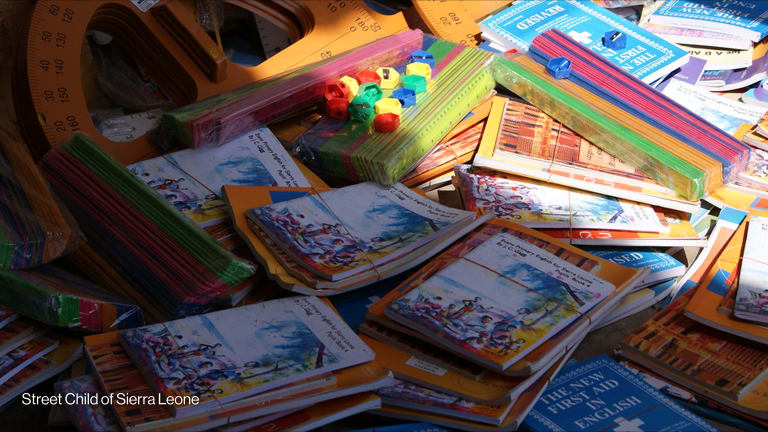
From 2018 to 2022, U.K.-funded programming administered through NGO Street Child of Sierra Leone, or SCoSL, brought more than 20,600 children into school — until it became a casualty of FCDO’s steep aid cuts.
“Britain has been the big donor in Sierra Leone,” says Street Child U.K. CEO Tom Dannatt, but from January 2026, SCoSL will receive zero FCDO funding. SCoSL Country Director Kelfa Kargbo expects to lose 65% of his budget and lay off up to 30% of staff, warning: “It will have a devastating effect on access to education. … We are now not able to reach the great number of remote communities that need our support.”
FCDO’s ODA spending in Sierra Leone has fallen by 46%, more than any other African country, and its own equality assessment warns of “adverse impacts on children.” Self-perpetuating income-generating schemes that are already set up may keep schools already in the program afloat, but as Dannatt put it, replacing the funding “backbone” will be next to impossible.
Read: How UK aid cuts are hammering education in Sierra Leone
Naming rights
Earlier this year, Trump declared the U.S. Institute of Peace — a congressionally funded nonprofit that works to resolve conflicts across the world — “unnecessary,” sparking a still-ongoing legal battle for the institute’s survival. Staff were fired, grants were cut, and USIP’s chief was led out of the building by D.C. police.
But on Wednesday, the president seems to have changed his approach: “Donald J. Trump” was slapped onto USIP’s headquarters building in Washington, D.C., a facelift that came one day before leaders from Rwanda and the Democratic Republic of Congo were set to meet at USIP to sign a peace deal.
“Renaming the USIP building adds insult to injury,” says George Foote, the legal counsel for former USIP leadership and staff, in a statement. “The rightful owners will ultimately prevail and will restore the U.S. Institute of Peace and the building to their statutory purposes.”
For months, USIP has been hollowed out by the Trump administration, with former employees telling Devex that staff was reduced from over 300 to just 10, all of whom now work through the State Department. In May, a federal judge ruled that the government’s actions were illegal, though that was later appealed to a higher court, and is now on hold pending a decision from another case against the administration.
In the meantime, the administration has moved ahead with making USIP its own — and setting Trump’s ambition to be seen as a global peacemaker, quite literally, into stone.
Background reading: Trump to scrap US African Development Foundation, US Institute of Peace
Life beyond missions
United Nations peacekeepers are the latest to feel the shock of the U.S. foreign aid cuts: Funding shortfalls mean the U.N. will eliminate around 25% of its 68,000-strong force — roughly 17,000 people. For professionals with such a niche skill set, the big question is what comes next.
U.N. peacekeeping chief Jean-Pierre Lacroix reminded the world what’s at stake: “Our peacekeepers, your peacekeepers, protect people — they make the difference between life and death for hundreds of thousands of civilians.” But with the budget for peacekeeping operations down 15% and cuts described by Lacroix as something for which “we have no other option,” thousands are now weighing their next move.
Experts say options range from rejoining national military or police forces to shifting into NGO work, emergency response, peace-tech, or even private-sector roles where skills such as crisis management and logistics are in high demand. Others may turn to community-based work, or simply take time out to recover from what many describe as emotionally taxing careers, writes Devex contributor Rebecca Root. As leadership coach Katarina Holm-DiDio says, “the uniform may change, or the organization may change, but the mission … keeps on going.”
Read: Career paths for UN peacekeepers (Career)
+ Funding shifts and program delays slowed career growth for many professionals this year. Feeling stuck is common, but it is not permanent. Progress is possible when you have the right guidance and visibility. From Nov. 26 to Dec. 5, get up to 75% off your Devex Career Account for just $4.17 per month — billed annually. Gain the career insights and expert resources you need to strengthen your applications and seize better opportunities before they’re gone. Sign up now.
Beating TB back
Nigeria’s tuberculosis program just pulled off something remarkable: Despite U.S. funding cuts, the country diagnosed more people with tuberculosis this year than in 2024 — and the secret weapon wasn’t money, it was data.
Armed with detailed, facility-level data, the team rapidly mapped the impact of USAID’s stop-work orders, shuffled resources, secured emergency government funding, and applied tools such as the maximum yield index to keep screening going in every state. It worked, Devex Senior Reporter Jenny Lei Ravelo writes. TB treatment coverage has climbed from 24% in 2018 to 79% in 2024, TB mortality is down 63%, and case notifications actually grew by 6% in early 2025.
“The people who come to Nigeria will tell you one thing: when you get to TB, you will see that they are on the driving seat when it has to do with their data,” says Dr. Obioma Chijioke-Akaniro, monitoring and evaluation manager at the National Tuberculosis, Leprosy and Buruli Ulcer Control Programme in Nigeria.
The cuts were a wake-up call for Nigeria, which has since secured $54 million in government funding and is piloting TB coverage under national health insurance. And Chijioke-Akaniro has one clear lesson for other countries: Build your own data system, “so that at any particular time, you would understand that if push comes to shove, I’m still in charge. I might be shaking, but I won’t have a collapse of the system,” she says.
Read more: How data helped Nigeria mitigate the impact of US cuts on TB (Pro)
+ Begin your 15-day free trial of Devex Pro and instantly access our comprehensive suite of resources: expert analysis, insider briefings, an extensive funding database, curated event listings, and more. Discover all the exclusive content available to Pro members here.
In other news
China will provide $100 million for humanitarian aid and reconstruction efforts in Gaza. [Reuters]
The leaders of the Democratic Republic of Congo and Rwanda are expected to sign a U.S.- and Qatar-brokered peace accord in Washington, D.C. [BBC]
Twenty-four former aid workers are set to stand trial in Lesbos on charges that human rights groups say unfairly criminalize humanitarian efforts to help migrants arriving in Greece. [The Guardian]
Sign up to Newswire for an inside look at the biggest stories in global development.
About the author

Helen Murphy
Helen is an award-winning journalist and Senior Editor at Devex, where she edits coverage on global development in the Americas. Based in Colombia, she previously covered war, politics, financial markets, and general news for Reuters, where she headed the bureau, and for Bloomberg in Colombia and Argentina, where she witnessed the financial meltdown. She started her career in London as a reporter for Euromoney Publications before moving to Hong Kong to work for a daily newspaper.
Search for articles



Most Read
- 1
- 2
- 3
- 4
- 5