
Exclusive: Inside US-UN plan to remake funding for humanitarian crises



In the waning days of last year, the United States pledged to give the United Nations $2 billion through 2026 to respond to the world’s most urgent humanitarian crises in some seventeen countries, including the Democratic Republic of the Congo, Haiti, Syria, and Sudan.
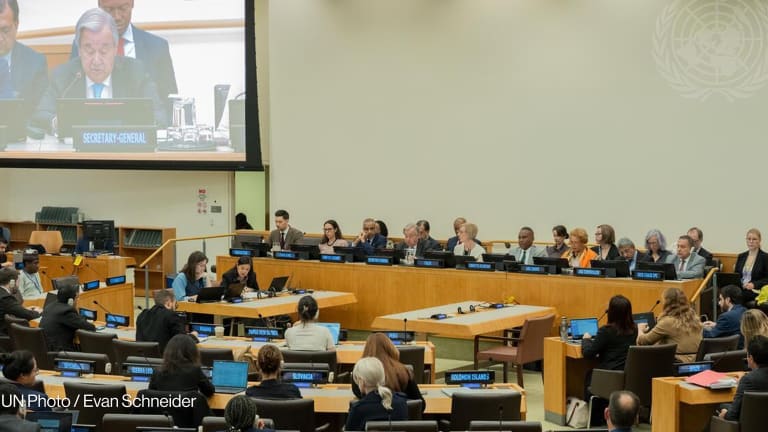
At the U.N., the new funding plan marked something of a shift in the institutional balance of power, placing management of U.S. funds in the hands of the U.N.’s emergency relief coordinator, Tom Fletcher, while empowering U.N. humanitarian coordinators in the field to determine how that money is spent.
The U.N.’s biggest and most powerful aid agencies, including the World Food Programme, UNICEF, and the UN Refugee Agency, will have to compete inside the U.N. bureaucracy for scarcer resources. Over time, the State Department envisions all U.S. funding of U.N. humanitarian work to be channeled through pooled funds managed by Fletcher’s office.
About the author

Colum Lynch
Colum Lynch is an award-winning reporter and Senior Global Reporter for Devex. He covers the intersection of development, diplomacy, and humanitarian relief at the United Nations and beyond. Prior to Devex, Colum reported on foreign policy and national security for Foreign Policy Magazine and the Washington Post. Colum was awarded the 2011 National Magazine Award for digital reporting for his blog Turtle Bay. He has also won an award for groundbreaking reporting on the U.N.’s failure to protect civilians in Darfur.
Search for articles



Most Read
- 1
- 2
- 3
- 4
- 5