Hot potato: How a new blight-resistant variety is boosting food security
As climate change drives a devastating plant disease into new regions, a new potato variety developed in Peru gives farmers an option that reduces losses and cuts costs.
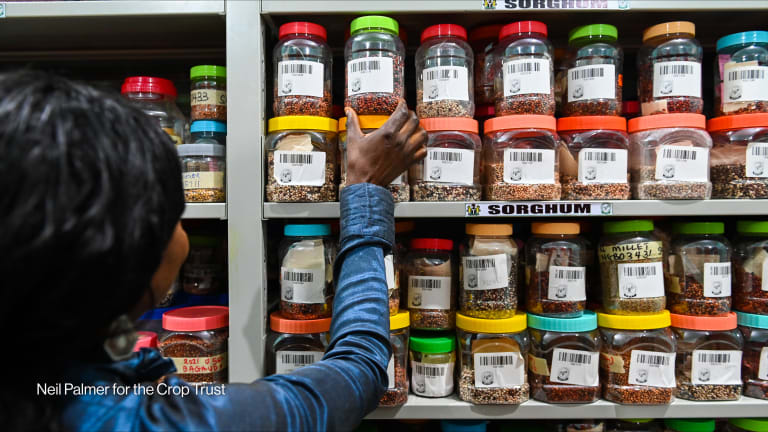
Scientists have developed a new disease-resistant potato variety, a breakthrough in combating a scourge that has cost farmers millions of dollars in losses around the world and is quickly spreading to new regions due to climate change. Developed by the Peru-based International Potato Center, CIP, with the help of Indigenous communities in the Andes mountains, scientists say the new variety is resistant to the plant disease known as late blight, which caused the Irish potato famine in the mid-1800s. Formally called CIP-Asiryq, the variety also requires fewer fungicide sprays and cooks faster than other varieties in Peru, which could save farmers money on input costs and save households on energy expenses for cooking. Potatoes are one of the world’s most important staple foods. They feed 1.3 billion people around the world and provide 17% of calories from food crops. Climate change is pushing late blight higher into the Andes. “Late blight has been a huge burden to potato farmers everywhere, so the development of a new resistant variety is a major step forward for food systems — in the Andes and beyond. CIP-Asiryq is also remarkable for its versatility,” said Thiago Mendes, CIP scientist and lead of the BOLD potato pre-breeding project, in a statement. The breakthrough is part of the Crop Wild Relatives project and its successor initiative, the Biodiversity for Opportunities, Livelihoods and Development, or BOLD, project which is led by the Crop Trust and funded by the government of Norway. The Crop Trust is a global nonprofit working to conserve crop diversity and safeguard global food and nutrition security by financially supporting the world’s gene banks. Gene banks are reservoirs that store seeds and other genetic materials that scientists can turn to for battling biodiversity loss, or for developing plant varieties resilient to threats such as climate change shocks. The Crop Trust has invested more than $2 million in potato pre-breeding research since 2013, which has led to the development of CIP-Asiryq and another late blight-resistant potato variety. In the case of CIP-Asiryq, traits resistant to late blight disease were harvested from wild potato varieties and incorporated into cultivated varieties. Although developed in Peru, the breeding design can be replicated elsewhere in the world under the International Treaty for Plant Genetic Resources for Food and Agriculture. The treaty promotes conservation, sustainable use and fair sharing of benefits from plant genetic resources for food and agriculture. In East Africa, a variety suited for the region’s highlands is under development through the BOLD project. Climate extremes are disrupting agricultural production worldwide, leading to declining yields and a surge in pests and diseases. Meanwhile, around 700 million people are food-insecure, according to the U.N. Food and Agriculture Organization. Climate change “is not a distant threat — it’s happening now. If we fail to act, the outlook is stark: in some regions, rain-fed agriculture could become impossible; in others, land will no longer be suitable for food production,” said Kaveh Zahedi, FAO director for climate change, biodiversity and environment, in a statement ahead of the 30th United Nations Climate Change Conference, or COP30. Softening these climate shocks requires innovation. CIP-Asiryq might be doing just that because it gives farmers the certainty of a harvest despite the intensity of climate extremes, according to Mike Kiambi, a researcher at Kenya-based Agricultural Development Corporation, a state agency. In his home region in Kenya, he has seen late blight devastate farmers by wiping out entire potato crops. For instance, during the rainy season when the disease invades, potato productivity declines to a level where a farmer can harvest 700 kilograms per acre instead of the average 10 tonnes per season. In neighboring Uganda, the disease can destroy as much as 60% to 100% of the crop, affecting some 300,000 smallholder farmers who depend on potato growing. In Peru — origin of the potato and home to nearly 4,000 native potato varieties — the disease can slash crop yields by 50% to 100%, according to the Crop Trust. “With this variety you are assured of high productivity despite the harsh environmental conditions that you are facing. And now you are sure food and nutritional security will be achieved,” said Kiambi. Demand for fast foods is widespread all over the world, and studies value the global potato processing market at $40.97 billion in 2023. It is projected to reach $60.08 billion by 2031. But it can also be processed into ready-to-use products, resulting in more money for farmers, according to Raul Ccanto, coordinator of the agrobiodiversity area of the Yanapai Group, a Peru-based NGO that works with smallholder farmers and was involved in the new variety’s development. The variety is said to cook faster than some local varieties in Africa and South America. This can encourage the use of clean cooking technologies in countries where the use of traditional fuel sources has led to deforestation and land degradation. “By it cooking faster it means you are more likely to use clean energy instead of firewood and charcoal compared to other varieties that will take longer to cook,” said Kiambi. Potato farming is a fragile affair that requires intense use of expensive agrochemicals which can represent 10 to 25% of the value of farmers’ potato harvests. But the new potato variety requires less spraying, saving farmers fungicide costs, which CIP experts estimate at about $3 billion to $10 billion every year globally. In Kenya, farmers can spend up to KES 30,000 ($231) per acre, despite repeated low returns, said Kiambi. “When you have blight resistant potato you are assuring that farmers can do organic farming,” he said. “Farmers’ health is also assured because they will have minimum exposure to chemicals.”
Scientists have developed a new disease-resistant potato variety, a breakthrough in combating a scourge that has cost farmers millions of dollars in losses around the world and is quickly spreading to new regions due to climate change.
Developed by the Peru-based International Potato Center, CIP, with the help of Indigenous communities in the Andes mountains, scientists say the new variety is resistant to the plant disease known as late blight, which caused the Irish potato famine in the mid-1800s. Formally called CIP-Asiryq, the variety also requires fewer fungicide sprays and cooks faster than other varieties in Peru, which could save farmers money on input costs and save households on energy expenses for cooking.
Potatoes are one of the world’s most important staple foods. They feed 1.3 billion people around the world and provide 17% of calories from food crops. Climate change is pushing late blight higher into the Andes.
This article is free to read - just register or sign in
Access news, newsletters, events and more.
Join usSign inPrinting articles to share with others is a breach of our terms and conditions and copyright policy. Please use the sharing options on the left side of the article. Devex Pro members may share up to 10 articles per month using the Pro share tool ( ).
David Njagi is a Kenya-based Devex Contributing Reporter with over 12 years’ experience in the field of journalism. He graduated from the Technical University of Kenya with a diploma in journalism and public relations. He has reported for local and international media outlets, such as the BBC Future Planet, Reuters AlertNet, allAfrica.com, Inter Press Service, Science and Development Network, Mongabay Reporting Network, and Women’s Media Center.