How ringing for a pizza helps save a life in Zimbabwe
In 2018, the Zimbabwe government introduced a health levy under which 5% on every dollar purchase of airtime and mobile data is being used to provide free blood through public health institutions.
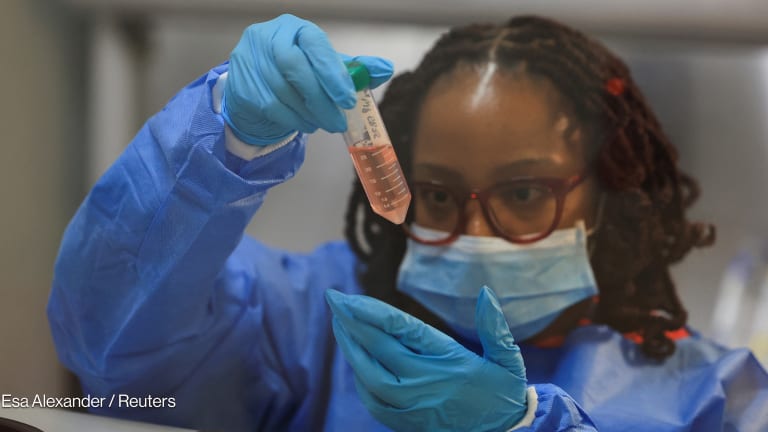
Mclaine Manyepa, an 11-year-old Zimbabwean boy, was diagnosed with sickle cell anemia — a disease that causes a shortage of healthy red blood cells — when he was six. At one stage the condition required him to undergo several blood transfusions a week. This cost his family up to $145 per 450-milliliter pint of blood in a country where 73% of the population earns less than $100 a month. It was too heavy a burden for his parents to bear but fortunately for them, his diagnosis was soon followed by a government initiative to provide free blood at all public health centers countrywide. “It is important to me as it is assisting me to beat financial constraints,” said his father, Graduate Manyepa, a teacher who earns $350 monthly. “I believe without this initiative, by now l would have lost my son.” In 2018 the government introduced a health levy under which 5% on every dollar purchase of airtime and mobile data is being used to provide free blood to vulnerable people like Mclaine through public health institutions. Some of the money raised under the "Talk-Surf and Save a Life" initiative is also being used to buy drugs and equipment for public health centers. Manyepa told Devex that he and his wife, Susan, would have struggled financially, as they had to travel 156 kilometers from their home to take their son for his weekly transfusion at Parirenyatwa Hospital, in Harare, the national capital which added to their expenses. After treatment anchored by the free blood that Mclaine routinely receives, his condition has improved and he has been traveling once or twice a month to get his mandatory transfusion. A 2015 research paper established that the total cost of producing safe blood in Zimbabwe for the year 2013 was $8.6 million. The cost includes the collection of blood, its processing, quality control, and storage. Through the “Talk-Surf and Save a Life” initiative, the government now bears the full cost of the production of blood which is made available to all patients who need it and are admitted to government and council facilities. Private health centers and patients admitted to private wards at public facilities have to buy blood from the Zimbabwe National Blood Service, or NBSZ, at the full price. Approximately 100,000 packs of blood are transfused in Zimbabwe yearly, according to K4D, a British research group. NBSZ needs to collect 450 whole blood units daily in a five-day working week to satisfy the transfusion needs of the country’s 15.2 million people. It collects blood free of charge from voluntary donors. Hemorrhaging pregnant people need 40% of the total while road traffic accidents and anemic patients such as Mclaine use 60% of the stock. Jasper Chimedza, the permanent secretary in the Ministry of Health and Child Care, told Devex the initiative has been successful and the “continued provision of quality and affordable health care services in our hospitals” is evidence of that. His ministry is seeking full control of the levy from the treasury, which in its 2021 national budget said it collected Z$115 million (about $319,000) in 2018. It projects that it will collect Z$13.9 billion this year. The World Health Organization representative to Zimbabwe, Jean-Marie Dangou, praised the government initiative but expressed concern over the high cost of the product at private health institutions. He said the government subsidy has improved access despite the high costs of the inputs to get the blood units available for the patients. But the cost of accessing the product in the private sector still averages well over the African average of $42 per unit. Dangou estimated the price of a pint of blood in Zimbabwe’s private sector at $120 and above. In countries like Rwanda and Uganda, blood is provided for free, while in Ghana patients pay a processing fee of between $11 and $45 per unit. WHO is supporting Zimbabwe in strengthening national blood systems to ensure timely access to safe and sufficient supplies of blood and blood products and good transfusion practices. It also helps develop and implement guidelines that promote the appropriate clinical use of blood and blood products, ensuring the treatment of specific conditions that can lead to significant morbidity or mortality if not prevented or managed effectively by other means. NBSZ chief executive officer, Lucy Marowa, added that the scheme has been generally positive, as more patients are being served. Blood collections rose by 29% in the first two years of the initiative but later dropped by the same margin due to the COVID-19 outbreak, according to Marowa. The volatile economic environment in the country sometimes slows down the settling of invoices for the product. While the initiative has been helpful, Marowa said the government should expedite the processing of invoices and consider more contributions from national health insurance, motor insurance and United Nations agencies. Dangou urged the government to consolidate the free blood initiative by fulfilling its commitment to provide a 100% subsidy to NBSZ in a timely manner. “Any delay in availing this will force NBSZ to adopt and implement a cost recovery pricing system that makes product charges escalate massively,” he warned. “There is need to address these challenges to ensure sustainable access to safe and quality-assured blood and blood products for needy patients. Through our collaborative efforts, there is need to raise adequate and sustainable funding and increase blood donation rates,” he said.
Mclaine Manyepa, an 11-year-old Zimbabwean boy, was diagnosed with sickle cell anemia — a disease that causes a shortage of healthy red blood cells — when he was six.
At one stage the condition required him to undergo several blood transfusions a week. This cost his family up to $145 per 450-milliliter pint of blood in a country where 73% of the population earns less than $100 a month.
It was too heavy a burden for his parents to bear but fortunately for them, his diagnosis was soon followed by a government initiative to provide free blood at all public health centers countrywide.
This article is free to read - just register or sign in
Access news, newsletters, events and more.
Join usSign inPrinting articles to share with others is a breach of our terms and conditions and copyright policy. Please use the sharing options on the left side of the article. Devex Pro members may share up to 10 articles per month using the Pro share tool ( ).
Daisy Jeremani is an award-winning freelance journalist based in Bulawayo, Zimbabwe. She worked for The Chronicle, one of the leading local dailies for 15 years and has been freelancing for local and international outlets for the past seven. Her work has appeared in Al Jazeera Impact, Railway Gazette International, Tobacco Reporter, Poultry Site, Cigar Journal, and Topia Magazine among others.