

Hurricane Melissa tests a US disaster system without USAID
As communities across the Caribbean reel from the damage, aid organizations face a real-world test of U.S. disaster response without the agency that once led relief efforts.
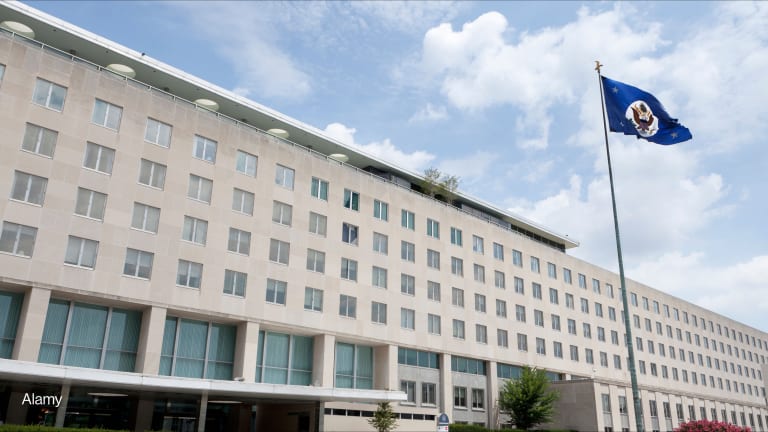
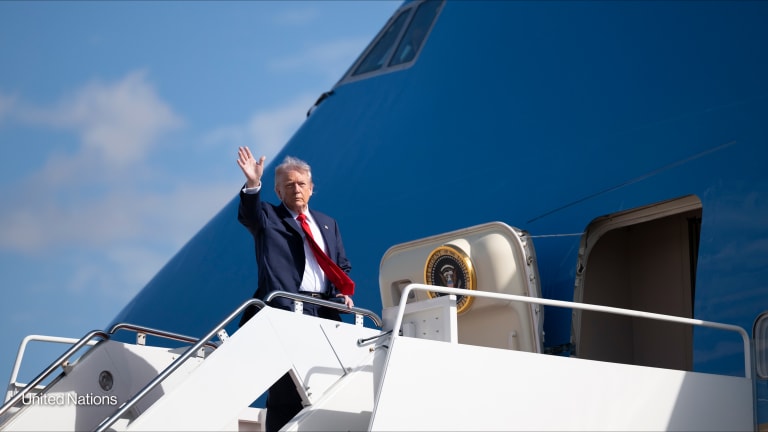
By Elissa Miolene // 31 October 2025Torn-apart homes in Jamaica, with frames nearly swallowed by murky mud. Families wading through floodwater in Haiti, their belongings in plastic bags. Hospitals lying shattered in Cuba, glass littering the floors and ceilings split open. These were some of the first images emerging in the wake of Hurricane Melissa, which tore through the Caribbean earlier this week. About 77% of Jamaica remains without power, while 50 people in Haiti, the Dominican Republic, and Jamaica are reported dead as of this publication. And as organizations race to support affected communities, they’re doing so largely without what was once the biggest player in the game: the U.S. Agency for International Development. “When we had an earthquake in Myanmar, China was able to fill a lot of those gaps that USAID would have been more of a lead on,” said Rebecca Wolfe, the executive director of international policy and development at the University of Chicago. “There aren’t players in our backyard who can play that role as easily in the Western Hemisphere.” With Washington retooling how it responds to crises, many feel the storm will offer an early test of whether new systems can fill the void left by the agency that once led America’s international disaster response. For some, there’s a feeling of optimism: The State Department deployed disaster assistance response teams on Thursday morning, flew in search-and-rescue groups the same day, and is working with local responders on the ground. But for others, there’s a sense of wariness, and a feeling — as stated by one former State Department official — that “we’re not coming close to what we should be doing.” By late March, the Trump administration canceled 73% of USAID programs in Jamaica and half of those in Haiti, according to an early analysis from the D.C.-based Center for Global Development. And today, only a few hundred staff members have migrated from USAID to the U.S. Department of State. “It’s not like the car was there with the engine idling,” said Jeremy Konyndyk, the president of Refugees International and a former senior official at USAID. “The car is there, but it has to get the tires put back on. It’s not ready to hit the ground running in the way that would have been the case a year ago, because these agencies have just been so degraded by these widespread budget cuts.” A storm — and a stress test The State Department announced it had deployed regional disaster assistance response teams — commonly referred to as DARTs — on Wednesday. Those DARTs, the State Department said, lead the U.S. government’s humanitarian response to the hurricane and are aimed at assisting those in Jamaica, Haiti, the Bahamas, and Cuba. The State Department also mobilized urban search-and-rescue teams made up of American firefighters and other responders, with the agency posting images of a team from Virginia’s Fairfax County climbing into an airplane the following day. Soon after, the State Department retweeted the County of Los Angeles’ Fire Department, which stated their 35-person team had been mobilized, too. Those teams landed in the region on Thursday afternoon, according to several sources familiar with the operation. “The United States is in close contact with the governments of Jamaica, Haiti, Dominican Republic, and The Bahamas as they confront the devastating impacts of Hurricane Melissa,” tweeted Secretary of State Marco Rubio on Wednesday. “We have rescue and response teams heading to affected areas along with critical lifesaving supplies.” One day later, Rubio tweeted that the government is “prepared to offer immediate humanitarian aid” to Cubans affected by Hurricane Melissa, and that the U.S. will do so “directly and via local partners who can most effectively deliver it to those in need.” But typically, USAID would have deployed DART teams before a hurricane made landfall, explained Konyndyk and two other former senior USAID and State Department officials. Hurricane preparedness planning would also have begun as early as May or June, a former senior USAID official explained, solidifying linkages between USAID, the State Department, the Department of Defense, and other domestic agencies well before hurricane season began. Based on messaging from the State Department, it doesn’t seem like that was done this time around, though the agency did not respond to a request for information for this story. Instead, the agency directed Devex toward a previously published statement that outlined the information above. “We were deploying a DART, but we were also deploying a DART in partnership with and in support of pretty robust USAID missions in those countries, too. There was a lot of U.S. capacity and a lot of U.S. presence that would pre-exist the storm,” Konyndyk said. “So right there, the U.S. is starting off from a much weaker position than it has done in the past.” Signs of hope Still, others are more encouraged by the agency’s response in the Caribbean so far, which is also slated to include the Department of Defense. While the former State Department official — who has years of experience in the region — said they felt frustrated by the delays in getting a DART to Jamaica, they also noted that the team is made up of experienced responders, including those who were once employed by USAID’s Bureau of Humanitarian Assistance. They and another former senior USAID official were also encouraged by the fact that the U.S. government’s regional disaster assistance program, or RDAP, in Latin America and the Caribbean was saved from the U.S. aid cull — a move that preserved a roster of in-country expertise across the region. Arlan Fuller, the director of emergency preparedness and response at the D.C.-based nonprofit Project Hope, said his team has been communicating with the State Department from the beginning. The DARTs, Fuller was told, would be the U.S. government’s starting point. He was hopeful about the level of support emerging from the U.S. government, adding that both the White House and President Donald Trump have emphasized the government would be responding to humanitarian needs in the region. “This is our first bite at the apple to see how this is all going to be put into play for a hurricane like this, with the new status quo,” said Fuller. “I think we’ll deal with this on a case-by-case basis, but so far, all things are pointing in a promising and encouraging direction.” The on-the-ground response Either way, the State Department isn’t the only organization responding in the region. Over the last several days, nonprofits have flocked to Jamaica’s ravaged shores, taking the lead from the Jamaican government on how to best offer support. Project Hope has deployed a small team in Jamaica: One staff member was already living in the country, Fuller said, and three more joined on Thursday morning. Additional staff will arrive in Jamaica in the coming days and weeks, he added, and the organization will also be responding to the hurricane’s impacts in Haiti and the Dominican Republic, where a large Project Hope team is already based. “In the first few days, it’s all about supplies — and it’s focused on what we can be doing in terms of hygiene kits, basic essentials, items for people who were out of their homes, and medicines,” said Fuller, who added that Project Hope is trying to source resources both within Jamaica and outside of it. “With the Kingston airport now open, we’re trying to get those supplies in as fast as we can.” Airlink, which works with aviation and logistics partners to transport relief workers and supplies, is working on the other side of that equation. On Saturday, the D.C.-based nonprofit pre-positioned relief resources in advance of the storm, including experts in water, sanitation, and hygiene. In the days since, it has coordinated with 16 organizations to get supplies and staff where they were needed most. Those on the Project Hope team were some of the first responders Airlink sent via American Airlines on Thursday, and arrived on one of two planes that landed in Jamaica when the Kingston airport reopened. “By providing them with free or low-cost transportation, we free up funding for them to either purchase more aid or to do the follow-on investment in rebuilding, recovery, and rebuilding that’s going to be needed,” said Paloma Adams-Allen, the president and chief executive officer of Airlink. “And through our partnerships, especially with airlines and freight carriers, we help them rapidly deploy the who is needed, the responders, and the what is needed, the kind of aid.” Airlink has been able to retain its State Department funding, which, for Adams-Allen, meant that nothing had really changed in the organization’s response to this disaster. The only difference, she mentioned, was that they are getting more requests from nonprofits wanting Airlink to help move their aid, and getting those requests earlier than they had in years past. Adams-Allen, who served as USAID’s chief operating officer from 2021 to 2024, stressed that there wasn’t a clear delineation between the collapse of USAID and the uptick of demand for Airlink’s services, and said the organization hadn’t unpacked whether that was due to reduced funding across the sector or other factors. “The aid landscape may have changed in terms of significantly reduced funding for development and for resilience and for disaster response,” said Adams-Allen. “But in my mind, that makes Airlink’s model even more essential.” The way forward Still, responding to the immediate aftermath of Hurricane Melissa is just the beginning. While as of Thursday night, around 50 people had died as a result of the storm, research from Stanford University has found hurricanes can cause higher death rates for up to 15 years after a storm takes place — the result of long-term damage to infrastructure, loss of medications and health care, and the spread of water-borne and mosquito-borne diseases that proliferate after a disaster. “The acute phase — the day of the hurricane — you’re going to have casualties related to flying debris and flooding and storm surge, and that’s definitely going to take its toll,” said Fuller. “But a huge percentage of fatalities happen the days after the hurricane.” Project Hope — as a health-focused organization — will be focusing on how to help rebuild the infrastructure within the affected countries’ health systems, and work with other organizations to provide surge support, such as mobile clinics or other health services, for vulnerable groups. That includes communities whose hospitals were damaged or who can’t access clinics due to downed trees or landslides, along with people dealing with chronic conditions who might be struggling to access the medication they need. Airlink has plotted out its second phase, too: Getting nutritious food to those who need it most. Adams-Allen said that even in the areas of the island least hit by the storm, mangoes, bananas, and coconuts were ripped from Jamaica’s trees, highlighting just one example of how local food production will be affected in the months to come. “The need in Jamaica is going to be enormous, and I think that even if the White House comes through with a promise of providing aid, I don’t know if it will be at the same size and scale that they’ve done for past disasters,” said Fuller. “There are giant X factors, and we just have to wait and see what the reality is going to be.”
Torn-apart homes in Jamaica, with frames nearly swallowed by murky mud. Families wading through floodwater in Haiti, their belongings in plastic bags. Hospitals lying shattered in Cuba, glass littering the floors and ceilings split open.
These were some of the first images emerging in the wake of Hurricane Melissa, which tore through the Caribbean earlier this week.
About 77% of Jamaica remains without power, while 50 people in Haiti, the Dominican Republic, and Jamaica are reported dead as of this publication. And as organizations race to support affected communities, they’re doing so largely without what was once the biggest player in the game: the U.S. Agency for International Development.
This article is free to read - just register or sign in
Access news, newsletters, events and more.
Join usSign inPrinting articles to share with others is a breach of our terms and conditions and copyright policy. Please use the sharing options on the left side of the article. Devex Pro members may share up to 10 articles per month using the Pro share tool ( ).
Elissa Miolene reports on USAID and the U.S. government at Devex. She previously covered education at The San Jose Mercury News, and has written for outlets like The Wall Street Journal, San Francisco Chronicle, Washingtonian magazine, among others. Before shifting to journalism, Elissa led communications for humanitarian agencies in the United States, East Africa, and South Asia.