Opinion: How gene banks act as guardians against climate uncertainty
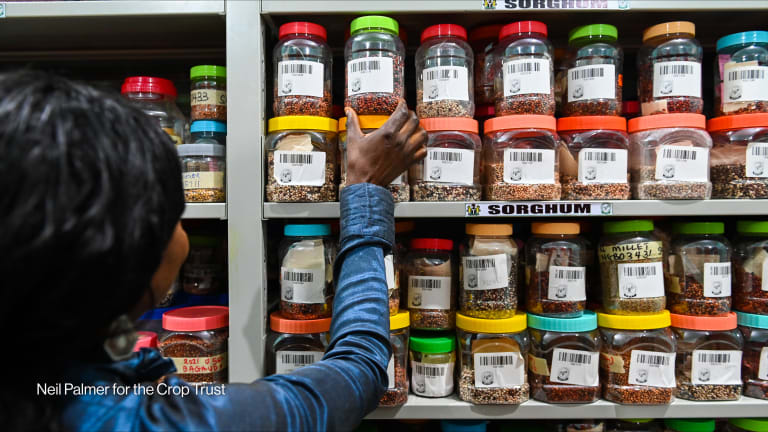
By preserving crop diversity, gene banks provide farmers, breeders, and researchers access to valuable genetic resources to adapt agriculture and ensure future food security.
By Geoffrey Hawtin OBE, Stefan Schmitz // 11 June 2024Biodiversity loss, climate change, and food insecurity are daunting, interconnected challenges that can seem insurmountable. As record-breaking temperatures persist and climate change escalates, the myriad solutions proposed often appear overly complex and expensive. Yet there is a deceptively simple but powerful solution that addresses all these problems: seeds. Seeds contain the genes that make wheat different from mango, wild potatoes different from cultivated ones, and plum-shaped San Marzano tomatoes different from beefsteak-shaped Brandywine. They encapsulate crop diversity. With an eye to the future, we can use crop diversity to adapt agriculture to meet the challenges of the climate crisis and prevent a doomsday future. Crop diversity provides a menu of options, allowing farmers to switch to more drought-resistant crops, to feed cows fodder that causes them to emit less methane, and adopt more sustainable practices. It allows plant breeders to come up with modern varieties, and researchers to study how they work. Seeds are fairly easy and relatively cheap to conserve for long periods. But you do have to take care of them. You need to dry them properly and keep them at low temperatures. You have to test them and grow them out regularly and describe the sort of plants they grow into. Thankfully, there are facilities all over the world that do all this. They’re called gene banks. And they are key to helping agriculture adapt to climate change. Gene banks — facilities that store seeds under optimal conditions — enable researchers, breeders, and farmers to access the diversity they need when they need it. They can breed new varieties, or perhaps return to communities heirloom varieties they once lost but which now perfectly match the climatic conditions. For example, plant breeders created CIP-Matilde, a late blight-resistant potato variety, by combining the disease-resistant traits of potato wild relatives with the tasty, high-yielding qualities of domesticated potatoes. Climate experts also make clear that adaptation must be combined with reduced emissions to mitigate the impacts of climate change. Agriculture can play a part here, too. Take alfalfa, a crop that has been fed to horses, cows, and other animals since ancient times. As with the potato, plant breeders found wild species of alfalfa that are adapted to a range of unfavorable environments, and used hem to develop new alfalfa varieties that not only survive through extremes including drought, but grow well, all the while helping to save water, add nitrogen to the soil, and provide nutrients to livestock. Gene banks themselves aren’t immune to shocks. As the climate changes, natural hazards will only increase in frequency and intensity, augmenting the exposure of gene banks and other infrastructure. Gene banks located in Asia-Pacific, South America, and Europe are most at risk from extreme weather events such as flash floods, storms, hail, or wildfires. Gene banks in Africa tend to face more political instability. We can’t put all of our eggs in one basket and we need to explore a variety of insurance options. The best insurance option for gene banks is the Svalbard Global Seed Vault. All gene banks need to duplicate their collections there to be on the safe side. Seeds in gene banks don’t just have value for immediate use, as with the potato and alfalfa examples — they also have what is referred to as option value. While the tangible benefits of crop improvement are evident, the option value lies in retaining potentially valuable genes and traits for use in the future — perhaps long into the future. This genetic diversity reservoir protects against unforeseen challenges, safeguarding our agriculture forever. Although we rely on just six crops — rice, wheat, maize, potato, soybeans, and sugarcane — for 75% of our total plant-derived energy intake globally, there are many, many more. Many of them lack consumer demand, are underused by farmers, and are neglected by researchers. Yet some of these crops, now often branded “opportunity crops,” have the potential to contribute substantially to future food production in a rapidly changing world. For example, a creamy curry accompanied by delicate basmati rice likely comes to mind when one thinks about rice. Not many are aware that the familiar Asian rice has a not-so-distant cousin, African rice, which is more nutritious and resilient in the face of climate change, but not nearly as widely grown. A gene bank in a research institute called AfricaRice in Bouaké, Côte d’Ivoire, maintains the largest collection of African rice varieties in the world and makes them available to all. Farmers in West Africa created and maintained this bountiful diversity centuries before the Asian rice species was introduced. Today, it is a treasure trove of genes to adapt rice cultivation to the challenges of tomorrow. Ensuring that gene banks such as that of AfricaRice get the vital support and resources they need to continue their work will guarantee the future of our food as the climate continues to change. An investment in crop diversity underlines a nation’s dedication to putting its money where its mouth is when it comes to innovation in agriculture — and food in the mouths of coming generations.
Biodiversity loss, climate change, and food insecurity are daunting, interconnected challenges that can seem insurmountable. As record-breaking temperatures persist and climate change escalates, the myriad solutions proposed often appear overly complex and expensive. Yet there is a deceptively simple but powerful solution that addresses all these problems: seeds.
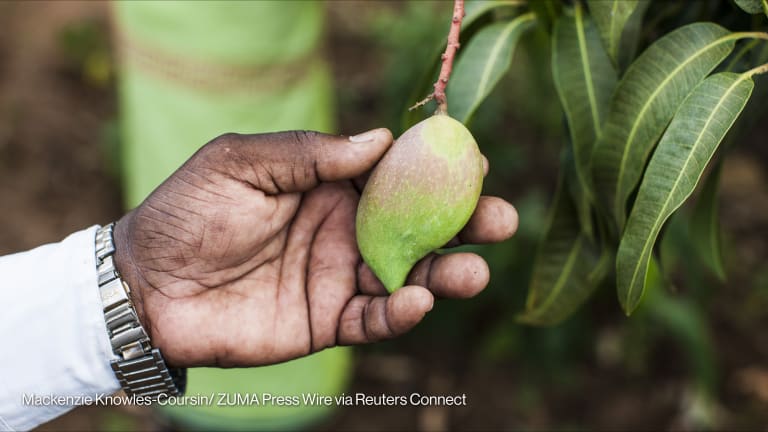
Seeds contain the genes that make wheat different from mango, wild potatoes different from cultivated ones, and plum-shaped San Marzano tomatoes different from beefsteak-shaped Brandywine. They encapsulate crop diversity.
With an eye to the future, we can use crop diversity to adapt agriculture to meet the challenges of the climate crisis and prevent a doomsday future. Crop diversity provides a menu of options, allowing farmers to switch to more drought-resistant crops, to feed cows fodder that causes them to emit less methane, and adopt more sustainable practices. It allows plant breeders to come up with modern varieties, and researchers to study how they work.
This article is free to read - just register or sign in
Access news, newsletters, events and more.
Join usSign inPrinting articles to share with others is a breach of our terms and conditions and copyright policy. Please use the sharing options on the left side of the article. Devex Pro members may share up to 10 articles per month using the Pro share tool ( ).
The views in this opinion piece do not necessarily reflect Devex's editorial views.
Geoffrey Hawtin OBE is an agricultural scientist and manager with extensive experience in agrobiodiversity, plant genetic resources, plant breeding, and research management. He currently serves on the executive board of the Crop Trust. Alongside Cary Fowler, he is the 2024 World Food Prize laureate.

Stefan Schmitz has led the Crop Trust as executive director since 2020. Previously, he directed BMZ’s “One World – No Hunger” initiative and chaired the Steering Committee of the Global Agriculture and Food Security Program. With a background in food security, rural development, and international cooperation, he holds a doctorate in geosciences from the Free University of Berlin.