• News
    • Latest news
    • News search
    • Health
    • Finance
    • Food
    • Career news
    • Content series
    • Focus areas
    • Try Devex Pro
  • Jobs
    • Job search
    • Post a job
    • Employer search
    • CV Writing
    • Upcoming career events
    • Try Career Account
  • Funding
    • Funding search
    • Funding news
  • Talent
    • Candidate search
    • Devex Talent Solutions
  • Events
    • Upcoming and past events
    • Partner on an event
  • Post a job
  • About
      • About us
      • Membership
      • Newsletters
      • Advertising partnerships
      • Devex Talent Solutions
      • Contact us
Join DevexSign in
Join DevexSign in

News

  • Latest news
  • News search
  • Health
  • Finance
  • Food
  • Career news
  • Content series
  • Focus areas
  • Try Devex Pro

Jobs

  • Job search
  • Post a job
  • Employer search
  • CV Writing
  • Upcoming career events
  • Try Career Account

Funding

  • Funding search
  • Funding news

Talent

  • Candidate search
  • Devex Talent Solutions

Events

  • Upcoming and past events
  • Partner on an event
Post a job

About

  • About us
  • Membership
  • Newsletters
  • Advertising partnerships
  • Devex Talent Solutions
  • Contact us
  • My Devex
  • Update my profile % complete
  • Account & privacy settings
  • My saved jobs
  • Manage newsletters
  • Support
  • Sign out
Latest newsNews searchHealthFinanceFoodCareer newsContent seriesFocus areasTry Devex Pro
    • Opinion
    • Energy

    Opinion: Renewable energy needs accountability to end green colonialism

    Green energy-related production in low-income contexts should not just serve the clean energy needs of the wealthy and powerful.

    By Michael Jarvis, Justin Sylvester // 28 March 2023
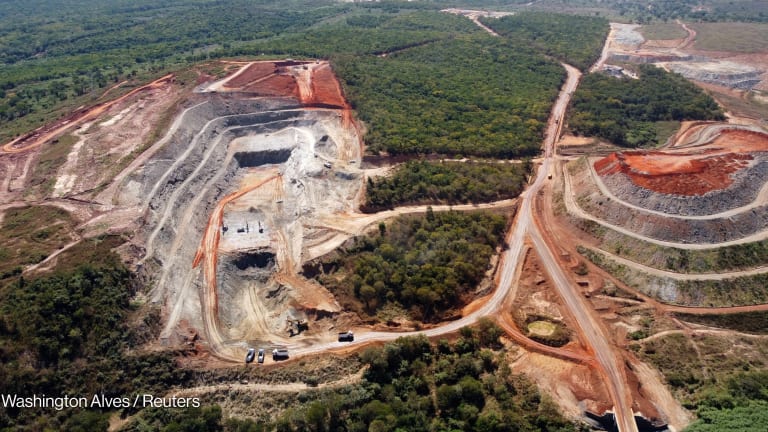
    It might seem odd to hear Greta Thunberg, champion of climate action, protest against a wind farm, but that is what recently happened in Oslo. Thunberg is just the latest to protest against “green colonialism” — environmentally friendly projects that usurp the rights of Indigenous, traditional, afro-descendants, and other local peoples. There is not yet sufficient attention to assure that communities surrounding renewable energy projects, as well as societies as a whole, see benefits from those investments, including access to the electricity generated. Achieving net zero should not come at the expense of the rights and well-being of poorer, rural communities. Governance challenges threatening to undermine sustainable energy shifts include contestation of land rights, arguments over benefit sharing, and disputes over community consent. We need greater accountability for green energy, and the good news is that there are practical steps that can be taken immediately. We also need a bigger rethink on how we can better address all dimensions of justice during this transition. In the rush to scale renewable energy capacity around the globe, there is an inherent tension between speed, rights, and assured benefits. In the United States, there are live complaints about the delays in securing permissions for renewables projects. But in country contexts as varied as Colombia, Tunisia, and Malaysia, we are seeing the opposite: land grabs, Indigenous populations excluded from their territory, corruption, and significant rent-seeking around wind and solar projects. The international community has woken up to risks around the supply of green minerals that are vital for the manufacture of wind turbines, solar panels, energy storage capacity, and new transmission infrastructures, but those concerns are as much fueled by national security concerns and great power competition as by development motivations. We should not repeat the extractive model for development that we have seen play out in high-carbon industries over the past century. Green energy-related production in low-income contexts should not just serve the clean energy needs of the wealthy and powerful. There are positive lessons from other sectors that can be applied as a starting point to avoid further green colonialism. The challenge is to find the political will and resources to take action. Where is Norway’s equivalent of its Oil for Development program for renewables? Where is the relevant multilateral development bank technical assistance or International Finance Corporation-specific guidance to match that on other sectors such as mining? Where is the pooled fund on governance of the energy transition to match the number of funds emerging for climate justice such as the Climate Justice Resilience Fund? Here are the initial five steps that development groups can take to strengthen accountability in the renewables sector: 1. Partner with governments, industry, and civil society groups to better understand the political economy behind green energy development and bring a systemic lens to sector development. This would mean looking explicitly at the distributional effects of different paths toward decarbonizing energy systems and identifying winners and losers for these different pathways. Understanding the political economy will clarify the ways in which renewable energy investments drive changes that are both just and unjust. 2. Support the development of updated policy guidance for the design and implementation of renewables projects, including elements such as permitting, revenue sharing, shared land use, energy access, decommissioning, and back policy with sufficient investment in regulatory capacity at the national and subnational level to assure that rules are followed. 3. Strengthen support for local communities to understand and defend their rights and to secure benefits from renewable investments. We can build network infrastructure within civil society to provide solidarity, share tactics, and align accountability demands across the countries where green energy firms operate and are headquartered. A campaign to demand a fair share of extractive industries' revenues took off in the 2000s. Now, Publish What You Pay is a coalition of over a thousand member organizations in over 50 countries. An equivalent network to influence renewable investments for the public good could be a game-changer. Efforts to expand the remit of the Extractive Industries Transparency Initiative to cover renewables could galvanize such a network. 4. Clarify and promote good practices for the industry, such as committing to the framework of free and prior informed consent for any new projects. In high-income markets, such as Australia, energy companies are tapping the expertise of community engagement experts from the mining sector. We need such expertise deployed around the globe. We need greater peer pressure to uphold good practices, as the International Council of Mining and Metals encourages within the mining sector. Why not look to create the equivalent for green energy producers? 5. Increase investor awareness and strengthen checks to minimize environmental, social, and governance risks, building on hard-won experience with other large land-use investments, such as mining and agribusiness. Investors, too, have a responsibility to assure that the burden of costs does not fall on local communities Taking these steps can help address some of the immediate risks in scaling renewable energy production. But, in parallel, let us expand the conversation — and our imaginations — on what a truly just transition can and should look like.

    Related Stories

    The African continent is being forced into an energy paradox
    The African continent is being forced into an energy paradox
    Opinion: From fossil fuels to clean energy — the future of port cities
    Opinion: From fossil fuels to clean energy — the future of port cities
    As COP30 debates just energy transition, Brazil’s lithium towns suffer
    As COP30 debates just energy transition, Brazil’s lithium towns suffer
    Beyond emissions: Rewiring development in the new energy era
    Beyond emissions: Rewiring development in the new energy era

    It might seem odd to hear Greta Thunberg, champion of climate action, protest against a wind farm, but that is what recently happened in Oslo. Thunberg is just the latest to protest against “green colonialism” — environmentally friendly projects that usurp the rights of Indigenous, traditional, afro-descendants, and other local peoples. 

    There is not yet sufficient attention to assure that communities surrounding renewable energy projects, as well as societies as a whole, see benefits from those investments, including access to the electricity generated. Achieving net zero should not come at the expense of the rights and well-being of poorer, rural communities.

    Governance challenges threatening to undermine sustainable energy shifts include contestation of land rights, arguments over benefit sharing, and disputes over community consent. We need greater accountability for green energy, and the good news is that there are practical steps that can be taken immediately. We also need a bigger rethink on how we can better address all dimensions of justice during this transition.

    This article is free to read - just register or sign in

    Access news, newsletters, events and more.

    Join usSign in

    Read more:

    ► Asian Development Bank aims to counter risk of just energy transitions (Pro)

    ► African leaders present unified position on a just energy transition (Pro)

    ► Opinion: Green energy investors, look to the global south

    • Environment & Natural Resources
    • Trade & Policy
    • Energy
    Printing articles to share with others is a breach of our terms and conditions and copyright policy. Please use the sharing options on the left side of the article. Devex Pro members may share up to 10 articles per month using the Pro share tool ( ).
    The views in this opinion piece do not necessarily reflect Devex's editorial views.

    About the authors

    • Michael Jarvis

      Michael Jarvis

      Michael Jarvis is an expert in good governance and multistakeholder approaches. He leads the Transparency and Accountability Initiative — a donor collaborative driving impactful funding for these issues. Having worked for two decades on natural resource governance, Michael was the World Bank’s global lead for extractives governance and a founder of the Open Contracting Partnership.
    • Justin Sylvester

      Justin Sylvester

      Justin Sylvester is a senior program officer at the Ford Foundation, based in Southern Africa. As part of the global natural resources and climate change team, his work addresses governance and rights challenges faced by countries in the global south, especially those hosting large-scale extractive industries and transitioning their energy systems.

    Search for articles

    Related Stories

    Opinion: EnergyRelated Stories - The African continent is being forced into an energy paradox

    The African continent is being forced into an energy paradox

    Sponsored by C40 CitiesRelated Stories - Opinion: From fossil fuels to clean energy — the future of port cities

    Opinion: From fossil fuels to clean energy — the future of port cities

    COP30Related Stories - As COP30 debates just energy transition, Brazil’s lithium towns suffer

    As COP30 debates just energy transition, Brazil’s lithium towns suffer

    EnergyRelated Stories - Beyond emissions: Rewiring development in the new energy era

    Beyond emissions: Rewiring development in the new energy era

    Most Read

    • 1
      Why NTDs are a prime investment for philanthropy
    • 2
      The silent, growing CKD epidemic signals action is needed today
    • 3
      Trump withdraws, defunds dozens of international orgs and treaties
    • 4
      Why capital without knowledge-sharing won't solve the NCD crisis
    • 5
      Why are 3.4 billion people still offline?
    • News
    • Jobs
    • Funding
    • Talent
    • Events

    Devex is the media platform for the global development community.

    A social enterprise, we connect and inform over 1.3 million development, health, humanitarian, and sustainability professionals through news, business intelligence, and funding & career opportunities so you can do more good for more people. We invite you to join us.

    • About us
    • Membership
    • Newsletters
    • Advertising partnerships
    • Devex Talent Solutions
    • Post a job
    • Careers at Devex
    • Contact us
    © Copyright 2000 - 2026 Devex|User Agreement|Privacy Statement