School meals are 'low hanging fruit' for food systems transformation
Robust school meals programs are one of the easiest ways for governments to help spur food systems reform.
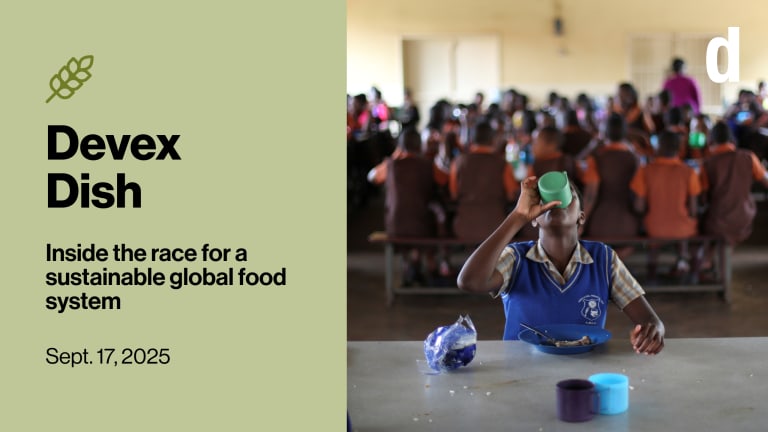
By Teresa Welsh // 24 July 2023Robust school meals programs are one of the easiest ways for governments to help spur food systems reform, government and United Nations’ officials said Monday at the opening session at the U.N. Food Systems Summit stocktaking event in Rome. Ensuring that children have access to a nutritious school meal each day provides a host of benefits for the child, society, and food systems, U.N. Deputy Secretary-General Amina Mohammed told the session, which highlighted the School Meals Coalition led by the World Food Programme. The coalition was created in 2021 at the inaugural U.N. Food Systems Summit to help governments provide food to all schoolchildren. She called school meals “the biggest public safety net that we have available to support future generations.” “School meals programs have an unrivaled potential to cut through the complexities of food systems … and above all really trying to develop and drive results at scale,” Mohammed said. “If we are to unlock the full potential of school meals for food system reform, we must extend their reach and expand their scope. Today demonstrates that we’ve come a long way but millions of the most vulnerable children still can’t access the school meals that could transform their lives.” “School feeding is not a public expenditure, school feeding is an investment … School feeding is an entry point to deliver public service delivery.” --— Cristina Duarte, United Nations special adviser on Africa Providing children a full school meal, which for many worldwide is the only one they will eat all day, helps increase school attendance, particularly for girls. The meals reduce poverty by purchasing food from smallholder farmers and supporting local markets. Local procurement also builds sustainable and resilient food systems that are less vulnerable to shocks such as the COVID-19 pandemic — which significantly disrupted food exports globally. The School Meals Coalition aims to restore the number of children getting school meals to pre-pandemic levels, which were decimated when schools closed. It also intends to expand the reach to vulnerable children who were being missed and improve existing programs to broaden local procurement. The U.N. Food Systems Summit stocktaking event this week brings together some 2,000 delegates to evaluate progress on food systems transformation since the summit was established in 2021. Mohammed said that school meals can help meet many Sustainable Development Goals, in addition to the near-impossible target of ending hunger by 2030. This additional progress includes eliminating overconsumption and malnutrition, cutting food waste, and reducing carbon emissions by decreasing coal and firewood cooking. Governments can intentionally design their school meal programs to have these additional benefits, she said. “School meal programs have a vast untapped potential to support more resilient rural livelihoods in the face of climate change,” Mohammed said. The School Meals Coalition was launched by France, Finland, the African Union, and include 61 countries. That number has since increased to 85, with the addition on Monday of Bangladesh. U.N. Special Adviser on Africa Cristina Duarte, a former finance minister of Cape Verde, said a major development challenge is the efficiency of policymakers who are often not responsive enough to their populations. “School feeding is not a public expenditure, school feeding is an investment … School feeding is an entry point to deliver public service delivery,” Duarte said. “It is much more than a hot meal for a child in a school. In the case of Africa, when you feed the child, you feed the mother. When you feed the mother, you feed the family. When you feed the family, you feed the community.” She called it “low hanging fruit” for states, as it is a fundamental way to be present in remote areas. Duarte called for governments to earmark a portion of official development assistance for the next five years which can be used to leverage national budgets to finance school meals. Rwanda has invested over $120 million in its school meals programs since joining the coalition in 2021, said the country’s Education Minister Gaspard Twagirayezu. Before, the country reached mostly secondary school students, but now an estimated 3.5 million children across all levels are fed daily at school. Executing such a program requires more than just budgets, he said. “We have also invested in building governance systems, we have a national level school feeding committee that includes ourselves, the ministry of education, the ministry of agriculture, and all our partners because of course school feeding is [a] multisectoral business,” Twagirayezu added. Schools have local committees with teachers, parents, and students to increase awareness and ownership of the programs, he said. Sierra Leone President Julius Maada Bio said his country covers 80% of the cost of school meals, increasing school attendance, enrolment, and decreasing stunting levels. The program focuses on building a sustainable supply chain of locally produced food, which boosts incomes for local farmers. But its free education program is straining the government’s capacity to feed all children, he said. “Currency depreciation … and slow economic growth levels have left us with limited fiscal space to meet the growing demand,” Maada Bio said. The U.N.’s Mohammed echoed concern that the most vulnerable countries do not have money to expand school meals programs, which requires an additional $1.7 billion globally, she said. She called for “unsustainable debt” to be converted into debt for school meals swaps and said climate finance can be tapped for additional resources. “As fiscal pressure mounts in the face of slower growth and mounting debt service obligations, many countries need aid to supplement efforts and realize their ambitions so that we’re not seeing that there are trade-offs on children's lives,” Mohammed said. Visit Food Secured — a series that explores how to save the food system and where experts share groundbreaking solutions for a sustainable and resilient future. This is an editorially independent piece produced as part of our Food Secured series, which is funded by partners. To learn more about this series and our partners, click here.
Robust school meals programs are one of the easiest ways for governments to help spur food systems reform, government and United Nations’ officials said Monday at the opening session at the U.N. Food Systems Summit stocktaking event in Rome.
Ensuring that children have access to a nutritious school meal each day provides a host of benefits for the child, society, and food systems, U.N. Deputy Secretary-General Amina Mohammed told the session, which highlighted the School Meals Coalition led by the World Food Programme.
The coalition was created in 2021 at the inaugural U.N. Food Systems Summit to help governments provide food to all schoolchildren. She called school meals “the biggest public safety net that we have available to support future generations.”
This article is free to read - just register or sign in
Access news, newsletters, events and more.
Join usSign inPrinting articles to share with others is a breach of our terms and conditions and copyright policy. Please use the sharing options on the left side of the article. Devex Pro members may share up to 10 articles per month using the Pro share tool ( ).
Teresa Welsh is a Senior Reporter at Devex. She has reported from more than 10 countries and is currently based in Washington, D.C. Her coverage focuses on Latin America; U.S. foreign assistance policy; fragile states; food systems and nutrition; and refugees and migration. Prior to joining Devex, Teresa worked at McClatchy's Washington Bureau and covered foreign affairs for U.S. News and World Report. She was a reporter in Colombia, where she previously lived teaching English. Teresa earned bachelor of arts degrees in journalism and Latin American studies from the University of Wisconsin.