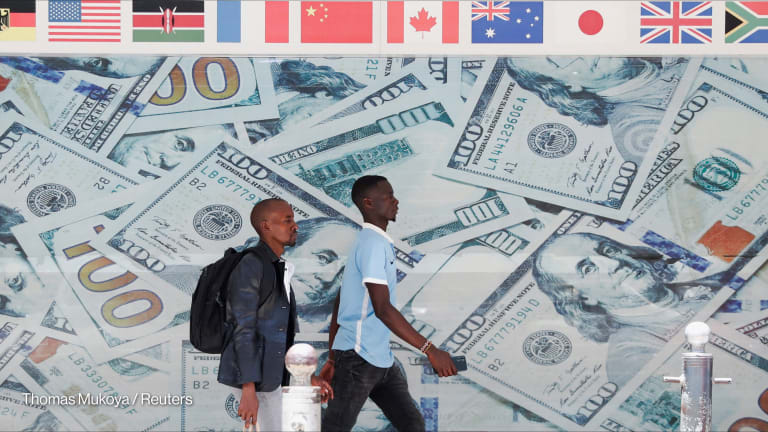
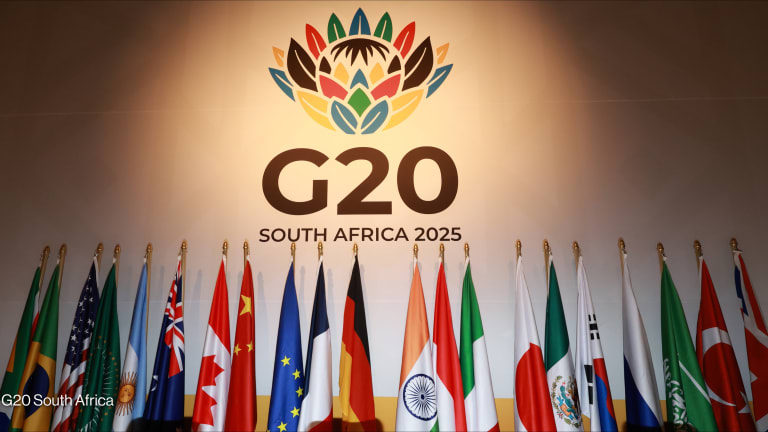
As the year draws to a close and people of many faiths around the world prepare for a season of reflection, renewal, and generosity, the Catholic Church marks another jubilee — a time marked by forgiveness, restoration, and social justice celebrated every 25 years. Historically, during the jubilee year, slaves were liberated, land acquired was returned to its original owners, and debts were forgiven. In essence, the jubilee served as a “reset button” that the Catholic Church advocated to give people a fresh start. This reset button can be a powerful economic and moral tool. The most recent jubilee, in 2000, led to the largest debt forgiveness in modern history. Advocated by Pope John Paul II, 36 countries collectively received $76 billion in debt relief through the Highly Indebted Poor Countries, or HIPC, initiative. HIPC was not a cure-all, but it created sufficient fiscal space to increase public investment and social spending on health and education. Unfortunately, while the papacy successfully triggered a significant reduction in debt levels across the global south, our institutions of global economic governance did not put the frameworks in place to make sure debt burdens didn’t reach the same weight again. As we close this jubilee year, we need to carry forward the message of hope and the call for debt relief for the most vulnerable countries. It is shameful to see United Nations figures showing that 61 developing countries spent more than 10% of their government revenue just on interest payments in 2024. These trends are why the papacy reconvened a group of expert commissioners this year, led by Nobel Prize-winning economist Joseph Stiglitz, to garner solutions. Our expert group has a loud call and a plan for action: It is time for an HIPC 2.0. Most of the world’s poorer countries were building on the fresh start that the first HIPC gave them until the so-called polycrisis of the COVID-19 pandemic, war, climate change, interest rate hikes, and increased tariffs put a growing number of developing countries in need of debt relief. At the beginning of 2025, debt relief was high on the political agenda. South African President Cyril Ramaphosa indicated that delivering debt relief for low-income countries would be his key priority during the G20 summit in South Africa. However, powerful countries in the G20 have seen to it that only a weak declaration was issued, arguing that progress is being made. Meanwhile, 3.3 billion people live in countries where interest payments exceed spending on health or education. Going forward, debt service payments will amount to 137% of the African continent’s annual climate financing needs between now and 2030. At exactly the time when countries need to be ramping up finance to address critical priorities, debt service is crowding out investment — despite the fact that the benefits of such investments far outweigh the catastrophic costs of inaction. A HIPC 2.0 won’t be a carbon copy of the first HIPC. First, it needs a new name to encourage participation — after all, no sovereign nation wants to be labeled a “heavily indebted poor country.” An initiative to deal with debt burdens should instead convey a message of optimism. As such, a much more suitable name could be HOPE, as already suggested, standing for “High Opportunity for Prosperity and Equity.” This time, the overall stock of developing country debt is not yet at the same level as in the 1990s, and only a handful of countries have outright defaulted since 2020. But while debt stock may be at manageable levels, interest rates are high. Meanwhile, debt payments are at similar levels as the last jubilee and rising much faster than government revenue. Due to the lack of a proper debt relief regime, rather than defaulting on their debt, countries under strain are defaulting on other obligations: their people, long-term development, and the planet. Also different is today’s creditor landscape. In the first HIPC, most developing country debt was owed to advanced country governments and the institutions they dominate, such as the World Bank and the International Monetary Fund. While those traditional lenders still account for about 30% of the external debt of developing countries, private bondholders and emerging market lenders such as China are now a big part of the mix. Although debt problems are a drag on global growth, international institutions and private creditors have not been willing to provide comprehensive relief. The Jubilee Report, published in June by the Jubilee Commission, is chock full of policy remedies to bring creditors together and provide comprehensive debt relief. The report argues that some countries will need reductions in the principal of their external debts. For others, an efficient solution would be an extension of their debt repayments by 20 years at low interest rates. In either case, the international community will need creative, tailored approaches to compel all creditors to participate. Making sure that the debt cycle doesn’t yet again necessitate action from the pope in another 25 years will require reforms of the international financial architecture. International institutions need to shift away from imposing austerity on countries and shift to an investment-oriented approach that enhances economic growth in the developing world. There is no shortage of policy options at hand. The Jubilee Report also goes beyond the growing number of commissions and reports calling for debt relief, challenging us not only to see the economic wounds inflicted by debt, but to feel the responsibility to heal them. As the holiday season approaches, many of us return to our deepest values: compassion, justice, and the belief that new starts are possible. The 2025 jubilee year will soon come to an end, but its message calls us not only to recognize the economic costs of spiraling debt but to embrace the moral imperative to alleviate it. Once again, the world needs the moral clarity of the pope’s voice — and the courage of global leaders to act on it.
As the year draws to a close and people of many faiths around the world prepare for a season of reflection, renewal, and generosity, the Catholic Church marks another jubilee — a time marked by forgiveness, restoration, and social justice celebrated every 25 years. Historically, during the jubilee year, slaves were liberated, land acquired was returned to its original owners, and debts were forgiven. In essence, the jubilee served as a “reset button” that the Catholic Church advocated to give people a fresh start.
This reset button can be a powerful economic and moral tool. The most recent jubilee, in 2000, led to the largest debt forgiveness in modern history. Advocated by Pope John Paul II, 36 countries collectively received $76 billion in debt relief through the Highly Indebted Poor Countries, or HIPC, initiative. HIPC was not a cure-all, but it created sufficient fiscal space to increase public investment and social spending on health and education.
Unfortunately, while the papacy successfully triggered a significant reduction in debt levels across the global south, our institutions of global economic governance did not put the frameworks in place to make sure debt burdens didn’t reach the same weight again. As we close this jubilee year, we need to carry forward the message of hope and the call for debt relief for the most vulnerable countries.
This article is free to read - just register or sign in
Access news, newsletters, events and more.
Join usSign inPrinting articles to share with others is a breach of our terms and conditions and copyright policy. Please use the sharing options on the left side of the article. Devex Pro members may share up to 10 articles per month using the Pro share tool ( ).
The views in this opinion piece do not necessarily reflect Devex's editorial views.
Marina Zucker-Marques is a senior academic researcher for the Global Economic Governance Initiative and serves as team lead for the financial stability workstream at the Boston University Global Development Policy Center. She was a commissioner for the Jubilee Report on Addressing the Debt and Development Crises.
Kevin P. Gallagher is the director of the Boston University Global Development Policy Center and a professor of global development policy at the Frederick S. Pardee School of Global Studies at Boston University. He was a commissioner for the Jubilee Report on Addressing the Debt and Development Crises.
Marilou Uy is a nonresident senior fellow for the Global Economic Governance Initiative at the Boston University Global Development Policy Center. She was a commissioner for the Jubilee Report on Addressing the Debt and Development Crises.