• News
    • Latest news
    • News search
    • Health
    • Finance
    • Food
    • Career news
    • Content series
    • Focus areas
    • Try Devex Pro
  • Jobs
    • Job search
    • Post a job
    • Employer search
    • CV Writing
    • Upcoming career events
    • Try Career Account
  • Funding
    • Funding search
    • Funding news
  • Talent
    • Candidate search
    • Devex Talent Solutions
  • Events
    • Upcoming and past events
    • Partner on an event
  • Post a job
  • About
      • About us
      • Membership
      • Newsletters
      • Advertising partnerships
      • Devex Talent Solutions
      • Contact us
Join DevexSign in
Join DevexSign in

News

  • Latest news
  • News search
  • Health
  • Finance
  • Food
  • Career news
  • Content series
  • Focus areas
  • Try Devex Pro

Jobs

  • Job search
  • Post a job
  • Employer search
  • CV Writing
  • Upcoming career events
  • Try Career Account

Funding

  • Funding search
  • Funding news

Talent

  • Candidate search
  • Devex Talent Solutions

Events

  • Upcoming and past events
  • Partner on an event
Post a job

About

  • About us
  • Membership
  • Newsletters
  • Advertising partnerships
  • Devex Talent Solutions
  • Contact us
  • My Devex
  • Update my profile % complete
  • Account & privacy settings
  • My saved jobs
  • Manage newsletters
  • Support
  • Sign out
Latest newsNews searchHealthFinanceFoodCareer newsContent seriesFocus areasTry Devex Pro
    • News
    • Displacement and migration

    US aid cuts leave refugees in Malawi desperate and hungry

    Donor cutbacks have plunged Malawi’s refugee camp into crisis. Once heavily supported by U.S. contributions, Dzaleka now faces slashed food rations and shrinking health and protection services.

    By Madalitso Wills Kateta // 20 August 2025
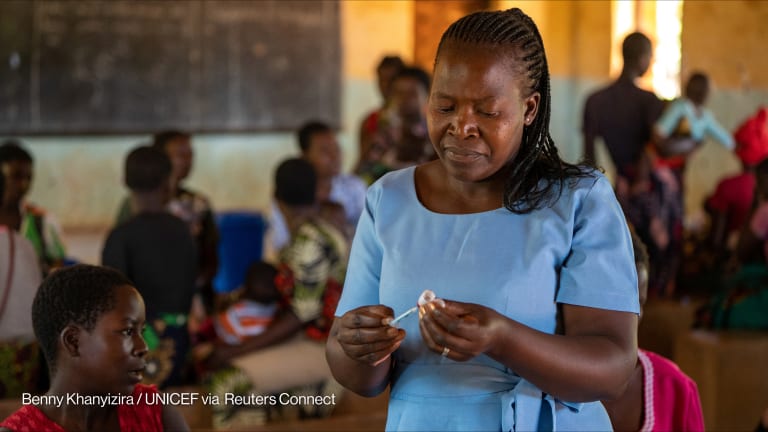
    DZALEKA, Malawi — Just before midnight on a Thursday last month, 22-year-old Louisa and her two friends entered the crowded bar at Dzaleka refugee camp, in Dowa district in central Malawi, dressed in revealing attire. Louisa, who started working as a sex worker last year, told Devex that “life has not been easy the past few months.” For the remaining night hours, she will dance and drink until a client takes her out, either to another bar or to any nearby lodge for the night. “I have to do this if I have to take care of my daughter’s needs and make ends meet as our monthly cash transfers were recently drastically reduced,” said Louisa — whose full name has been withheld to protect her identity. The abrupt loss of U.S. funding has pushed the Dzaleka camp — located over 40 kilometers from Malawi’s capital, Lilongwe, and home to nearly 60,000 refugees from the Democratic Republic of Congo, Burundi, Somalia, and Rwanda — into a worsening humanitarian crisis. With global humanitarian aid gutted under the Trump administration, refugees are struggling to survive on dwindling food rations and face rising malnutrition rates, and are increasingly turning to desperate measures such as sex work and theft to support their families. Established in 1994 to house 12,000 refugees, Dzaleka has long depended on international aid for food, shelter, and health care. The United States was a key donor through a variety of United Nations agencies. It contributed $65.9 million to the World Food Programme’s Malawi budget between 2016 and 2022 for emergency and refugee support, and funded 40% of UN Refugee Agency’s global budget in 2024. Now, both agencies say they are being forced to scale back operations at the camp, including cutting cash transfers to 50% rations. Funding shortfalls WFP Malawi Country Representative and Director Hyoung-Joon Lim said that while the agency’s office in Malawi has not received formal notice from the U.S. government to halt operations, global funding shortfalls — including reduced contributions from major donors — are severely affecting its work, with the harshest impact on refugee assistance. “Most of the refugees fled protracted conflict in the Great Lakes and Horn of Africa regions. With limited access to income-earning opportunities inside the camp, mainly due to the government’s encampment policy, WFP’s food assistance is their primary means of survival,” he said. Lim noted that no specific figure has been confirmed regarding U.S. reductions, but current gaps highlight the scale of unmet needs — with $7 million needed to restore full rations for refugees, $98.6 million for the lean season response, and $32 million to sustain resilience-building activities. He added that WFP is actively seeking additional donor support. UNHCR has also confirmed it is downsizing its operations in Malawi as part of its global operational adjustment due to ongoing funding constraints affecting the humanitarian sector. The UNHCR office has since been reduced to three staff members from a total of 37. lt has also stopped supporting health personnel through the country’s Ministry of Health. “In Malawi, we will no longer have a country office and transition to a smaller national office,” based in the office of the commissioner of refugees in the Ministry of Homeland Security, Duniya Aslam Khan, UNHCR communications officer for southern Africa, told Devex. Aslam Khan said the U.S. has historically been UNHCR’s largest donor. She said the UN Refugee Agency’s funding situation has been made uncertain due to the U.S. government’s decision to review its foreign assistance programs, as well as announcements by a quarter of its top donors on plans to reduce overseas aid. A looming disaster Since 2016, refugees in Malawi’s Dzaleka camp have endured repeated food ration cuts. In July 2023, WFP halved assistance to more than 51,000 people, deepening risks of hunger and malnutrition among children, pregnant people, and those with health conditions. The crisis has been worsened by soaring food prices, a rising refugee population, and the government’s 2023 “back to camp” policy, which forcibly relocated thousands of refugees who had integrated into Malawi society from Lilongwe to Dzaleka, leading to severe overcrowding and unsanitary conditions. In April 2025, WFP appealed for $11.5 million to restore full rations and prevent a complete suspension of food aid by October, noting that current transfers — about $7.73 per person per month at 50% rations — fall far short of basic needs. Funding shortfalls are also forcing NGOs that partnered with WFP and UNHCR to scale back or close, cutting off livelihood programs, training, and awareness campaigns. UNHCR says health services have been drastically affected as well. With reduced assistance and limited access to cash, many refugees are now engaging in negative coping mechanisms, including crime and sex work, said Abdikariim Ismael Taashiir, a Somali community leader at the camp. “It is now difficult for the refugees to access reproductive health services and treatment for chronic conditions. Women and children are now more vulnerable to exploitation and abuse due to lack of protection services and security,” he said. Joyce Wamuyu, a Rwandan community leader, added that while previous cash transfers were never enough, they could at least stretch through most of the month. "Now, we get a fraction of what we previously received, and we can barely survive on the cash we receive. We are now forced to make impossible choices between food and other essentials like soap and medicine.” Others are selling off what few assets they have, while children as young as 10 years old are being pushed into work to support their families — leaving them at heightened risk of exploitation and abuse. “Families are resorting to early marriages as a means of securing financial stability, further compromising the education and well-being of young girls,” she said. Police report that crime in Dzaleka has risen by 14%, mostly involving housebreaking and theft. “The development creates a sense of insecurity as refugees feel vulnerable to theft, assault, and other forms of violence,” said Alice Sitima, police spokesperson for Dowa district. Jonathan Bonongwe, the district’s social welfare officer, added that limited access to reproductive health services and the rise in sex work have also heightened concerns about the spread of HIV/AIDS and other sexually transmitted infections. A bleak future In Malawi, dozens of support jobs — including security personnel — have already been lost at UNHCR, fueling fears that the Dzaleka camp, long considered a hot spot for crimes such as human trafficking, could slide further into lawlessness as food and basic services dwindle. While acknowledging the risks posed by the downsizing, UNHCR spokesperson Aslam Khan said alternative arrangements are being made, including stronger partnerships with the government and development agencies, to maintain essential services and protection activities. She noted that UNHCR has donated supplies to the government of Malawi, NGOs, and refugee-led groups to help sustain service delivery. “The current financial situation is beyond our control and unfortunately, it requires us to make significant workforce reductions. We recognize this is a very difficult situation for our colleagues and, even more so, for people fleeing danger who will be severely impacted,” Aslam Khan said. While host governments and local authorities hold primary responsibility for camp security, Aslam Khan said UNHCR supports these efforts by training police officers, employing and training refugee watchmen, and strengthening community reporting systems in collaboration with refugee leaders and law enforcement. “As UNHCR's presence and support decrease, we have been advocating with all stakeholders and refugee communities to continue working with authorities to ensure security measures remain effective,” she said. Finding solutions UNHCR has stressed that it is not withdrawing from Malawi but downsizing as part of a global consolidation, maintaining a smaller presence and providing support through stronger partnerships with local groups and neighboring UNHCR offices. “Although resources are scarcer and our capacity is reduced, we will continue to work hard to respond to emergencies, protect the rights of refugees, and pursue longer-term solutions,” Aslam Khan said. But Innocent Magambi, CEO at Inua Advocacy, a refugee rights nonprofit, warned that the lack of a clear transition plan is troubling, as Malawi’s government is unlikely to manage the refugee situation alone. He said the cuts are fueling desperation and eroding protection, straining relations between refugees and host communities, and raising the risk of tension and unrest. “This is more than an economic decision; it is a direct threat to human dignity, safety, and the hope for any meaningful future for refugees in Malawi,” he said. Magambi noted that while refugees typically have three durable solutions — voluntary repatriation, local integration, or third-country resettlement — the situation at Dzaleka is different, as many come from countries such as the Democratic Republic of Congo, Burundi, and Rwanda, which remain plagued by political instability, dictatorship, and unrest. “Peace in these countries remains uncertain, and repatriation is not a viable solution. Resettlement, once a hope for 1-2% of the global refugee population each year, has sharply declined, especially after the Trump administration restrictions. That leaves local integration as the only realistic and humane option,” Magambi said. “Malawi has supported the idea in principle, but it is yet to implement it. Sadly, even refugees who had peacefully integrated into Malawian society, earning a living and contributing to their communities, have been forced back into the camp, making them dependent on aid once again,” he said. He argued that what is needed now is not more aid, but political will and legal reform. Malawi, he said, could improve conditions for refugees by updating outdated laws that deny them the right to work or run businesses outside the camp and restrict their freedom of movement. Louisa said such freedom could help improve her life. “I at times find myself thinking that I am a stateless person. I wish I could have gone back home and started all over, but I don’t have anyone to go back home for. Malawi has always seemed like a better home for me and my daughter. I only hope the government will soften its stance on the refugee laws,” Louisa said.

    Related Stories

    Devex Dish: Cuts to WFP rations push refugees in Malawi to the edge
    Devex Dish: Cuts to WFP rations push refugees in Malawi to the edge
    From camps to crops: US aid cuts reshape refugee life in Thailand
    From camps to crops: US aid cuts reshape refugee life in Thailand
    Devex Newswire: US pushes UN to rethink aid, cut reliance on Washington
    Devex Newswire: US pushes UN to rethink aid, cut reliance on Washington
    US funding cuts jeopardize Malawi's maternal health advances
    US funding cuts jeopardize Malawi's maternal health advances

    DZALEKA, Malawi — Just before midnight on a Thursday last month, 22-year-old Louisa and her two friends entered the crowded bar at Dzaleka refugee camp, in Dowa district in central Malawi, dressed in revealing attire.

    Louisa, who started working as a sex worker last year, told Devex that “life has not been easy the past few months.”

    For the remaining night hours, she will dance and drink until a client takes her out, either to another bar or to any nearby lodge for the night. “I have to do this if I have to take care of my daughter’s needs and make ends meet as our monthly cash transfers were recently drastically reduced,” said Louisa — whose full name has been withheld to protect her identity.

    This article is free to read - just register or sign in

    Access news, newsletters, events and more.

    Join usSign in

    Read more:

    ► How US aid cuts hurt migrant and refugee programs

    ► Exclusive: UN Refugee Agency braces for thousands of job cuts

    ► US aid cuts cause uproar over food shortages in Kenyan refugee camp

    • Humanitarian Aid
    • Global Health
    • Democracy, Human Rights & Governance
    • Malawi
    Printing articles to share with others is a breach of our terms and conditions and copyright policy. Please use the sharing options on the left side of the article. Devex Pro members may share up to 10 articles per month using the Pro share tool ( ).

    About the author

    • Madalitso Wills Kateta

      Madalitso Wills KatetaMadatso_Kateta

      Madalitso Wills Kateta is a Malawi-based Devex contributing reporter. He specializes in gender, human rights, climate change, politics, and global development reporting. He has written for the Thomson Reuters Foundation, The New Humanitarian, African Arguments, Equal Times, and others.

    Search for articles
    Related Stories

    Devex DishRelated Stories - Devex Dish: Cuts to WFP rations push refugees in Malawi to the edge

    Devex Dish: Cuts to WFP rations push refugees in Malawi to the edge

    Migration and DisplacementRelated Stories - From camps to crops: US aid cuts reshape refugee life in Thailand

    From camps to crops: US aid cuts reshape refugee life in Thailand

    Devex NewswireRelated Stories - Devex Newswire: US pushes UN to rethink aid, cut reliance on Washington

    Devex Newswire: US pushes UN to rethink aid, cut reliance on Washington

    Global healthRelated Stories - US funding cuts jeopardize Malawi's maternal health advances

    US funding cuts jeopardize Malawi's maternal health advances

    Most Read

    • 1
      Why NTDs are a prime investment for philanthropy
    • 2
      The silent, growing CKD epidemic signals action is needed today
    • 3
      Trump withdraws, defunds dozens of international orgs and treaties
    • 4
      Why capital without knowledge-sharing won't solve the NCD crisis
    • 5
      Why are 3.4 billion people still offline?
    • News
    • Jobs
    • Funding
    • Talent
    • Events

    Devex is the media platform for the global development community.

    A social enterprise, we connect and inform over 1.3 million development, health, humanitarian, and sustainability professionals through news, business intelligence, and funding & career opportunities so you can do more good for more people. We invite you to join us.

    • About us
    • Membership
    • Newsletters
    • Advertising partnerships
    • Devex Talent Solutions
    • Post a job
    • Careers at Devex
    • Contact us
    © Copyright 2000 - 2026 Devex|User Agreement|Privacy Statement