Weathering the storm: Millennium Challenge Corporation pivot underway
Board selects new countries in Latin America as MCC expands its work in the hemisphere on the heels of other long-awaited changes.
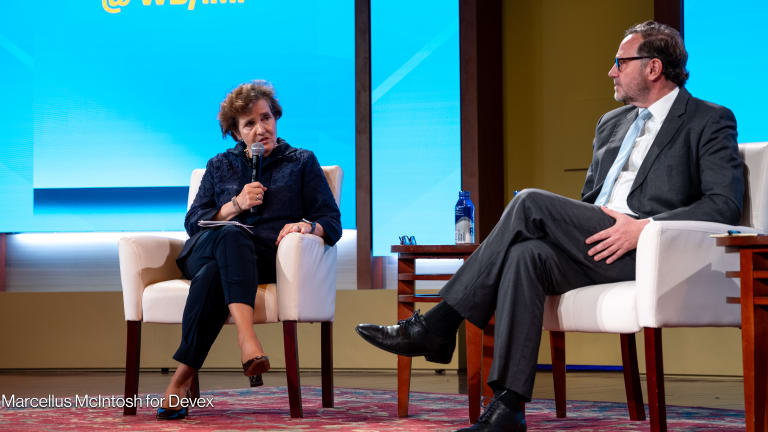
It’s been a tumultuous year for the Millennium Challenge Corporation, but in recent months the agency has begun to stabilize — and to sketch a path forward. That recalibration is reflected in the Dec. 10 board decision to select new countries eligible for MCC funds. At that meeting, Ecuador was selected as eligible to develop a compact — the large-scale grant agreements that make up the bulk of the agency’s work. Bolivia and Guatemala were selected to develop threshold programs, smaller grants that support policy and institutional reforms and often lead to bigger programs. “These selections underscore the opportunities to deepen our partnerships close to home, and advance MCC’s ability to foster economic growth, increase prosperity, and offer meaningful benefits to the U.S. private sector,” Deputy Secretary of State Christopher Landau, who also presides over the MCC board of directors, said in a statement. “We’re eager to keep building strong presence in the Western Hemisphere to achieve our shared goals — and deliver meaningful results — for the American people, as well as those in Ecuador, Bolivia, and Guatemala,” he added. Some of these recent selections were made possible by a 2024 law that expanded the number of countries where MCC can operate, alongside changes to the scorecard it uses to determine whether countries are eligible for its funding. “There’s been massive leadership changes, program cuts, staff losses, but in the context of reductions that we’re seeing across the U.S. foreign aid architecture, we have seen that MCC has survived and it is figuring out in real time whether and how it should adapt its model to the new strategic priorities of the administration,” Fatema Sumar, executive director of the Harvard Center for International Development at the Harvard Kennedy School, said at a Devex event last week. Earlier this year, MCC’s future appeared uncertain.The agency ultimately survived, however, due to a combination of factors, including its size, impact, model, and support from partner countries and Congress, said James Mazzarella, senior fellow at the Atlantic Council’s Freedom and Prosperity Center, who described MCC as having been in the “DOGE crosshairs.” Even so, a significant number of programs were cut — a move Mazzarella called “jarring,” noting that MCC had never previously canceled a compact while a partner country was meeting its obligations. With new countries becoming eligible, however — including Fiji and Tonga, selected at an August board meeting — the agency is ending the year with nearly as many programs as it started with, he added. As the year has progressed, several trends have come into focus. MCC is expected to place greater emphasis on Latin America and the Indo-Pacific, and may tweak aspects of its grantmaking to align more closely with administration priorities. While large-scale infrastructure projects — particularly in the energy sector — are likely to remain central, MCC could add greater emphasis on supply chains and critical minerals, while still maintaining education and agriculture components, MCC experts said at the event. Key questions remain unanswered, including whether the agency will have politically appointed leadership, what its budget will look like, and how future programs will be structured. “Modernizing the agency, making sure that it can stay relevant, flexible to the current needs and future needs of where the world is going is going to be really important,” Sumar said. “The silver lining here being if the agency can take advantage of the political drama and trauma of the past year to figure out ways to really get through some of the reforms that it has been debating for quite some time.”
It’s been a tumultuous year for the Millennium Challenge Corporation, but in recent months the agency has begun to stabilize — and to sketch a path forward.
That recalibration is reflected in the Dec. 10 board decision to select new countries eligible for MCC funds. At that meeting, Ecuador was selected as eligible to develop a compact — the large-scale grant agreements that make up the bulk of the agency’s work.
Bolivia and Guatemala were selected to develop threshold programs, smaller grants that support policy and institutional reforms and often lead to bigger programs.
This story is forDevex Promembers
Unlock this story now with a 15-day free trial of Devex Pro.
With a Devex Pro subscription you'll get access to deeper analysis and exclusive insights from our reporters and analysts.
Start my free trialRequest a group subscription Printing articles to share with others is a breach of our terms and conditions and copyright policy. Please use the sharing options on the left side of the article. Devex Pro members may share up to 10 articles per month using the Pro share tool ( ).
Adva Saldinger is a Senior Reporter at Devex where she covers development finance, as well as U.S. foreign aid policy. Adva explores the role the private sector and private capital play in development and authors the weekly Devex Invested newsletter bringing the latest news on the role of business and finance in addressing global challenges. A journalist with more than 10 years of experience, she has worked at several newspapers in the U.S. and lived in both Ghana and South Africa.