• News
    • Latest news
    • News search
    • Health
    • Finance
    • Food
    • Career news
    • Content series
    • Focus areas
    • Try Devex Pro
  • Jobs
    • Job search
    • Post a job
    • Employer search
    • CV Writing
    • Upcoming career events
    • Try Career Account
  • Funding
    • Funding search
    • Funding news
  • Talent
    • Candidate search
    • Devex Talent Solutions
  • Events
    • Upcoming and past events
    • Partner on an event
  • Post a job
  • About
      • About us
      • Membership
      • Newsletters
      • Advertising partnerships
      • Devex Talent Solutions
      • Contact us
Join DevexSign in
Join DevexSign in

News

  • Latest news
  • News search
  • Health
  • Finance
  • Food
  • Career news
  • Content series
  • Focus areas
  • Try Devex Pro

Jobs

  • Job search
  • Post a job
  • Employer search
  • CV Writing
  • Upcoming career events
  • Try Career Account

Funding

  • Funding search
  • Funding news

Talent

  • Candidate search
  • Devex Talent Solutions

Events

  • Upcoming and past events
  • Partner on an event
Post a job

About

  • About us
  • Membership
  • Newsletters
  • Advertising partnerships
  • Devex Talent Solutions
  • Contact us
  • My Devex
  • Update my profile % complete
  • Account & privacy settings
  • My saved jobs
  • Manage newsletters
  • Support
  • Sign out
Latest newsNews searchHealthFinanceFoodCareer newsContent seriesFocus areasTry Devex Pro
    • News
    • Global health

    WHO issues recommendations for weight-loss drugs to treat obesity

    The guideline also recommends behavioral therapy as an aid to treatment, but lacks recommendations on discontinuation due to limited evidence.

    By Jenny Lei Ravelo // 01 December 2025
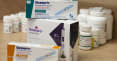
    The World Health Organization has issued its first guideline on treatments to support millions of people struggling with obesity. The guideline specifically recommends the use of glucagon-like peptide-1, or GLP-1, therapies, a class of drugs that includes tirzepatide, liraglutide, and semaglutide, which are found in popular weight-loss treatments such as Ozempic and Mounjaro. WHO said these therapies may be used by adults — excluding pregnant women — for the long-term treatment of obesity, which has become a serious public health issue now affecting more than 1 billion people globally. WHO defines obesity in adults as having a body mass index of 30 or higher. It adds that intensive behavioral therapies may be offered to adults living with obesity and are prescribed these medications, although there is “low certainty evidence” at the moment to suggest it may improve treatment outcomes. WHO had already added GLP-1 therapies to its essential medicines list back in September for the management of type 2 diabetes. It said the guideline “will be continuously updated and expanded in response to the evolving evidence base and emerging real-world data on safety, feasibility, effectiveness and system-level requirements.” Why is this important? Obesity was associated with 3.7 million deaths in 2024, and that number is projected to double by 2030, according to WHO. Despite that, obesity is still largely seen as a lifestyle issue rather than a chronic disease. In a news release, WHO Director-General Tedros Adhanom Ghebreyesus said the “new guidance recognizes that obesity is a chronic disease that can be treated with comprehensive and lifelong care.” GLP-1 therapies offer multiple benefits. Apart from helping individuals in lowering their blood sugar and supporting weight loss, studies have also shown that they can reduce the risk of heart and kidney complications. One study estimated that universal access to these drugs could reduce global obesity prevalence by 20% and save 28 million lives over five years. Limitations The recommendations are conditional, meaning there are some uncertainties. For example, the experts involved in developing the guidelines require further evidence on the benefits and potential harms associated with longer use of GLP-1 therapies. But due to limited evidence, the experts did not make a specific recommendation on when to discontinue the therapies. According to the WHO document, some of the experts involved proposed a strong recommendation on the guidelines for using GLP-1 therapies for long-term treatment of obesity, but eventually, they decided on a conditional recommendation “based on currently limited long-term data, variability of expectations about weight loss across cultures and context, concern around costs and cost-effectiveness, and equity implications.” The guidelines come amid the expected introduction of generic forms of semaglutide in 2026, when patents for the drug are set to expire in several countries, including India and China, potentially expanding access to the medications as cheaper versions become available. However, WHO warned that “GLP-1 therapies are projected to reach fewer than 10% of those who could benefit by 2030,” even with the anticipated rapid expansion of production of these medicines. The U.N. health agency called on the global community to consider several strategies to expand access, including via pooled procurement, tiered pricing, and voluntary licensing. WHO emphasized that medicines alone won’t solve the problem of obesity. Governments must also create healthier environments for their population, such as through policies and the provision of early interventions for people at high risk of developing obesity.

    Related Stories

    Ozempic generics are coming. But will low-income countries benefit?
    Ozempic generics are coming. But will low-income countries benefit?
    Devex Newswire: Keeping the faith in the health of 'America First'
    Devex Newswire: Keeping the faith in the health of 'America First'
    Devex CheckUp: Innovative global health financing for tough times
    Devex CheckUp: Innovative global health financing for tough times
    Devex CheckUp: Ozempic generics — promises galore, pitfalls aplenty
    Devex CheckUp: Ozempic generics — promises galore, pitfalls aplenty

    The World Health Organization has issued its first guideline on treatments to support millions of people struggling with obesity.

    The guideline specifically recommends the use of glucagon-like peptide-1, or GLP-1, therapies, a class of drugs that includes tirzepatide, liraglutide, and semaglutide, which are found in popular weight-loss treatments such as Ozempic and Mounjaro.

    WHO said these therapies may be used by adults — excluding pregnant women — for the long-term treatment of obesity, which has become a serious public health issue now affecting more than 1 billion people globally. WHO defines obesity in adults as having a body mass index of 30 or higher.

    This article is free to read - just register or sign in

    Access news, newsletters, events and more.

    Join usSign in

    Read more:

    ► Ozempic generics are coming. But will low-income countries benefit?

    ► Obesity is on the rise in Africa. Here’s what UNICEF is doing about it

    ► Could WHO jumpstart widespread access to obesity medications?

    • Global Health
    • Democracy, Human Rights & Governance
    Printing articles to share with others is a breach of our terms and conditions and copyright policy. Please use the sharing options on the left side of the article. Devex Pro members may share up to 10 articles per month using the Pro share tool ( ).

    About the author

    • Jenny Lei Ravelo

      Jenny Lei Ravelo@JennyLeiRavelo

      Jenny Lei Ravelo is a Devex Senior Reporter based in Manila. She covers global health, with a particular focus on the World Health Organization, and other development and humanitarian aid trends in Asia Pacific. Prior to Devex, she wrote for ABS-CBN, one of the largest broadcasting networks in the Philippines, and was a copy editor for various international scientific journals. She received her journalism degree from the University of Santo Tomas.

    Search for articles

    Related Stories

    Global HealthRelated Stories - Ozempic generics are coming. But will low-income countries benefit?

    Ozempic generics are coming. But will low-income countries benefit?

    Devex NewswireRelated Stories - Devex Newswire: Keeping the faith in the health of 'America First'

    Devex Newswire: Keeping the faith in the health of 'America First'

    Devex CheckUpRelated Stories - Devex CheckUp: Innovative global health financing for tough times

    Devex CheckUp: Innovative global health financing for tough times

    Devex CheckUpRelated Stories - Devex CheckUp: Ozempic generics — promises galore, pitfalls aplenty

    Devex CheckUp: Ozempic generics — promises galore, pitfalls aplenty

    Most Read

    • 1
      How green bonds can close the infrastructure finance gap
    • 2
      From India to the world: Advancing quality maternal care at scale
    • 3
      Africa can pay for its own health if we choose efficiency over dependency
    • 4
      Inside Mars, Inc.'s $1 billion pivot toward sustainability
    • 5
      Climate change mandates more innovation in yellow fever vaccines
    • News
    • Jobs
    • Funding
    • Talent
    • Events

    Devex is the media platform for the global development community.

    A social enterprise, we connect and inform over 1.3 million development, health, humanitarian, and sustainability professionals through news, business intelligence, and funding & career opportunities so you can do more good for more people.

    • About us
    • Membership
    • Newsletters
    • Advertising partnerships
    • Devex Talent Solutions
    • Post a job
    • Careers at Devex
    • Contact us
    © Copyright 2000 - 2026 Devex|User Agreement|Privacy Statement