• News
    • Latest news
    • News search
    • Health
    • Finance
    • Food
    • Career news
    • Content series
    • Focus areas
    • Try Devex Pro
  • Jobs
    • Job search
    • Post a job
    • Employer search
    • CV Writing
    • Upcoming career events
    • Try Career Account
  • Funding
    • Funding search
    • Funding news
  • Talent
    • Candidate search
    • Devex Talent Solutions
  • Events
    • Upcoming and past events
    • Partner on an event
  • Post a job
  • About
      • About us
      • Membership
      • Newsletters
      • Advertising partnerships
      • Devex Talent Solutions
      • Contact us
Join DevexSign in
Join DevexSign in

News

  • Latest news
  • News search
  • Health
  • Finance
  • Food
  • Career news
  • Content series
  • Focus areas
  • Try Devex Pro

Jobs

  • Job search
  • Post a job
  • Employer search
  • CV Writing
  • Upcoming career events
  • Try Career Account

Funding

  • Funding search
  • Funding news

Talent

  • Candidate search
  • Devex Talent Solutions

Events

  • Upcoming and past events
  • Partner on an event
Post a job

About

  • About us
  • Membership
  • Newsletters
  • Advertising partnerships
  • Devex Talent Solutions
  • Contact us
  • My Devex
  • Update my profile % complete
  • Account & privacy settings
  • My saved jobs
  • Manage newsletters
  • Support
  • Sign out
Latest newsNews searchHealthFinanceFoodCareer newsContent seriesFocus areasTry Devex Pro
    • News
    • The Trump effect

    6 lessons for the US from the UK's aid department's traumatic demise

    Five years after the Department for International Department was axed, the fallout still reverberates — and may hold clues for the impact of USAID's disappearance.

    By Rob Merrick // 06 February 2025
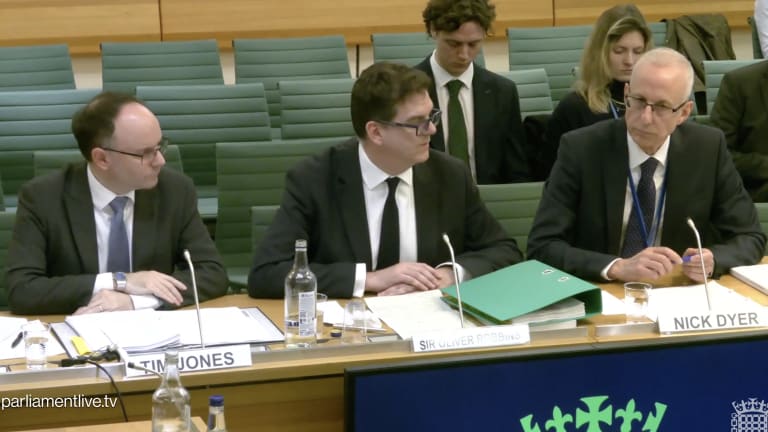
    “I learned as a young banker in the City [of London] that there is no such thing as a merger: one side wins and the other side loses,” sighed Andrew Mitchell, the former United Kingdom development minister, as he recalled the chaotic death of its dedicated aid department five years ago. The remark sums up the widespread view that the revered Department for International Development was not “merged” into the new Foreign, Commonwealth & Development Office as an equal partner, but gobbled up by the U.K.’s mighty Foreign Office — or “destroyed” in the description of the ex-DFID top civil servant Mark Lowcock at the same think-tank event last October. There is a clear parallel with the breathtaking shutdown of the U.S. Agency for International Development, which is being absorbed by the State Department, with its future influence unknown. So, what were the consequences of the loss of DFID, which now might be echoed on the other side of the Atlantic? 1. Expertise vanishes … and may never return Years after DFID was axed in 2020, government officials and watchdogs were still highlighting the damage from an exodus of experienced, highly skilled staff members — some of whom simply did not want to work under the new regime. One study highlighted how, as late as January 2024, a quarter of positions overseeing major programs were unfilled, a second found remaining staff members were “disempowered and demoralized,” while Mitchell said it was “like meeting people who had emerged from the rubble of a nuclear explosion” when he returned to the development brief in late 2022. 2. Objectives are twisted and resources wasted Speaking to the Institute for Government, or IfG, in October, Lowcock argued DFID’s simple objective — poverty reduction — was once again suffocated by other “objectives” such as boosting trade and geopolitical influence, threatening a return to the bad old days of the Pergau Dam scandal and tied aid, which wastes billions over and above the damage to development. “The lesson of history is if you're not super clear about having one focus for your development effort, reducing poverty, what you find is you do a terrible job on your mix of objectives,” he said, adding: “That way lies ruin.” A study in 2023 did find some successes when it came to FCDO integrating policy objectives, but they were restricted to a handful of countries and contexts. 3. Diplomacy and development are different jobs “Diplomacy requires languages and understanding of negotiating skills and trade-off management, and you're always dealing with short-term issues. Development, by contrast, is about money and project management and expertise, and often about the long term,” Lowcock explained. Mitchell pointed to France’s clear-out of terrorists from Mali, by heavily armed troops “in shiny vehicles with shiny weapons” but with no action to show local people who “wanted to educate their children” that the social improvements they craved would follow. “I don't believe DFID in its heyday would have allowed that mistake to be made,” he said. 4. A soft power totem is lost Former U.K. Prime Minister Tony Blair recounted last year how his foreign policy had been “based on three pillars”: being the U.S.’s “strongest ally,” being a “key” player in Europe — and on having a world-leading development program. “We are weaker on all three now. I mean, the Department of International Development is gone. Its budget’s been cut,” Blair said. At the IfG event, Sarah Champion, the chair of Parliament’s International Development Committee, remembered the “anger” her committee encountered at an international gathering soon after DFID was axed. “We were seen as a country that did the right thing for the right reason, and it wasn't conditional,” she said. But no longer. 5. Don’t reorganize and cut spending at the same time The damage from DFID’s disappearance was compounded by its timing, as the U.K. slashed aid spending from 0.7% to 0.5% of national income — taking out around £4.5 billion ($5.6 billion) overnight, mainly by taking a wrecking ball to bilateral programs for the world’s poorest countries. This was a large pot of money — but it pales in comparison with the spending freeze and stop-work order imposed on the USAID, the world’s largest bilateral donor, which distributed $40 billion across more than 130 countries in 2023 and fed millions of people. 6. The permanent harm from populist anti-aid rhetoric “UK overseas aid has been treated as some giant cashpoint in the sky that arrives without any reference to UK interests,” thundered then-Prime Minister Boris Johnson as he axed DFID — overturning decades of U.K. leaders arguing for development spending. It was a populist ploy pinched by Billionaire Elon Musk with his far-darker branding of USAID as a “criminal organization.” “I nearly had a fit, because I saw that [remark] damaging all the good work that had been done,” Mitchell remembered. Support for aid has never recovered in the U.K., and no leading politician now speaks out for it — lacking a message with the destructive power of Johnson’s.

    Related Stories

    Beyond aid cuts, 3 major signs the UK is abandoning development
    Beyond aid cuts, 3 major signs the UK is abandoning development
    State Department employees in anxious limbo over massive staff cuts
    State Department employees in anxious limbo over massive staff cuts
    How US aid can appeal to ‘America First’ Republicans
    How US aid can appeal to ‘America First’ Republicans
    UK's aid department defends major staff cuts as MPs fear brain drain
    UK's aid department defends major staff cuts as MPs fear brain drain

    “I learned as a young banker in the City [of London] that there is no such thing as a merger: one side wins and the other side loses,” sighed Andrew Mitchell, the former United Kingdom development minister, as he recalled the chaotic death of its dedicated aid department five years ago.

    The remark sums up the widespread view that the revered Department for International Development was not “merged” into the new Foreign, Commonwealth & Development Office as an equal partner, but gobbled up by the U.K.’s mighty Foreign Office — or “destroyed” in the description of the ex-DFID top civil servant Mark Lowcock at the same think-tank event last October.

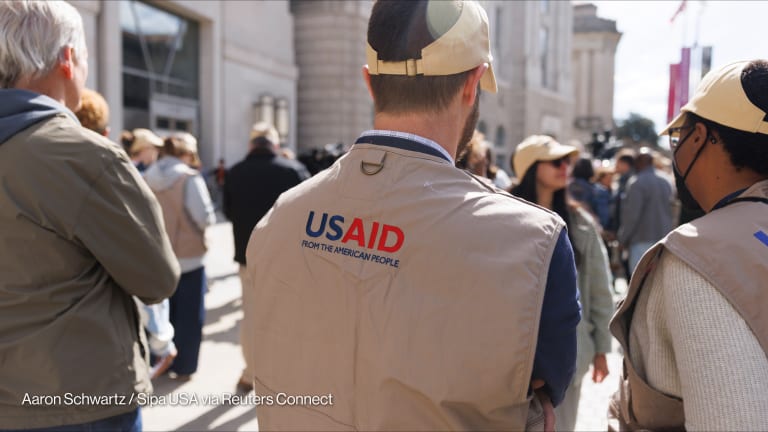
    There is a clear parallel with the breathtaking shutdown of the U.S. Agency for International Development, which is being absorbed by the State Department, with its future influence unknown. So, what were the consequences of the loss of DFID, which now might be echoed on the other side of the Atlantic?

    This article is free to read - just register or sign in

    Access news, newsletters, events and more.

    Join usSign in

    More reading:

    ► Scoop: FCDO says USAID merger would have 'seismic impact'

    ► 5 years after UK aid merger, 60% of development adviser jobs are empty

    ► Lammy says FCDO merger can't be reversed, due to China and climate

    • Funding
    • Democracy, Human Rights & Governance
    • Institutional Development
    • Trade & Policy
    • Foreign, Commonwealth & Development Office (FCDO)
    Printing articles to share with others is a breach of our terms and conditions and copyright policy. Please use the sharing options on the left side of the article. Devex Pro members may share up to 10 articles per month using the Pro share tool ( ).

    About the author

    • Rob Merrick

      Rob Merrick

      Rob Merrick is the U.K. Correspondent for Devex, covering FCDO and British aid. He reported on all the key events in British politics of the past 25 years from Westminster, including the financial crash, the Brexit fallout, the "Partygate" scandal, and the departures of Boris Johnson and Liz Truss. Rob has worked for The Independent and the Press Association and is a regular commentator on TV and radio. He can be reached at rob.merrick@devex.com.

    Search for articles

    Related Stories

    UK AidRelated Stories - Beyond aid cuts, 3 major signs the UK is abandoning development

    Beyond aid cuts, 3 major signs the UK is abandoning development

    the trump effectRelated Stories - State Department employees in anxious limbo over massive staff cuts

    State Department employees in anxious limbo over massive staff cuts

    The Trump EffectRelated Stories - How US aid can appeal to ‘America First’ Republicans

    How US aid can appeal to ‘America First’ Republicans

    UK AidRelated Stories - UK's aid department defends major staff cuts as MPs fear brain drain

    UK's aid department defends major staff cuts as MPs fear brain drain

    Most Read

    • 1
      Exclusive: Former Iraqi president picked to lead UN Refugee Agency
    • 2
      Invest in diagnostics to win the health fight
    • 3
      Financing Asia’s transformation: How to plug the trillion-dollar gap
    • 4
      Future forward: Closing infrastructure gaps for climate innovation
    • 5
      Opinion: A blueprint for country ownership and transition
    • News
    • Jobs
    • Funding
    • Talent
    • Events

    Devex is the media platform for the global development community.

    A social enterprise, we connect and inform over 1.3 million development, health, humanitarian, and sustainability professionals through news, business intelligence, and funding & career opportunities so you can do more good for more people. We invite you to join us.

    • About us
    • Membership
    • Newsletters
    • Advertising partnerships
    • Devex Talent Solutions
    • Post a job
    • Careers at Devex
    • Contact us
    © Copyright 2000 - 2025 Devex|User Agreement|Privacy Statement