
Devex Newswire: Aid cuts keep coming but one Gulf state offers good news

Presented by Operation Smile

More aid cuts are coming — this time from two major European donors.
Also in today’s edition: An exclusive on a U.N. staff perk under threat. Plus, not everyone is taking an ax to foreign assistance: We’ve got the story of one country’s rise as a development powerhouse.
+ Join us tomorrow at 9 a.m. ET, for a career briefing with development leaders from Save the Children, ActionAid, and PCDN.Global on how to navigate the job market in 2026. Register now.
Sound familiar?
Is Germany taking a page out of U.S. President Donald Trump’s foreign aid playbook? While it’s not going so far as getting rid of an entire agency the way Trump nixed USAID, it is gearing up for significant changes and cuts.
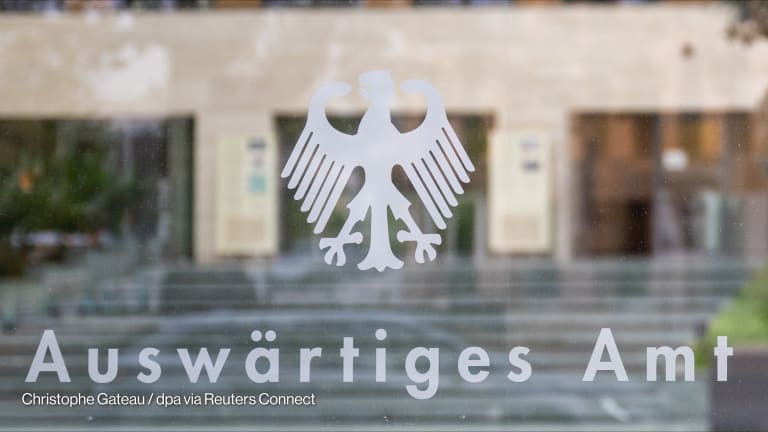
Humanitarian aid is set to take a big hit, with the newly approved budget maintaining the more than 50% drop in funding for humanitarian assistance originally made in the 2025 budget. The government will also embark on a major restructuring of its Federal Foreign Office, which will entail sizable staff cuts, according to an internal memo seen by Devex.
In addition, the stabilization department, known as Department S — which is responsible for all crisis-related programs, including humanitarian aid and crisis prevention — will be dissolved, my colleague Jesse Chase-Lubitz reports. And in a move reminiscent of the new regional focus at the U.S. State Department, the German Foreign Office will put more resources toward its regional offices to make in-country management “more targeted and effective,” according to the memo.
“They will prioritize regions with a strong geopolitical relevance for Germany,” says Ralf Südhoff of the Centre for Humanitarian Action, a German think tank. “They will prioritize Ukraine, everything migration related, and everything which is of relevance for economic relations, like raw materials.”
The rhetoric emanating from the Foreign Office echoes that of Germany’s development ministry, known as the BMZ, which in October published a plan showing that it is refocusing on economic cooperation and private partnerships to benefit the German economy.
That leaves areas such as humanitarian assistance getting the short end of the stick.
“This budget for next year was the first one that the new government could write on their own,” Südhoff says. “The decision not to do this is a really clear signal that [humanitarian aid] is not a priority.”
Read: Germany overhauls foreign office amid major humanitarian budget cuts (Pro)
+ Curious about the insights that drive global development? Experience Devex Pro with a 15-day free trial and explore expert analyses, unlock hidden funding opportunities, connect with key players at exclusive events, and access a wealth of knowledge you won’t find anywhere else. Check out some of the content exclusive to Pro readers.
The Swedes too?!
Another stalwart of foreign assistance is embarking on a similar path of focusing on its backyard, at the expense of more fragile settings further away.
Sweden will phase out development aid to at least five countries in 2026 as part of an effort to free up money for Ukraine, Jesse reports.
Ukraine will see a bump of around $1 billion, while aid will cease entirely for Zimbabwe, Tanzania, Mozambique, Liberia, and Bolivia. The Swedish embassies in Bolivia, Liberia, and Zimbabwe will also close.
“The money has to come from somewhere to balance the budget,” said Sweden’s minister for international development cooperation and foreign trade, Benjamin Dousa, at a press conference. He also noted that, in the government’s view, aid has not always had the desired effect, sometimes creating dependency rather than development.
Dousa added that humanitarian aid would remain intact, and he guaranteed that “AIDS prevention and other important health interventions, things that literally save lives, will not be affected by this.”
That’s cold comfort to organizations whose projects are now on the chopping block.
“The Swedish government is working towards dismantling the longstanding tradition of Swedish development aid for ideological reasons,” says Suzanne Standfast, Oxfam Sweden’s secretary-general. “Poverty eradication is clearly not seen as a pressing issue.”
Read: Sweden cuts aid to 5 countries to free up financial support to Ukraine
Filling the gulf
The wealthy Gulf state of Qatar is becoming a development heavyweight as it projects its power abroad, notably in war-torn Syria.
It’s got plenty of money to chip in thanks to abundant oil and natural gas. The Qatar Fund for Development, the country’s central aid agency, has grown in lockstep with Qatar itself, whose per-capita GDP is roughly twice that of the U.K., Canada, or France, along with most high-income nations.
Qatar contributed a cumulative $642.4 million in foreign assistance last year. That’s 0.32% of the country’s gross national income — a figure far below the United Nations target of 0.7%, but on par with the world’s largest donors.
Strategic neighboring countries have benefited from that largesse.
“The Gulf States have a lot of interest in expanding their influence in the Arab world and in the Middle East in general,” says Mohammad Yaghi, a political scientist specializing in the Middle East and the Gulf. “It’s an area that affects their sovereignty, and it’s an area that can undermine their stability.”
That includes Syria, a testing ground for Qatar’s ambitions, my colleague Elissa Miolene writes. Qatar’s benefactor role in Syria escalated not only after the overthrow of the al-Assad regime, but the collapse of USAID, which for years had been the largest aid donor to the country.
“In Syria, we’ve been there since the beginning,” Fahad Hamad Al-Sulaiti, director-general of the Qatar Fund for Development, told Elissa in Doha last month. “But since the eighth of December [when the al-Assad regime fell], we’ve made a big transition in terms of our commitment.”
“We are changing our model, and we want to make sure that we are on the right track of development,” Al-Sulaiti added, speaking not just of Syria, but of Qatar’s engagements as a whole. “What we’re looking for is, how can we create a good economy? And how can we create a good return for those countries?”
Read: Qatar’s quiet rise as a development powerhouse (Pro)
+ Get the latest in development funding, data-driven funding analyses, and resource mobilization news in your inbox every Monday by signing up for Money Matters, a free weekly newsletter.
So very nearly there
$1.8 billion
—Meanwhile, in the nearby Gulf state of the United Arab Emirates, the Global Polio Eradication Initiative, or GPEI, received more than $1.8 billion in pledges from donor governments and private foundations at a pledging event in Abu Dhabi, my colleague Jenny Lei Ravelo reports.
The total includes previously announced pledges and contributions, as well as $1.2 billion in new commitments — including $800 million from the Gates Foundation and $140 million from the Mohamed bin Zayed Foundation for Humanity.
“We’re 99.9% of the way there — but the last stretch demands the same determination that got us this far,” Bill Gates said in a news release.
Why is this important? The pledges will reduce GPEI’s $1.7 billion funding gap to about $440 million, and support global efforts to eradicate polio, which partners hope to achieve by 2029.
Read: Polio eradication secures nearly $2B in pledges at Abu Dhabi summit
Hard lesson in math
Here’s another impressive number: $30,000. OK, that may seem small compared to amounts needed for polio eradication, but that’s the amount a person working abroad for the United Nations can receive as a college education grant annually for each of their children.
Foreign nationals working in U.N. headquarters can receive as much as half of the tuition costs for a private American university. Americans posted in foreign duty stations, but not on U.S. soil, can also claim the benefit, my colleague Colum Lynch writes.
But in case you haven’t noticed the theme of this (and so many other) newsletter edition, that perk is in danger of being eliminated.
The Trump administration, with backing from the European Union, wants to claw back funding for such staff entitlements, arguing they have become too generous and out of line with benefits awarded to comparable government workers.
In a recent meeting on U.N. reform, Jeff Bartos, U.S. ambassador for U.N. management and reform, said that the U.N. reform initiative dubbed UN80, combined with a series of austerity measures, “are a necessary first step for the United Nations to get back to basics.”
But there’s no guarantee the U.S. and Europeans will get their way. They face stiff opposition from a coalition of more than 130 low- and middle-income countries, and would require broader buy-in from the global south.
Exclusive: US and EU aim to kill UN college education subsidy
In other news
Israeli authorities raided a vacant UNRWA compound in East Jerusalem over alleged unpaid taxes, prompting the agency’s chief Philippe Lazzarini to accuse Israel of violating U.N. legal protections. [New York Times]
Sudan’s paramilitary Rapid Support Forces launched drone strikes on a kindergarten and hospital in Kalogi, Kordofan, killing at least 114 people, including 63 children, and targeting paramedics and responders, according to the World Health Organization. [Reuters]
The U.N.’s humanitarian coordination office has lowered its 2026 funding appeal to $33 billion after Western donor support this year hit a decade low. [Associated Press]
Sign up to Newswire for an inside look at the biggest stories in global development.
About the author

Anna Gawel
Anna Gawel is the Managing Editor of Devex. She previously worked as the managing editor of The Washington Diplomat, the flagship publication of D.C.’s diplomatic community. She’s had hundreds of articles published on world affairs, U.S. foreign policy, politics, security, trade, travel and the arts on topics ranging from the impact of State Department budget cuts to Caribbean efforts to fight climate change. She was also a broadcast producer and digital editor at WTOP News and host of the Global 360 podcast. She holds a journalism degree from the University of Maryland in College Park.
Search for articles



Most Read
- 1
- 2
- 3
- 4
- 5