


Presented by Friedman School of Nutrition Science & Policy at Tufts University

If there’s one food that unites much of Asia and the Pacific, it’s rice. The grain is a daily staple for more than 2 billion people in the region.
So it’s a no-brainer that Asian governments and international organizations such as the World Food Programme have targeted rice in their push to improve people’s overall health and nutrition. Those efforts have drastically scaled up in recent years: Today more than 800 million people in the region have access to fortified rice, or varieties that have been enriched with key vitamins and minerals.
“Through fortified rice, you are able to have a cost-effective approach to reaching millions of people with a basic food commodity that everyone in this region eats,” Samir Wanmali, WFP’s regional director for Asia and the Pacific, tells Devex contributor Rebecca Root.
And the results are rolling in. Bangladesh saw a 5% reduction in the number of anemic women who consumed fortified rice, while teenage girls in Indonesia had higher folic acid levels, meaning they were less likely to become anemic. The benefits extend to more than just health: Every $1 invested in fortification generates $27 in economic returns from averted disease, improved earnings, and greater work productivity, according to WFP.
How are countries rolling out this super healthy rice at such a large scale? Public procurement has made the biggest impact, along with technical support from WFP. And that will bring the private sector on board, experts say.
Take India, for example. In the world’s most populous country, more than half of the population now has access to fortified rice — the highest figure across the region, Rebecca writes. The Indian government, the region’s largest investor, has committed approximately $2 billion per year through 2028 to facilitate the distribution of fortified rice. From 2019 to 2024 it worked on a nationwide rollout, replacing conventional rice with fortified rice in all government safety net programs — from school meals to child health initiatives and ration card subsidy schemes. This created the guaranteed, large-scale demand that millers sought in order to invest in technology to blend regular rice kernels with fortified ones, according to the Asian Development Bank’s Takashi Yamano. More than 21,000 mills in India now use fortification technology.
“One lesson is that the governments themselves are the largest financiers or are the ones that are willing to take the risk, to make that investment, and test it at scale,” Wanmali says.
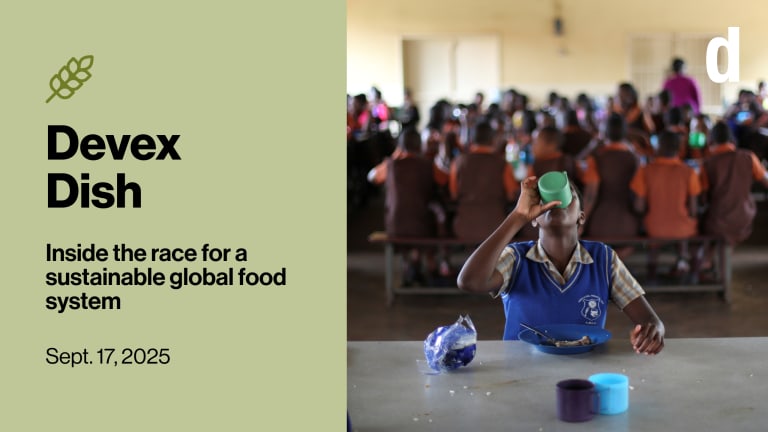
Bhutan, Cambodia, and Sri Lanka are now delivering fortified rice through school feeding programs. In Nepal, WFP is providing supply-chain logistics support to get the ingredients and materials needed to fortify rice in hard-to-reach communities.
Importantly for consumers, the cost is nearly the same, with fortified rice estimated to cost just 2% to 5% more than regular rice, according to the Food Fortification Initiative. And production costs will naturally decrease as fortification becomes more common and competitive markets emerge.
When it comes to adoption, it is up to governments not only to kick-start markets, but also to gain the public’s trust. In India, for example, some recipients of government programming initially rejected the fortified rice following social media rumors labeling it “plastic rice.” And in the Philippines, a court in 2024 banned cultivation of a genetically modified variety known as Golden Rice after a campaign by Greenpeace — even though the government introduced it to fight Vitamin A deficiencies, and most scientists say it is perfectly safe and lifesaving.
Still, in a time of drastic foreign aid cuts, tight domestic budgets, and stubbornly high rates of global malnutrition, fortifying staple foods is a relatively cheap intervention with a very high payoff. That’s what drove the Gates Foundation in 2024 to name large-scale food fortification as one of four solutions the world should invest in to build healthier populations.
Read: Asia is fighting malnutrition by turbocharging fortified rice production
See also: New ways of fortifying staple foods could save lives. Here’s how
Don’t miss: We know how to treat anemia. So why is it still so common?
And if your plate still isn’t full enough: Can these scientists usher in a new rice age?
Getting the check
The Asian Development Bank is one of the institutions funding the region’s rapid rollout of fortified foods. Next week, Manila will be abuzz with nutrition, agriculture, and food systems specialists — including the prime minister of Bhutan, Tshering Tobgay — as they gather for ADB’s Asia and the Pacific Food Systems Forum 2026.
The theme is “Feeding the Future, Sustaining the Planet,” and a big part of the conversation is expected to be how ADB should spend the $40 billion it has committed to invest in food systems and nutrition by 2030. It announced the surprise pledge last May — and while some of the money has been allocated, Qingfeng Zhang, ADB’s senior director of the agriculture, food, nature, and rural development sector office, tells Rebecca that the bank wants to discuss what more country-driven, science-based solutions might look like.
With Asia and the Pacific experiencing the full force of climate change — think a steady
rotation of floods, cyclones, and heat waves — economic volatility, along with high rates of hunger, obesity, and malnutrition, there’s much to discuss.
“The scale of the problem, however, is matched by a genuine window of political will, strong
policies, and investment momentum. And the … forum sits in this intersection,” says Jamie
Morrison, senior adviser for policy and external relations at the Global Alliance for Improved Nutrition. New regional initiatives and partnerships will be announced, so watch this space.
Will you be at the forum next week? Devex Senior Reporter Jenny Lei Ravelo will be on the ground. Email her at jennylei.ravelo@devex.com.
Background: How ADB plans to invest $40 billion in food systems by 2030 (Pro)
+ Experience Devex Pro with a 15-day free trial and explore expert analyses, unlock hidden funding opportunities, connect with key players at exclusive events, and access a wealth of knowledge you won’t find anywhere else. Check out some of the content exclusive to Pro readers.
Wartime rations
As if global food security and prices haven’t been unstable enough recently, they’re now getting even more volatile.
Bringing home the bacon
Your next job?
Director, Corporate Engagement
Sustainable Agriculture Network
Worldwide (remote)
The U.S.-Israel war with Iran is stalling oil and fertilizer exports through the Strait of Hormuz, the Persian Gulf’s only sea passage to the open ocean. The closure of this crucial waterway has also triggered price spikes for raw materials for fertilizer — such as urea, ammonia, phosphates, and sulfur — that come from Middle East countries such as Qatar and Saudi Arabia.
“A prolonged conflict would likely choke global sea trade with the Persian Gulf region, raising the costs of energy and fertilizer prices globally, directly threatening food security in Gulf countries (which depend on imports of grains, oilseeds, and vegetable oils through the Strait of Hormuz), and potentially affecting food production and prices in other regions as well,” according to Joseph Glauber, a research fellow emeritus with the International Food Policy Research Institute. Countries including India, Brazil, Thailand, and South Africa rely on countries in the Persian Gulf for a significant proportion of their fertilizer inputs.
WFP is already seeing disruptions to its work. Internal displacement and food insecurity spiked in Lebanon and Iran from the first days of the conflict, while border closures in Gaza sent food prices higher. “As the conflict disrupts supply chains, drives up costs and weakens the purchasing power of families, people already on the edge could be pushed further towards severe food insecurity,” WFP said in a statement.
Chew on this
Somalia, which has lost 70% of its global humanitarian funding in a single year, now faces a “food crisis” as organizations are notified that their lifesaving U.S. grants are ending. [Devex]
A new nonpartisan policy organization led by former U.S. special envoy for global food security, Cary Fowler, is urging the U.S. to invest $100 billion to boost sustainability and productivity of food crops. [Food Security Leadership Council]
The U.N. can’t reform itself without renewed — and younger — leadership, Clim-Eat’s Dhanush Dinesh writes in an opinion piece. [Devex Opinion]
Food loss and waste can be a reservoir and even an accelerator for antimicrobial resistance, or AMR, highlighting that it should be integrated into AMR surveillance and management strategies. [FAO]
The hunger crisis is set to worsen in West and Central Africa. Here’s why and what to do about it. [The Conversation]
Rebecca Root contributed to this edition of Devex Dish.
About the author

Tania Karas@TaniaKaras
Tania Karas is a Senior Editor at Devex, where she edits coverage on global development and humanitarian aid in the Americas. Previously, she managed the digital team for The World, where she oversaw content production for the website, podcast, newsletter, and social media platforms. Tania also spent three years as a foreign correspondent in Greece, Turkey, and Lebanon, covering the Syrian refugee crisis and European politics. She started her career as a staff reporter for the New York Law Journal, covering immigration and access to justice.
Search for articles



Most Read
- 1
- 2
- 3
- 4
- 5