• News
    • Latest news
    • News search
    • Health
    • Finance
    • Food
    • Career news
    • Content series
    • Focus areas
    • Try Devex Pro
  • Jobs
    • Job search
    • Post a job
    • Employer search
    • CV Writing
    • Upcoming career events
    • Try Career Account
  • Funding
    • Funding search
    • Funding news
  • Talent
    • Candidate search
    • Devex Talent Solutions
  • Events
    • Upcoming and past events
    • Partner on an event
  • Post a job
  • About
      • About us
      • Membership
      • Newsletters
      • Advertising partnerships
      • Devex Talent Solutions
      • Contact us
Join DevexSign in
Join DevexSign in

News

  • Latest news
  • News search
  • Health
  • Finance
  • Food
  • Career news
  • Content series
  • Focus areas
  • Try Devex Pro

Jobs

  • Job search
  • Post a job
  • Employer search
  • CV Writing
  • Upcoming career events
  • Try Career Account

Funding

  • Funding search
  • Funding news

Talent

  • Candidate search
  • Devex Talent Solutions

Events

  • Upcoming and past events
  • Partner on an event
Post a job

About

  • About us
  • Membership
  • Newsletters
  • Advertising partnerships
  • Devex Talent Solutions
  • Contact us
  • My Devex
  • Update my profile % complete
  • Account & privacy settings
  • My saved jobs
  • Manage newsletters
  • Support
  • Sign out
Latest newsNews searchHealthFinanceFoodCareer newsContent seriesFocus areasTry Devex Pro
    • News
    • Climate change

    Fighting at the forefront: Protecting Southeast Asia from climate change

    With a warming planet now becoming “a threat to sustainable development,” how can regions most vulnerable to climate change, including Southeast Asia, mitigate its negative effects? IPCC vice chair Jean-Pascal van Ypersele gives us the inside track on the findings of its synthesis report.

    By Lean Alfred Santos // 18 August 2015
    As the world is expected to finalize a new global climate agreement in Paris, France, at the end of the year, many experts and stakeholders still question whether this international initiative will be comprehensive enough to include the most vulnerable people in the smallest nations. “Some of the key risks in the region are increased flood damage to infrastructure, livelihoods and settlements, heat-related human mortality, and increased drought-related water and food shortages,” Jean-Pascal van Ypersele, vice chair of the Intergovernmental Panel on Climate Change, told Devex. Among the climate change-related events that happened recently include Typhoon Haiyan, which killed more than 6,000 people in the Philippines in 2013, and the extreme heat wave that hit India in May this year, which has resulted in over 2,500 deaths. Many people living in Pacific island nations continue to face the possibility of eventually becoming climate refugees as well, should sea levels rise high enough to inundate their countries completely. It should then come as no surprise that nations in these climate-vulnerable regions want to have a bigger voice in global discussions. But apart from that, there is also the question of whether these frontier nations are equipped enough to handle the devastating effects of a warmer planet, while juggling the perceived trade-off for economic growth. While there have been several discussions on how to effectively mitigate the adverse effects of climate change, van Ypersele explained that the focus should not veer away from those who will be affected the most: the poor. “The IPCC has repeatedly assessed that the poor are in general more vulnerable to the effects of climate, so those risks affect the poor disproportionately,” he said. For context, 60 percent of the world’s poor in countries largely considered developing or least developed are in Asia and the Pacific. Addressing climate change By now, the world is no longer a stranger to the causes and effects of climate change. A warming planet, van Ypersele said, has become “a threat to sustainable development.” If that is the case, is there a way to address this problem? “There are many opportunities to link mitigation, adaptation and the pursuit of social objectives,” he said. “These include the eradication of poverty, increasing access to basic energy and clean water, food security … [and] there can be co-benefits [in] climate mitigation and adaptation [including] in job creation.” IPCC launched its “Climate Change 2014 Synthesis Report” Tuesday, Aug. 18, in Bangkok, Thailand. The report pulls out the most important findings of IPCC various studies and assessments on the impact of climate change and ways to strengthen adaptation and mitigation measures. Among other solutions, the report highlights the large potential of efforts to improve energy efficiency and boost the use of renewable energy sources. While effective energy efficiency solutions require technology that may not be accessible to poorer countries, the report said partnerships with different stakeholders — such as those from the private sector or the academe — are not only helpful but crucial to their success. And while renewable energy output is still not enough to be the main source in many energy-hungry nations, greater investments in clean energy may push output high enough to become a viable base load substitute to traditional coal and gas, van Ypersele said. But the IPCC official offers other climate change mitigation measures as well, including eliminating fuel subsidies, and improving the efficiency standards of vehicles, appliances and industries. Another alternative is carbon pricing or taxation — something renowned economist Jeffrey Sachs has been advocating in his capacity as director of the New York-based Earth Institute. The idea is to tax countries based on their carbon emissions, and the money that will be collected will be used to further climate change mitigation and adaptation programs. Van Ypersele said carbon pricing is “indeed an important option to consider and can be a very efficient tool” but explained that there should be variations on how this measure is implemented, given ongoing debate on the issue. “The report diagnoses the severity of the problem, but also gives hope, as it concluded that humanity has the means, today, to limit climate change and address … some of the other very pressing issues we are facing on this planet,” he concluded. Read more international development news online, and subscribe to The Development Newswire to receive the latest from the world’s leading donors and decision-makers — emailed to you FREE every business day.

    Related Stories

    Experts warn of spike in heat deaths as countries backpedal on climate
    Experts warn of spike in heat deaths as countries backpedal on climate
    Slashing super pollutants is a win. So where's the money?
    Slashing super pollutants is a win. So where's the money?
    Can nature be placed on the balance sheet?
    Can nature be placed on the balance sheet?
    Devex Invested: The climate insurance lottery low-income countries can’t afford
    Devex Invested: The climate insurance lottery low-income countries can’t afford

    As the world is expected to finalize a new global climate agreement in Paris, France, at the end of the year, many experts and stakeholders still question whether this international initiative will be comprehensive enough to include the most vulnerable people in the smallest nations.

    “Some of the key risks in the region are increased flood damage to infrastructure, livelihoods and settlements, heat-related human mortality, and increased drought-related water and food shortages,” Jean-Pascal van Ypersele, vice chair of the Intergovernmental Panel on Climate Change, told Devex.

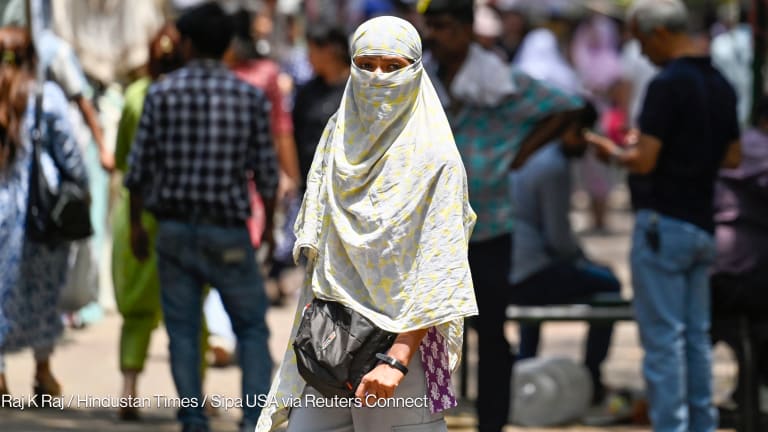
    Among the climate change-related events that happened recently include Typhoon Haiyan, which killed more than 6,000 people in the Philippines in 2013, and the extreme heat wave that hit India in May this year, which has resulted in over 2,500 deaths. Many people living in Pacific island nations continue to face the possibility of eventually becoming climate refugees as well, should sea levels rise high enough to inundate their countries completely.

    This article is free to read - just register or sign in

    Access news, newsletters, events and more.

    Join usSign in
    • Environment & Natural Resources
    Printing articles to share with others is a breach of our terms and conditions and copyright policy. Please use the sharing options on the left side of the article. Devex Pro members may share up to 10 articles per month using the Pro share tool ( ).

    About the author

    • Lean Alfred Santos

      Lean Alfred Santos@DevexLeanAS

      Lean Alfred Santos is a former Devex development reporter focusing on the development community in Asia-Pacific, including major players such as the Asian Development Bank and the Asian Infrastructure Investment Bank. He previously covered Philippine and international business and economic news, sports and politics.
    Search for articles

    Related Stories

    Climate ChangeRelated Stories - Experts warn of spike in heat deaths as countries backpedal on climate

    Experts warn of spike in heat deaths as countries backpedal on climate

    COP30Related Stories - Slashing super pollutants is a win. So where's the money?

    Slashing super pollutants is a win. So where's the money?

    ClimateRelated Stories - Can nature be placed on the balance sheet?

    Can nature be placed on the balance sheet?

    Devex InvestedRelated Stories - Devex Invested: The climate insurance lottery low-income countries can’t afford

    Devex Invested: The climate insurance lottery low-income countries can’t afford

    Most Read

    • 1
      Exclusive: Former Iraqi president picked to lead UN Refugee Agency
    • 2
      Invest in diagnostics to win the health fight
    • 3
      Financing Asia’s transformation: How to plug the trillion-dollar gap
    • 4
      State Department scrambles to rebuild foreign aid workforce
    • 5
      Future forward: Closing infrastructure gaps for climate innovation
    • News
    • Jobs
    • Funding
    • Talent
    • Events

    Devex is the media platform for the global development community.

    A social enterprise, we connect and inform over 1.3 million development, health, humanitarian, and sustainability professionals through news, business intelligence, and funding & career opportunities so you can do more good for more people. We invite you to join us.

    • About us
    • Membership
    • Newsletters
    • Advertising partnerships
    • Devex Talent Solutions
    • Post a job
    • Careers at Devex
    • Contact us
    © Copyright 2000 - 2025 Devex|User Agreement|Privacy Statement