• News
    • Latest news
    • News search
    • Health
    • Finance
    • Food
    • Career news
    • Content series
    • Focus areas
    • Try Devex Pro
  • Jobs
    • Job search
    • Post a job
    • Employer search
    • CV Writing
    • Upcoming career events
    • Try Career Account
  • Funding
    • Funding search
    • Funding news
  • Talent
    • Candidate search
    • Devex Talent Solutions
  • Events
    • Upcoming and past events
    • Partner on an event
  • Post a job
  • About
      • About us
      • Membership
      • Newsletters
      • Advertising partnerships
      • Devex Talent Solutions
      • Contact us
Join DevexSign in
Join DevexSign in

News

  • Latest news
  • News search
  • Health
  • Finance
  • Food
  • Career news
  • Content series
  • Focus areas
  • Try Devex Pro

Jobs

  • Job search
  • Post a job
  • Employer search
  • CV Writing
  • Upcoming career events
  • Try Career Account

Funding

  • Funding search
  • Funding news

Talent

  • Candidate search
  • Devex Talent Solutions

Events

  • Upcoming and past events
  • Partner on an event
Post a job

About

  • About us
  • Membership
  • Newsletters
  • Advertising partnerships
  • Devex Talent Solutions
  • Contact us
  • My Devex
  • Update my profile % complete
  • Account & privacy settings
  • My saved jobs
  • Manage newsletters
  • Support
  • Sign out
Latest newsNews searchHealthFinanceFoodCareer newsContent seriesFocus areasTry Devex Pro
    • Opinion
    • Opinion: Global Health

    Guinea worm’s near-eradication shows what’s possible for tropical diseases

    Opinion: The world has gone from 3.5 million cases of Guinea worm among people to just 10 cases in 40 years. This is a reason for celebration and for caution, not to give up on reaching full eradication.

    By Dr. Kashef Ijaz // 30 January 2026
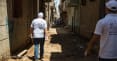
    I’ve got good news for humankind: The world is on the brink of eradicating Guinea worm disease, which would make it the second human disease ever eradicated after smallpox. Now for the not-so-good news: The progress toward eradication is fragile, and all the hard-won gains could be lost without sustained commitment from the global community. As we commemorate World Neglected Tropical Diseases Day today, the near-eradication of Guinea worm disease is a powerful example of what country-led, global health collaboration can achieve. It’s also a warning about what’s at risk, as the fallout from funding challenges in global health threatens to reverse progress at the exact moment when the eradication milestone is within reach. Guinea worm disease, or dracunculiasis, is a painful parasitic infection spread through contaminated drinking water and undercooked aquatic animals. The female worm, which can reach up to three feet long when mature, creates a blister and slowly emerges over the course of weeks. There is no medicine to treat it, and no vaccine to prevent it. Guinea worm has infected humans since antiquity; references to the incapacitating disease date back to 1500 B.C., appearing in hieroglyphics on ancient Egyptian medical papyri, and it remained widespread across South Asia and Africa well into the 20th century. When The Carter Center assumed leadership of the global Guinea Worm Eradication Program in 1986, an estimated 3.5 million human cases occurred annually in 21 countries in Africa and Asia. Not anymore. This week, The Carter Center’s latest report reveals that in 2025, only 10 cases were reported worldwide, the lowest annual total of human cases ever recorded. The eradication campaign, which includes national ministries of health and other partners such as the World Health Organization, the U.S. Centers for Disease Control and Prevention, and UNICEF, has reduced the disease by more than 99.99% and averted more than 100 million cases among the world’s most marginalized and neglected populations. The achievement is remarkable not only for its scale but also for occurring without a vaccine or medicine. Instead, eradication has been driven by behavior change and a network of hundreds of thousands of volunteers, trained to provide health education in their communities. Guinea worm disease is a neglected tropical disease, a group of preventable diseases that disproportionately affect people living in poverty. Over 1 billion people worldwide are affected by NTDs. The diseases cause chronic pain, blindness, and disfigurement, contributing to a damaging cycle that keeps children out of school and adults out of work. But it doesn’t have to be that way. NTDs are preventable, treatable, and increasingly, on the pathway to being eliminated. The Carter Center’s health programs focus on eliminating five neglected tropical diseases: guinea worm, river blindness, trachoma, schistosomiasis, and lymphatic filariasis. We have assisted 22 countries in eliminating at least one disease. The solutions used to prevent NTDs are cost-effective and scalable, making NTDs one of the smartest health investments. Every $1 invested in preventive therapies for NTDs generates approximately $25 in economic benefits for affected communities. The campaign to end NTDs also strengthens local health systems, helping bolster diagnostic platforms, create sustainable systems, and build partnerships that can be used for a variety of public health work. I’ve seen firsthand how the work to prevent NTDs relieves needless human suffering, supports economic stability, and promotes peace. One of my favorite examples is the 1995 “Guinea worm ceasefire” when then-U.S. President Jimmy Carter negotiated the longest humanitarian ceasefire in history during the Second Sudanese Civil War. The nearly six-month truce provided a reprieve from violence and unrelenting bloodshed, and the two warring factions allowed health workers to reach remote regions in southern Sudan that were heavily affected by Guinea worm, distributing 200,000 cloth filters to strain larvae from drinking water and immunizing 100,000 children against measles, polio, and tuberculosis. Still, the progress we’ve made against NTDs is fragile. While the campaign against NTDs has been driven by strong country leadership, we need sustained global and financial commitments so we don’t drop the baton in our final lap toward eradicating Guinea worm and eliminating many other NTDs. We risk decades of progress if we let disruptions to funding and delivery systems, such as the dissolution of the U.S. Agency for International Development, impact our ability to prioritize ending NTDs. Last year, when the typical distribution system collapsed, our team had to mobilize alternative networks to ensure the timely delivery of $98 million worth of trachoma-fighting antibiotics to 10 million people across Ethiopia and Mozambique. While this was a successful outcome, it is not a sustainable solution. President Carter liked to say that there were no neglected diseases, only neglected people. The truth is that NTDs are a massive global health challenge. But we also know what we need to do to eliminate them. The progress we’ve made toward eradicating Guinea worm makes it clear: We can, and we must, eliminate NTDs. Now is not the time to give up the fight.

    Related Stories

    Why NTDs are a prime investment for philanthropy
    Why NTDs are a prime investment for philanthropy
    Egypt triumphs over centuries-old fight against trachoma
    Egypt triumphs over centuries-old fight against trachoma
    Devex Newswire: The 50 powerful people you need to know
    Devex Newswire: The 50 powerful people you need to know
    The END Fund: A collaborative fund approach to health integration
    The END Fund: A collaborative fund approach to health integration

    I’ve got good news for humankind: The world is on the brink of eradicating Guinea worm disease, which would make it the second human disease ever eradicated after smallpox.

    Now for the not-so-good news: The progress toward eradication is fragile, and all the hard-won gains could be lost without sustained commitment from the global community.

    As we commemorate World Neglected Tropical Diseases Day today, the near-eradication of Guinea worm disease is a powerful example of what country-led, global health collaboration can achieve. It’s also a warning about what’s at risk, as the fallout from funding challenges in global health threatens to reverse progress at the exact moment when the eradication milestone is within reach.

    This article is free to read - just register or sign in

    Access news, newsletters, events and more.

    Join usSign in

    More reading:

    ► Can innovative models close financing gaps for neglected disease R&D? (Pro)

    ► Opinion: It's official, noma is a neglected tropical disease. Now what?

    ► Opinion: A 'one health' approach can avert climate crisis impact on NTDs

    • Global Health
    • Private Sector
    • Trade & Policy
    • Funding
    • Humanitarian Aid
    • The Carter Center
    Printing articles to share with others is a breach of our terms and conditions and copyright policy. Please use the sharing options on the left side of the article. Devex Pro members may share up to 10 articles per month using the Pro share tool ( ).
    The views in this opinion piece do not necessarily reflect Devex's editorial views.

    About the author

    • Dr. Kashef Ijaz

      Dr. Kashef Ijaz

      Dr. Kashef Ijaz is a medical epidemiologist and the vice president for health programs at The Carter Center. He leads initiatives working to control, eliminate, or eradicate six tropical diseases in 18 nations, and efforts to improve mental health care and caregiving worldwide.

    Search for articles
    Related Stories

    Produced in Partnership: Escape the NeglectRelated Stories - Why NTDs are a prime investment for philanthropy

    Why NTDs are a prime investment for philanthropy

    Escape the NeglectRelated Stories - Egypt triumphs over centuries-old fight against trachoma

    Egypt triumphs over centuries-old fight against trachoma

    Devex NewswireRelated Stories - Devex Newswire: The 50 powerful people you need to know

    Devex Newswire: The 50 powerful people you need to know

    The future of global healthRelated Stories - The END Fund: A collaborative fund approach to health integration

    The END Fund: A collaborative fund approach to health integration

    Most Read

    • 1
      One year on: Is Africa’s surgical equity push delivering real change?
    • 2
      How to deliver results at scale for people and planet
    • 3
      Ending HIV globally requires action in Eastern Europe and Central Asia
    • 4
      What will it take to unlock private financing in a changing era?
    • 5
      UN diplomats revel in US setback at women’s rights forum
    • News
    • Jobs
    • Funding
    • Talent
    • Events

    Devex is the media platform for the global development community.

    A social enterprise, we connect and inform over 1.3 million development, health, humanitarian, and sustainability professionals through news, business intelligence, and funding & career opportunities so you can do more good for more people.

    • About us
    • Membership
    • Newsletters
    • Advertising partnerships
    • Devex Talent Solutions
    • Post a job
    • Careers at Devex
    • Contact us
    © Copyright 2000 - 2026 Devex|User Agreement|Privacy Statement