
• News
    • Latest news
    • News search
    • Health
    • Finance
    • Food
    • Career news
    • Content series
    • Focus areas
    • Try Devex Pro
  • Jobs
    • Job search
    • Post a job
    • Employer search
    • CV Writing
    • Upcoming career events
    • Try Career Account
  • Funding
    • Funding search
    • Funding news
  • Talent
    • Candidate search
    • Devex Talent Solutions
  • Events
    • Upcoming and past events
    • Partner on an event
  • Post a job
  • About
      • About us
      • Membership
      • Newsletters
      • Advertising partnerships
      • Devex Talent Solutions
      • Contact us
Join DevexSign in
Join DevexSign in

News

  • Latest news
  • News search
  • Health
  • Finance
  • Food
  • Career news
  • Content series
  • Focus areas
  • Try Devex Pro

Jobs

  • Job search
  • Post a job
  • Employer search
  • CV Writing
  • Upcoming career events
  • Try Career Account

Funding

  • Funding search
  • Funding news

Talent

  • Candidate search
  • Devex Talent Solutions

Events

  • Upcoming and past events
  • Partner on an event
Post a job

About

  • About us
  • Membership
  • Newsletters
  • Advertising partnerships
  • Devex Talent Solutions
  • Contact us
  • My Devex
  • Update my profile % complete
  • Account & privacy settings
  • My saved jobs
  • Manage newsletters
  • Support
  • Sign out
Latest newsNews searchHealthFinanceFoodCareer newsContent seriesFocus areasTry Devex Pro
    • News
    • News analysis: South Sudan

    In South Sudan, waiting for the rain

    This year, more acute food shortages could mean normal rains will have especially painful effects if relief organizations cannot deliver emergency food aid.

    By Jennifer Brookland // 13 July 2012

    Related Stories

    ‘We’re turning away 9 out of 10 hungry people’: The cost of shrinking aid
    ‘We’re turning away 9 out of 10 hungry people’: The cost of shrinking aid
    Devex Newswire: A time of rethink and restructure for aid organizations
    Devex Newswire: A time of rethink and restructure for aid organizations
    Hurricane Melissa tests a US disaster system without USAID
    Hurricane Melissa tests a US disaster system without USAID
    What are the key issues at stake at the G20 summit in South Africa?
    What are the key issues at stake at the G20 summit in South Africa?
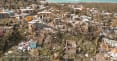
    A refugee camp becomes flooded following heavy rains in South Sudan. The onset of the rainy season has made humanitarian efforts difficult in the country. Photo by: Malini Morzaria / European Commission Humanitarian Aid & Civil Protection

    The rains that turn much of South Sudan to mud each year come as a surprise to no one. People build their houses on stilts and try to store as much food as possible in advance.

    This year, though, more acute food shortages could mean normal rains will have especially painful effects if relief organizations cannot deliver emergency food aid.

    And that’s a real possibility, given that many roads are already impassable and flooding has been predicted.

    “In some places, ours and other organizations’ work stops for several months,” said Pact, Inc. former Sudan country director Graham Wood. The flooding and rain make roads that were already difficult to travel on completely impassable in much of the region. Rural areas are traditionally cut off for three, four, even six months at a time, Wood said.

    In a particularly memorable rainy season four years ago, Wood sent two staff members to Jonglei. They flew in, then drove the last 100 miles. When they arrived, it began to rain, and the two got completely stuck. After several days without electricity, their equipment and phones were inoperable. After a couple of weeks they walked 60 kilometers (37 miles) to the nearest airstrip only to find it flooded, making it impossible for planes to land. All told, they were stranded for three months.

    It’s an extreme case, but not a unique one.

    The rainy season has major effects on South Sudan’s rural communities, which represents more than 80 percent of the country’s population. Pact stops drilling boreholes for people without water, and can’t access existing ones for needed repairs. This leads to spikes in diseases like malaria, pneumonia and foot and mouth disease in livestock. Women who give birth during the rainy season often know they will have no way to reach a health clinic if things go wrong.

    “It’s a really serious situation in a country with almost no infrastructure,” said Wood. “People exist on a very thin line almost all of the time, and if you add the rains it makes it really, really hard for people to cope.”

    Without any real revenue or tax base, it’s also impossible for the government of South Sudan to respond.

    “With the best will in the world and the most fantastic people, they still would not be able to cover these kinds of events,” said Wood.

    With so many basic needs unmet, policymakers, donors and aid workers are hotly debating whether development assistance for South Sudan should be refocused on relief rather than governance and other longer-term development work.

    “How much should we divert development money to basic service delivery?” asked Ambassador Princeton Lyman, U.S. Special Envoy for Sudan, in remarks made July 9.

    The dilemma extends across sectors, from health to agriculture to education, Lyman said. He pointed to a teacher training program the United States planned to fund but later canceled, worried the South Sudanese government would not have the capacity to pay or employ graduates.

    “There is a view that the humanitarian situation is likely to be so bad that the kind of longer term development projects can wait,” Wood said.

    But with no clear distinction between humanitarian relief and development, it’s not a simple one or the other. Wood believes the answer is clear: The people of South Sudan need both.

    Wood feared what he viewed as the alternative: South Sudan could become a failed state.

    “The impact of reduction in aid of any kind,” he said, “is going to be particularly devastating in a state that has almost nothing anyway.”

    • Humanitarian Aid
    Printing articles to share with others is a breach of our terms and conditions and copyright policy. Please use the sharing options on the left side of the article. Devex Pro members may share up to 10 articles per month using the Pro share tool ( ).

    About the author

    • Jennifer Brookland

      Jennifer Brookland

      Jennifer Brookland is a former Devex global development reporter based in Washington, D.C. She has worked as a humanitarian reporter for the United Nations and as an investigative journalist for News21. Jennifer holds a bachelor's in foreign service from Georgetown University and a master's in journalism from Columbia University and in international law and diplomacy from the Fletcher School. She also served for four years as an Air Force officer.


    Search for articles

    Related Stories

    Food systemRelated Stories - ‘We’re turning away 9 out of 10 hungry people’: The cost of shrinking aid

    ‘We’re turning away 9 out of 10 hungry people’: The cost of shrinking aid

    Devex NewswireRelated Stories - Devex Newswire: A time of rethink and restructure for aid organizations

    Devex Newswire: A time of rethink and restructure for aid organizations

    HumanitarianRelated Stories - Hurricane Melissa tests a US disaster system without USAID

    Hurricane Melissa tests a US disaster system without USAID

    Economic developmentRelated Stories - What are the key issues at stake at the G20 summit in South Africa?

    What are the key issues at stake at the G20 summit in South Africa?

    Most Read

    • 1
      Why NTDs are a prime investment for philanthropy
    • 2
      US lawmakers strike $50B foreign assistance deal, surpassing Trump's plan
    • 3
      The silent, growing CKD epidemic signals action is needed today
    • 4
      Why are 3.4 billion people still offline?
    • 5
      Exclusive: Inside US-UN plan to remake funding for humanitarian crises
    • News
    • Jobs
    • Funding
    • Talent
    • Events

    Devex is the media platform for the global development community.

    A social enterprise, we connect and inform over 1.3 million development, health, humanitarian, and sustainability professionals through news, business intelligence, and funding & career opportunities so you can do more good for more people. We invite you to join us.

    • About us
    • Membership
    • Newsletters
    • Advertising partnerships
    • Devex Talent Solutions
    • Post a job
    • Careers at Devex
    • Contact us
    © Copyright 2000 - 2026 Devex|User Agreement|Privacy Statement