• News
    • Latest news
    • News search
    • Health
    • Finance
    • Food
    • Career news
    • Content series
    • Focus areas
    • Try Devex Pro
  • Jobs
    • Job search
    • Post a job
    • Employer search
    • CV Writing
    • Upcoming career events
    • Try Career Account
  • Funding
    • Funding search
    • Funding news
  • Talent
    • Candidate search
    • Devex Talent Solutions
  • Events
    • Upcoming and past events
    • Partner on an event
  • Post a job
  • About
      • About us
      • Membership
      • Newsletters
      • Advertising partnerships
      • Devex Talent Solutions
      • Contact us
Join DevexSign in
Join DevexSign in

News

  • Latest news
  • News search
  • Health
  • Finance
  • Food
  • Career news
  • Content series
  • Focus areas
  • Try Devex Pro

Jobs

  • Job search
  • Post a job
  • Employer search
  • CV Writing
  • Upcoming career events
  • Try Career Account

Funding

  • Funding search
  • Funding news

Talent

  • Candidate search
  • Devex Talent Solutions

Events

  • Upcoming and past events
  • Partner on an event
Post a job

About

  • About us
  • Membership
  • Newsletters
  • Advertising partnerships
  • Devex Talent Solutions
  • Contact us
  • My Devex
  • Update my profile % complete
  • Account & privacy settings
  • My saved jobs
  • Manage newsletters
  • Support
  • Sign out
Latest newsNews searchHealthFinanceFoodCareer newsContent seriesFocus areasTry Devex Pro
    • News
    • Global Health

    Kenyan govt internal memo warns of ‘domino effect’ of US health cuts
    Kenya’s Ministry of Health sent a briefing to President William Ruto to warn of a “domino effect that imperils every link in the healthcare chain.”

    By Sara Jerving // 26 March 2025
    Kenya’s health system is reeling from the Trump administration’s abrupt halt of U.S. foreign aid — a move that has left health facilities underfunded, health workers unemployed, data management systems vulnerable, and placed vital programs, from HIV treatment to malaria prevention, in jeopardy, according to an internal government briefing. The briefing from Kenya’s Ministry of Health, circulated to President William Ruto and his cabinet on March 10, warned the halt in programming was triggering a “domino effect that imperils every link in the healthcare chain.” The United States has supported Kenya’s health systems for decades with funding and technical expertise through the U.S. Agency for International Development, or USAID, the U.S. President’s Emergency Plan for AIDS Relief, or PEPFAR, the U.S. Centers for Disease Control and Prevention, or CDC, and the U.S. Department of Defense. “Vital initiatives — especially those supported by PEPFAR, USAID, and CDC — have experienced severe service interruptions, undermining decades of progress in HIV treatment and broader public health,” according to the document, of which Devex obtained a copy. On Jan. 24, the Trump administration abruptly halted all U.S. foreign aid programming. This “crippled the delivery mechanisms necessary to reach millions in need,” the brief said, and caused “widespread staff layoffs,” which further weakened the “backbone” and exacerbated “the instability” of the nation’s health workforce. It also led to service delivery partners facing “acute operational challenges” and some completely ceasing operations. “This abrupt policy shift halted billions of dollars that were vital for sustaining health programs across Kenya,” it stated. “Kenya’s heavy reliance on donor-funded health systems has revealed deep systemic weaknesses.” And the situation globally has been in flux, with many describing the Trump administration’s implementation of the foreign aid cuts as “chaotic.” Many implementing organizations and countries have been left in limbo — unsure about the final status regarding whether programming has been officially canceled. The U.S. government told many that their programs have been terminated, and in some cases, those terminations were rescinded. On the same day the Kenyan government brief was issued, U.S. Secretary of State Marco Rubio said around 83% of USAID’s global programs have been terminated, leaving only about 1,000 programs. While it’s unclear the final tally of how many of Kenya’s programs supported by the U.S. government have been officially terminated, this memo gives insight into the scale at which the country’s health system has been buoyed by U.S. funding and the health security threats that the Trump administration’s rapid pullout has created for the East African country’s population. “Amid mounting financial uncertainties and a rapidly shifting global funding landscape, the urgent imperative to safeguard and enhance Kenya’s hard-won health achievements has never been more critical,” Dr. Debra Mulongo Barasa, cabinet secretary at the Kenyan Ministry of Health, wrote in the technical brief. “It highlights not only the profound risks posed by the abrupt cessation of US donor funding — particularly in the realm of HIV and related conditions — but also the pressing need to transition smoothly, thereby forestalling any major disruptions to service access.” The Ministry of Health had not responded to Devex’s request for comment at the time of publication. Dwindling stocks Of the 80.5 billion Kenyan shillings ($622.3 million) required annually toward health commodities in the country, about 31% — or KES24.9 billion ($192.5 million) is provided by the U.S. government to “procure, warehouse, and distribute essential commodities,” according to the document. This includes KES8.9 billion ($68.8 million) for HIV programs; KES3.3 billion ($25.5 million) for malaria programs; KES2.9 billion ($22.4 million) for nutrition programs; KES2.7 billion ($20.9 million) for blood supplies; KES598 million ($4.6 million) for family planning; KES585 million (4.5 million) for immunizations; KES63.8 million (around $493,000) for tuberculosis programs; KES3.7 billion ($28.6 million) for other areas, such as oxygen supplies, cancer treatment, and COVID-19 response; and an estimated KES2.3 billion ($17.8 million) for in-country logistical costs. The U.S. has funded about 32% of the HIV programming commodity needs. “Despite a temporary waiver that permits the distribution of these commodities for 60 days during the re-evaluation process, the situation remains precarious, with stock levels barely sufficient to carry the program through to November 2025,” the memo stated. The U.S. government also has supported 73% of the commodity needs for the nation’s malaria programs, which includes nets and preventative medicines for pregnant women, among other things. The halt in programming meant that an indoor residual spraying campaign that was scheduled for February and March was suspended, according to the document, and it noted an “inaccessibility” of over eight months of test kits and first-line medicines. The U.S. has also supplied 24% of the country's family planning program commodities. The country has a family planning commodity supply of less than five months, which is below the required 15-month minimum, the document stated. The U.S. also has supplied 56% of nutrition commodities, and this type of programming “faces a looming stock crisis.” The Americans have also supported about 0.4% of the tuberculosis commodity needs, but that “is still critical,” it stated. ‘A domino effect’ The U.S. has also long supported Kenya’s health information data systems. The brief said that the foreign aid halt has exposed “critical vulnerabilities” in these systems that “are now grappling with maintenance gaps and technology shortages.” This includes data collection for disease surveillance, HIV care, adherence to treatments, vaccination coverage, stock levels, and availability of blood supplies, among other things. Donor funding supports regular technology updates and maintenance, but in the absence of these supports, “these systems face the risk of breakdowns, technological obsolescence, and a failure to evolve with emerging health needs,” the brief stated. This leaves sensitive patient data vulnerable to cyber threats and limits the country’s ability to monitor outbreaks and the effectiveness of programs. These vulnerabilities create “a domino effect that may undermine overall health outcomes.” Many health data systems also rely on proprietary platforms managed by external vendors. “A funding cut may force Kenya to incur high licensing fees or migrate to alternative systems, risking data loss and operational delays,” the brief said. ‘Potential downward spiral’ The U.S. has also played roles in recruiting, training, and retaining health care professionals in Kenya and has supported community health worker programs. The aid pullout risks overburdening and burnout to the remaining staff, the brief said, adding that health facilities risk “falling into disrepair or even closure.” The freeze also threatens the rollout of the nation’s Social Health Insurance Fund. “Without sufficient external funding, the full rollout of the SHIF is at risk, potentially leaving significant gaps in healthcare access,” it stated. It also noted concerns about the government managing the insurance scheme efficiently “in the absence of external technical expertise, robust data systems, and critical infrastructure support.” “The freeze on donor funds risks making the SHIF unaffordable for low-income and vulnerable populations. Historically, donor support has helped bridge gaps in underserved areas,” it stated. The brief noted that the country has “inconsistencies in health financing regulations, vague procurement guidelines, and weak enforcement mechanisms” that have “severely disrupted contract execution across Kenya’s healthcare service delivery system.” “The recent U.S. funding freeze has only amplified these vulnerabilities, particularly in donor-funded programs, Public-Private Partnerships (PPPs), and health worker agreements,” it stated. The briefing also said cuts in funding have led to an increasing backlog of unpaid obligations, “which, if left unresolved, could disrupt the delivery of essential health services.” It has also left unresolved legal disputes and accumulating operational costs that could lead to utility shutoffs and asset repossession. It highlighted the example of $452,720 in unpaid reimbursements for a USAID program at the Kenya Medical Training College. “The risk of asset liquidation looms large, threatening to dismantle key health infrastructure and delay critical interventions. Ultimately, without swift corrective measures, Kenya’s health system faces a potential downward spiral, deepening crises and eroding the trust of both citizens and international donors,” it stated. A moment of urgency The authors — which included 46 people from a variety of government entities — called for urgent, coordinated measures to “fortify Kenya’s health system and guarantee the uninterrupted delivery of lifesaving HIV and health services, even under severe funding constraints.” They said the country needed to “reimagine” health financing, reduce external donor dependency, create a dedicated health contingency fund, fast-track budget disbursements, conduct a rapid fiscal analysis, strengthen public-private partnerships, incentivize private sector engagement, develop co-financing models, improve accountability frameworks, invest in local pharmaceutical manufacturing, review the national insurance benefits package to expand coverage for “critical conditions and commodities,” and explore health bonds, targeted levies, and insurance schemes, among other efforts. They also called for better harmonizing of the work of national policymakers and local health authorities and for the Kenyan government to engage diplomatically with the U.S. government, which would include requests for American technical assistance during Kenya’s transition period. Devex Senior Reporter Jenny Lei Ravelo contributed reporting to this article.

    Related Stories

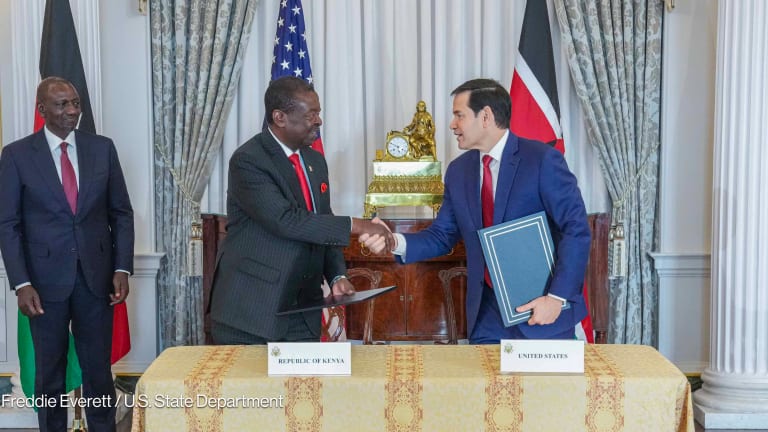
    The US signs first bilateral health deal with Kenya for $1.6 billion
    The US signs first bilateral health deal with Kenya for $1.6 billion
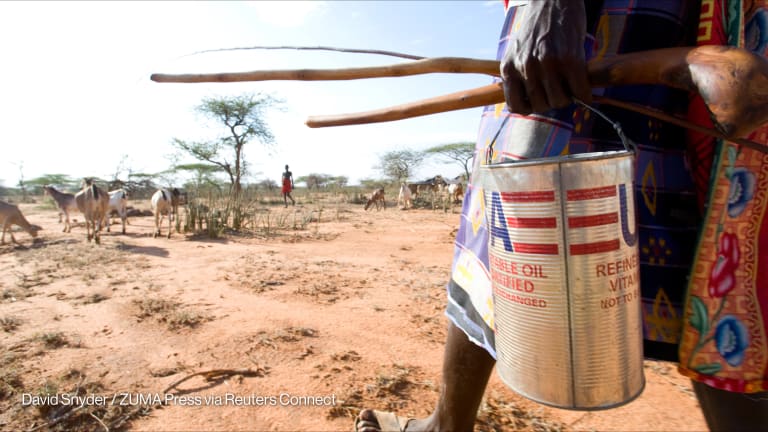
    A year without USAID: In Kenya, the shock reaches herders and hospitals
    A year without USAID: In Kenya, the shock reaches herders and hospitals
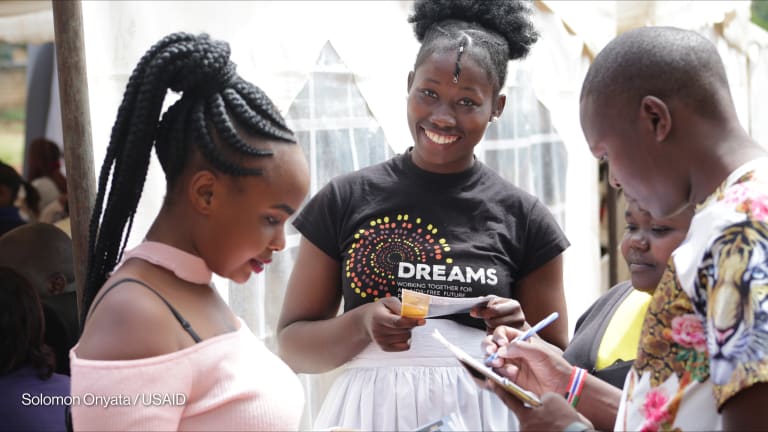
    Life after DREAMS: Kenya’s girls navigate HIV risk without US support
    Life after DREAMS: Kenya’s girls navigate HIV risk without US support
    Citizens will pay the price of health data as a bargaining chip in Africa
    Citizens will pay the price of health data as a bargaining chip in Africa

    Kenya’s health system is reeling from the Trump administration’s abrupt halt of U.S. foreign aid — a move that has left health facilities underfunded, health workers unemployed, data management systems vulnerable, and placed vital programs, from HIV treatment to malaria prevention, in jeopardy, according to an internal government briefing.

    The briefing from Kenya’s Ministry of Health, circulated to President William Ruto and his cabinet on March 10, warned the halt in programming was triggering a “domino effect that imperils every link in the healthcare chain.”

    The United States has supported Kenya’s health systems for decades with funding and technical expertise through the U.S. Agency for International Development, or USAID, the U.S. President’s Emergency Plan for AIDS Relief, or PEPFAR, the U.S. Centers for Disease Control and Prevention, or CDC, and the U.S. Department of Defense.

    This article is free to read - just register or sign in

    Access news, newsletters, events and more.

    Join usSign in

    More reading:

    ► Scoop: USAID Kenya partner has ‘no funds’ to carry out PEPFAR waiver

    ► ‘Disaster’ as health programs reel from USAID terminations

    ► Thousands of African health workers lose jobs due to US aid funding freeze

    • Funding
    • Global Health
    • Trade & Policy
    • United States Agency for International Development (USAID)
    • Kenya
    Printing articles to share with others is a breach of our terms and conditions and copyright policy. Please use the sharing options on the left side of the article. Devex Pro members may share up to 10 articles per month using the Pro share tool ( ).

    About the author

    • Sara Jerving

      Sara Jervingsarajerving

      Sara Jerving is a Senior Reporter at Devex, where she covers global health. Her work has appeared in The New York Times, the Los Angeles Times, The Wall Street Journal, VICE News, and Bloomberg News among others. Sara holds a master's degree from Columbia University Graduate School of Journalism where she was a Lorana Sullivan fellow. She was a finalist for One World Media's Digital Media Award in 2021; a finalist for the Livingston Award for Young Journalists in 2018; and she was part of a VICE News Tonight on HBO team that received an Emmy nomination in 2018. She received the Philip Greer Memorial Award from Columbia University Graduate School of Journalism in 2014.

    Search for articles
    Related Stories

    The Future of Global HealthRelated Stories - The US signs first bilateral health deal with Kenya for $1.6 billion

    The US signs first bilateral health deal with Kenya for $1.6 billion

    Global HealthRelated Stories - A year without USAID: In Kenya, the shock reaches herders and hospitals

    A year without USAID: In Kenya, the shock reaches herders and hospitals

    The Trump EffectRelated Stories - Life after DREAMS: Kenya’s girls navigate HIV risk without US support

    Life after DREAMS: Kenya’s girls navigate HIV risk without US support

    Opinion: Global healthRelated Stories - Citizens will pay the price of health data as a bargaining chip in Africa

    Citizens will pay the price of health data as a bargaining chip in Africa

    Most Read

    • 1
      One year on: Is Africa’s surgical equity push delivering real change?
    • 2
      How to deliver results at scale for people and planet
    • 3
      Ending HIV globally requires action in Eastern Europe and Central Asia
    • 4
      Rethinking how pharma succeeds in low- and middle-income countries
    • 5
      Document lays groundwork for UN Women–UNFPA merger
    • News
    • Jobs
    • Funding
    • Talent
    • Events

    Devex is the media platform for the global development community.

    A social enterprise, we connect and inform over 1.3 million development, health, humanitarian, and sustainability professionals through news, business intelligence, and funding & career opportunities so you can do more good for more people.

    • About us
    • Membership
    • Newsletters
    • Advertising partnerships
    • Devex Talent Solutions
    • Post a job
    • Careers at Devex
    • Contact us
    © Copyright 2000 - 2026 Devex|User Agreement|Privacy Statement