
Marco Rubio: What part is he actually playing in USAID's dismantling?
By Christine Ro // 08 April 2025
The disintegration of U.S. foreign assistance since President Donald Trump came into office has been dizzying. During that time, the sector and its allies have slid from hope to confusion to pessimism about Marco Rubio. The portents were good for Rubio, the U.S. secretary of state, who is also the acting administrator of the U.S. Agency for International Development. Last November, concerned aid leaders branded him someone they could work with. And with good reason. For years, Rubio, who served as a Republican senator from Florida since 2011, has spoken about the importance of development assistance. He linked this to his personal narrative, as the son of Cuban immigrants, as well as to his political beliefs — chiefly, using aid as a tool to counter authoritarianism and, specifically, Chinese hegemony. His hawkishness on China and his strategic attitude toward foreign assistance are clear from his legislative record. A 2024 bill to strengthen relations between the U.S. and the Philippines provided the U.S. State Department and USAID funding to respond to Chinese action in the South China Sea. This was just one of a number of tough-on-China bills from his last year in the U.S. Congress. Rubio has applied both carrots and sticks elsewhere, notably Latin America. In 2023, he sponsored a bill seeking to reinforce that aid to Nicaragua would be conditional on electoral reform and promotion of human rights. Republicans and Democrats alike supported the nomination of Rubio as secretary of state, perhaps because they saw him as a stable ballast in an otherwise unpredictable administration. Senators approved his confirmation on Jan. 20 by a vote of 99-0. But the shift since has been swift. What was Rubio’s role? Questions linger about how much influence Rubio really has in the Trump administration, and whether he will take on a stronger role in shaping what’s left of U.S. foreign assistance once the dust settles on USAID’s closure. During the agency’s dismantling, he delegated significant authority to Peter Marocco, who served as acting USAID deputy administrator — although Marocco has since stepped back into his primary role as director of the State Department’s Office of Foreign Assistance. Marocco, who had previously worked mainly in national security roles, spent just a few months at USAID in the first Trump administration. In 2020, he left the agency under murky circumstances following complaints from other staffers that he was abusing his power while leading the Bureau for Conflict Prevention and Stabilization. Marocco moved quickly in his new USAID position. As acting USAID deputy administrator, his name appeared on a number of communications undercutting USAID, including court filings and staff termination notices. In the wake of legal disputes over the administration’s blanket aid freeze and whether it should pay implementers for work already done, the State Department abruptly terminated almost 10,000 awards on Feb. 26. While the administration said Rubio personally signed off on each termination, many observers wondered if Marocco was largely behind the purge. To some of his critics, it appears that Rubio has been sidelined. As Democratic Sen. Chris Murphy commented to Politico, “The simple story is that Rubio is not in charge.” “Rubio threw in the towel on USAID,” said one recently terminated humanitarian staffer for USAID, who did not wish to be identified because of the potential risk to their future employment. “It’s clear he wasn’t consulted on any of these decisions being made, and he still seems entirely out of the loop with neither the personal nor political will to intervene. … Marocco and [the Department of Government Efficiency] are winning without much of a fight.” But others point out that there are limits to any secretary of state’s power. “Once you’re secretary of state, you serve at the pleasure of the president, with the advice and consent of the Senate,” said Doug Anderson, former general counsel of the House Foreign Affairs Committee and now senior director of U.S. government relations at ONE. “Some of Secretary Rubio's own stated new emphases are very welcome, for example, approaching foreign partners as real partners, rather than presumptuously dictating to them as outsiders what we think their assistance needs are, is a welcome shift in emphasis,” he added. However, Anderson said, the challenge “has been reconciling Secretary Rubio's aspirational statements with the fairly disruptive reality of what's often happening on the ground.” Francisco Bencosme, China policy lead at USAID during the Biden administration, said that Rubio has been caught up in tensions within the Trump administration. “I think there is a real debate between fiscal hawks and national security types within the administration. Right now, it looks like fiscal hawks are winning,” said Bencosme, whose time working for the Senate Foreign Relations Committee overlapped with Rubio’s membership on the committee. Others put a different spin on Rubio’s influence, or perceived lack thereof. “Secretary Rubio is perhaps trying to make the best of a situation that is not fully within his control,” said Noam Unger, director of the Sustainable Development and Resilience Initiative at the Center for Strategic and International Studies. But other pieces of evidence suggest that Rubio is far from a lame duck. His interactions with Elon Musk — at times combative and at times respectful — appear to indicate that he is no pushover. Sources told Politico that Rubio has pushed back on Musk’s attempts to downsize State. Musk himself later addressed Rubio respectfully on X. “Tough, but necessary,” he wrote, in response to a Rubio tweet saying that 5,200 USAID awards had been canceled. “Good working with you. The important parts of USAID should always have been with Dept of State.” An employee of the State Department, who was not authorized to speak with the media, was supportive of the absorption of all foreign assistance within his department, saying that he had witnessed duplication between the State Department and USAID programs. That tracks with a commonly held view among many Republicans that foreign aid programs can be redundant and siloed, and not aligned with U.S. foreign policy goals. How does Rubio really feel about aid? Rubio has made comments which show that he was engaged with the process of shutting down USAID — and supportive of it. He told USAID employees and others in Guatemala of his deep frustration at the lack of responsiveness from USAID staffers, who he said were “almost inviting themselves to get in trouble.” He said the U.S. needed to create a different foreign aid infrastructure, cutting out programs that don’t serve the national interest. “Foreign aid is the least popular thing government spends money on,” Rubio said. “I spent a lot of time in my career defending it and explaining it, but it’s harder and harder to do across the board — it really is.” At the same time, Rubio said he intends to protect U.S. aid spending. “The United States is not walking away from foreign aid. It’s not,” he said during his visit to Guatemala. “We’re going to continue to provide foreign aid and to be involved in programs, but it has to be programs that we can defend. It has to be programs that we can explain.” Recent figures suggest that Rubio may have followed these principles more closely than it originally appeared. While he said that only 18% of aid programs survived, he appears to have maintained several large programs in areas such as food, health, and humanitarian aid, meaning that spending has potentially been cut by less than previously thought — by just 34%, according to one recent analysis. So what will Rubio do next? Joshua Kurlantzick, senior fellow for Southeast Asia and South Asia at the Council on Foreign Relations, believes Rubio’s antipathy toward the Chinese government “will eventually lead Rubio, despite Trump and [Elon] Musk’s wishes, to recognize that the U.S. has to continue some level of aid to the countries in China’s vicinity, or risk losing U.S. soft power entirely to China.” Though Rubio’s room for maneuvering may be limited, “I think he will eventually stabilize some amount of foreign aid, although in a much smaller USAID and overall aid budget,” Kurlantzick said. He may also have more room to maneuver if Musk eventually steps away from his government role. Some are still holding out hope for support for specific areas that Rubio has embraced in the past. Malaria No More, which in 2018 gave Rubio an award for leadership on malaria action, is likely hoping the secretary of state will continue to champion the cause. But much has changed since Jan. 15, when in his confirmation hearing to be secretary of state, Rubio spoke of malaria as a health, humanitarian, and economic crisis that could be within the U.S. national interest to address. It appears that almost 30 malaria-related USAID programs have now been terminated, far more than remain active, according to a State Department memo sent to Congress on March 21. (However, confusion persists as to the details of which projects have actually been terminated.) Also diminished during Rubio’s tenure is a commitment to promoting democracy and opposing authoritarianism around the world. Rubio previously sat on the board of directors of the International Republican Institute, or IRI, a nonprofit promoting democracy. Today, IRI’s future is uncertain, like other aid programs for civic society and democracy promotion that have been specifically targeted for termination under Rubio’s watch. Some aid observers expect little from Rubio at this point. “I think it’s become very clear that this is not the sword he’s going to die on,” Bencosme said. He believes the fight has moved elsewhere: “Congress and the courts are going to have to decide whether they’re actually going to provide checks and balances around the money that they actually appropriate.” Congress, for its part, passed a package of aid spending for fiscal 2025 that’s equivalent to the previous year — almost $60 billion — but it’s widely expected that number will come down in the face of opposition from the Trump administration. The political headwinds are challenging. “Rubio’s trajectory — and the broader future of U.S. foreign aid — may depend heavily on efforts to restore bipartisan recognition of its strategic and humanitarian value,” said Rose Mutiso, research director for the Energy for Growth Hub. Yet “USAID currently serves as a politically convenient scapegoat with minimal domestic political cost for Trump and many Republicans, despite the enormous humanitarian implications.” Moreover, Rubio has a history of reversing course when his positions are out of step with the Republican establishment. Notably, he stopped supporting his own co-sponsored bipartisan bill on comprehensive immigration reform after it sparked a conservative backlash. Over the years, Rubio also shifted “from a Tea Party firebrand to a more traditional conservative figure,” according to Mutiso, who worked with Rubio’s office on energy policy during a stint at the Senate. With the dismantling of USAID all but complete, competing visions are now beginning to emerge, outlining possible futures for U.S. foreign assistance. Rubio will be left with an almost blank slate. It remains to be seen what he will choose to sketch out.


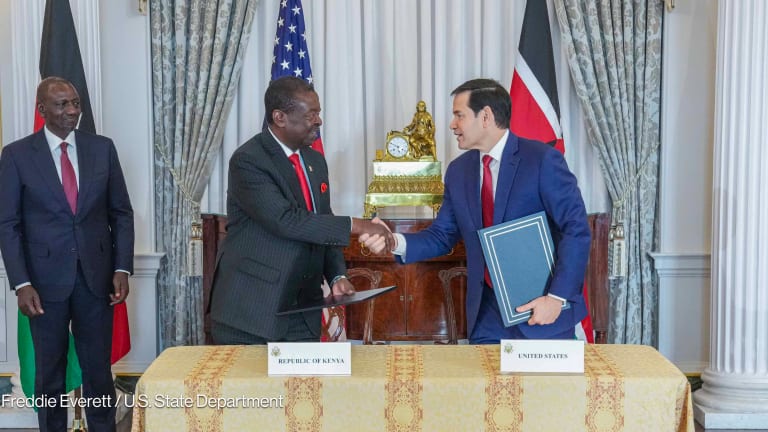
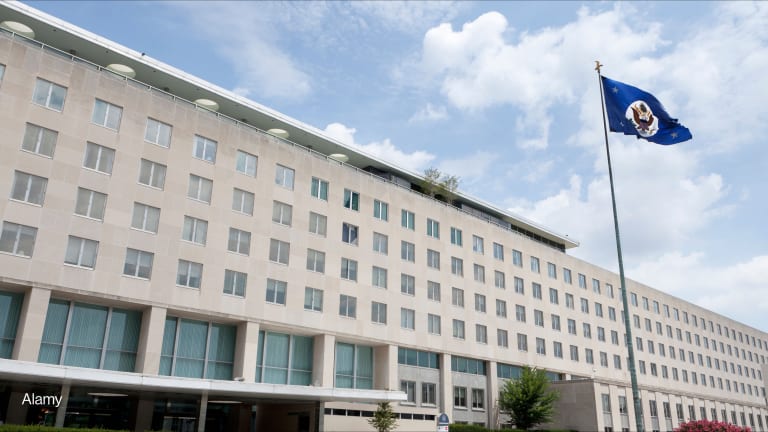
The disintegration of U.S. foreign assistance since President Donald Trump came into office has been dizzying.
During that time, the sector and its allies have slid from hope to confusion to pessimism about Marco Rubio.
The portents were good for Rubio, the U.S. secretary of state, who is also the acting administrator of the U.S. Agency for International Development. Last November, concerned aid leaders branded him someone they could work with.
Printing articles to share with others is a breach of our terms and conditions and copyright policy. Please use the sharing options on the left side of the article. Devex Pro members may share up to 10 articles per month using the Pro share tool ( ).
About the author

Christine Ro
Christine Ro is a freelance journalist in London. She previously worked for the International Institute for Environment and Development.
Search for articles


Most Read
- 1
- 2
- 3
- 4
- 5