Trump reinstates Mexico City Policy, further limiting abortion care

An executive order lays out a similar policy to Trump's first administration and elicits concerns even as organizations were already preparing for its implementation.
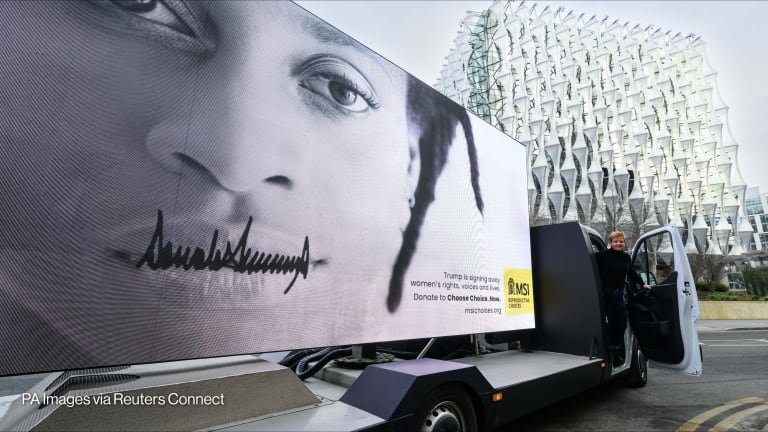
By Elissa Miolene, Adva Saldinger // 27 January 2025U.S. President Donald Trump has reinstated the Mexico City Policy, which blocks U.S. federal funding to international nongovernmental organizations that either provide abortions or information about them, even if other donors fund these services. The executive order, issued late Friday, applies the policy to all global health assistance funding and mandates a plan to include funds “furnished by all departments or agencies.” It does not, however, expand the Mexico City Policy to all foreign affairs funding, which some had anticipated. The policy is known for its swift instatement by Republican presidents and revocation by Democrats since its creation by President Ronald Reagan in the 1980s. It complements the Helms amendment, which since 1961 has prohibited the use of U.S. foreign assistance funding for abortions. Immediate reactions from global health organizations and some congressional leaders expressed concerns about the Mexico City Policy, also referred to as the “global gag rule.” “Last time around, clinics had to be shut down, safe abortion care was ceased, and everything was just driven underground — making everything much less safe,” Anu Kumar, president of reproductive health organization Ipas, told Devex. Studies have shown that the Mexico City Policy, even in its unexpanded form, increased the typical abortion rate in some countries by 40%. It also reduces the use of modern contraceptives by 13.5%, likely due to the number of clinics, programs, and services that are shuttered as a result. “The reinstatement of the global gag rule undermines global health progress and puts access to essential care further out of reach — putting millions of lives at risk with disproportionate impacts on people who are already marginalized,” said Dilly Severin, executive director of the Universal Access Project. Women and girls will find it harder to access lifesaving health care and make informed decisions about when to have children, which has a “direct impact on boosting education outcomes, labor force participation, and wages,” said Janeen Madan Keller, deputy director of global health policy at the Center for Global Development. “What they see is a government and a donor that is hostile towards abortion care.” --— Anu Kumar, president, Ipas U.S. Sen. Jeanne Shaheen, the top Democrat on the Senate Foreign Relations Committee, called the reinstatement of the policy a “reckless and dangerous move that puts the lives of women and girls around the world at risk.” During the first Trump administration, the policy led to the closure of clinics that provided numerous services, including access to contraception, prenatal care, and more, she said. As a result, maternal and child mortality rates, HIV rates, unplanned pregnancies, and abortions all increased. Health centers affected by the order are often the only medical providers in the area, and if they are forced to close, communities lose access to services. “Women and girls’ lives should never be a pawn in ideological battles,” Shaheen said in a statement, adding that the U.S. Congress should permanently repeal this policy. Shaheen has regularly introduced legislation to do just that, but with Republican control of Congress, passing such a resolution is not likely. What now? Organizations have already been preparing for this news, and in some cases, that means they have been withdrawing from abortion-related work, or looking for alternate sources of funding if they will no longer be eligible for U.S. support. Countries such as Mozambique and Nepal — which allow abortion during the first 12 weeks of a woman’s pregnancy — were stepping back from Ipas’ work even before Trump’s inauguration, Kumar reported. “What they see is a government and a donor that is hostile towards abortion care,” Kumar said. “So it’s much easier to simply stay away from it.” Organizations unwilling to sign onto the Mexico City Policy will be ineligible for U.S. funding, and others that choose to sign may have to eliminate certain services. “Every organization like ours will need to think very differently about the way they work,” Benoit Renard, CEO of Tiko, a nonprofit that uses technology to change how underserved girls access reproductive health services in Africa, told Devex. “For sure we will need to open the door to very different ways to be funded and to new types of donors.” In response to Trump’s expansion of the Mexico City Policy in his first term, and cuts to other reproductive health-related funding, other donors stepped up. However, with many donors cutting official development assistance, there are questions about whether such an effort will or can be mounted again. During the first Trump administration, MSI, now called MSI Reproductive Choices, didn’t sign the Mexico City Policy. As a result, it lost $120 million in USAID funding, Beth Schlachter, senior director of U.S. external relations for MSI Reproductive Choices, told Devex. The organization says that money would have prevented an estimated 6 million unintended pregnancies, 1.8 million unsafe abortions, and 20,000 maternal deaths. “When you do seek U.S. funding, it's with the understanding that it comes with a risk,” Schlachter said. “[The United States] swings wildly between Republicans and Democrats on a pretty regular basis, and so any money we take, we take with the hope that we're able to build up a program that others could backfill if we have to step out.” This time around, MSI is looking at a drop of $14 million, money that Schlachter expects will be stripped from the bulk of what MSI provides for women and girls across the world: contraception. Schlachter noted that even when the policy is rescinded, as it was under the Biden administration, it can take years for the U.S. Agency for International Development to restore relationships with organizations focused on reproductive health. “We really need to ask ourselves, as Americans, what the hell we're doing,” she said. “We have to ask ourselves what it really means, in the long term, if we can't get out of this cycle of tearing down what we build.”
U.S. President Donald Trump has reinstated the Mexico City Policy, which blocks U.S. federal funding to international nongovernmental organizations that either provide abortions or information about them, even if other donors fund these services.
The executive order, issued late Friday, applies the policy to all global health assistance funding and mandates a plan to include funds “furnished by all departments or agencies.” It does not, however, expand the Mexico City Policy to all foreign affairs funding, which some had anticipated.
The policy is known for its swift instatement by Republican presidents and revocation by Democrats since its creation by President Ronald Reagan in the 1980s. It complements the Helms amendment, which since 1961 has prohibited the use of U.S. foreign assistance funding for abortions.
This article is free to read - just register or sign in
Access news, newsletters, events and more.
Join usSign inPrinting articles to share with others is a breach of our terms and conditions and copyright policy. Please use the sharing options on the left side of the article. Devex Pro members may share up to 10 articles per month using the Pro share tool ( ).
Elissa Miolene reports on USAID and the U.S. government at Devex. She previously covered education at The San Jose Mercury News, and has written for outlets like The Wall Street Journal, San Francisco Chronicle, Washingtonian magazine, among others. Before shifting to journalism, Elissa led communications for humanitarian agencies in the United States, East Africa, and South Asia.
Adva Saldinger is a Senior Reporter at Devex where she covers development finance, as well as U.S. foreign aid policy. Adva explores the role the private sector and private capital play in development and authors the weekly Devex Invested newsletter bringing the latest news on the role of business and finance in addressing global challenges. A journalist with more than 10 years of experience, she has worked at several newspapers in the U.S. and lived in both Ghana and South Africa.