• News
    • Latest news
    • News search
    • Health
    • Finance
    • Food
    • Career news
    • Content series
    • Focus areas
    • Try Devex Pro
  • Jobs
    • Job search
    • Post a job
    • Employer search
    • CV Writing
    • Upcoming career events
    • Try Career Account
  • Funding
    • Funding search
    • Funding news
  • Talent
    • Candidate search
    • Devex Talent Solutions
  • Events
    • Upcoming and past events
    • Partner on an event
  • Post a job
  • About
      • About us
      • Membership
      • Newsletters
      • Advertising partnerships
      • Devex Talent Solutions
      • Contact us
Join DevexSign in
Join DevexSign in

News

  • Latest news
  • News search
  • Health
  • Finance
  • Food
  • Career news
  • Content series
  • Focus areas
  • Try Devex Pro

Jobs

  • Job search
  • Post a job
  • Employer search
  • CV Writing
  • Upcoming career events
  • Try Career Account

Funding

  • Funding search
  • Funding news

Talent

  • Candidate search
  • Devex Talent Solutions

Events

  • Upcoming and past events
  • Partner on an event
Post a job

About

  • About us
  • Membership
  • Newsletters
  • Advertising partnerships
  • Devex Talent Solutions
  • Contact us
  • My Devex
  • Update my profile % complete
  • Account & privacy settings
  • My saved jobs
  • Manage newsletters
  • Support
  • Sign out
Latest newsNews searchHealthFinanceFoodCareer newsContent seriesFocus areasTry Devex Pro
    • News
    • The Trump Effect

    State Department refugee office assumes USAID’s disaster response role
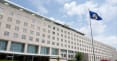
    The U.S. has quietly shifted its disaster response from USAID’s Bureau for Humanitarian Affairs, raising questions about America’s ability to respond quickly and effectively to global crises.

    By Elissa Miolene // 22 May 2025
    The United States’ disaster response work — which for years was led by USAID’s Bureau for Humanitarian Affairs, or BHA — has been overtaken by the State Department’s office that handles refugee issues, a bureau less than 10% the size of BHA. “The goals, characteristics, and types of assistance provided in response to humanitarian emergencies remain the same,” reads an internal cable, which was obtained by Devex on Wednesday. “Assistance will continue to be delivered consistent with U.S. foreign policy priorities under the America First agenda.” The shift took place on May 16, coming well before the full integration between the U.S. Agency for International Development and the State Department on July 1. To activate a response, posts must issue a declaration of humanitarian need, consult with relevant regional bureaus, and receive approval from the State Department’s Bureau of Population, Refugees, and Migration, or PRM, in Washington. After receiving approval from PRM, “up to $100,000” can be put forward for an initial response, which was the standard amount before the transition occurred. “Additional resources may be forthcoming based on established humanitarian need,” the cable reads, adding that doing so would require consultation with the State Department’s Bureau of Global Health Security and Diplomacy, Office of Foreign Assistance, and the new Office of Global Food Security. The latter office was first mentioned in the State Department’s proposed reorganization plan, published by the agency last month, but has not yet been cleared through Congress. “It’s unclear how PRM will be able to effectively take on this new and critical requirement,” said Chris Milligan, a former senior foreign service officer who served as counselor to USAID from 2018 to 2021. “PRM was never operational the way the BHA was.” More than 1,000 people had worked at BHA, according to several USAID staff. But today, very few have been spared from termination or administrative leave, along with the rest of the agency’s more than 10,000-person workforce. BHA functioned with staff in Washington and across the world, with disaster assistance response teams, or DARTs, often deploying to the scene of a crisis within 24 to 48 hours of its onset. But since the Trump administration hollowed out USAID, those DART teams seem to have gone with it. The first example of that was seen in Myanmar, when, in late March, the country was hit by a 7.7 magnitude earthquake. At that point, nearly the entire USAID mission in Yangon had been eliminated, according to reporting from The Washington Post — and days later, the U.S. still hadn’t arrived to help. “The United States was unable to provide lifesaving assistance to the people of Burma,” said Milligan. “Little has changed since then.” While the State Department has held hiring calls for USAID staff interested in working at the agency’s regional bureaus, opportunities at PRM were not discussed. But the shift would mark a huge change at the bureau, as PRM’s core work focuses on reducing illegal migration and supporting those fleeing persecution, violence, or crisis. “PRM does important work, including refugee and migration diplomacy,” said Rob Jenkins, who served as assistant to the administrator at USAID’s Bureau for Conflict Prevention and Stabilization during the Biden administration. “But they write checks to UN agencies and [the International Committee of the Red Cross]. They don’t deploy to emergencies. And aren’t built for it.” That being said, one BHA staffer told Devex that several members of their team had been embedded within PRM to train staff on responding to emergencies — though it was not clear whether those officials would remain at the bureau after July 1. The State Department did not respond to a request for comment on this story.

    Related Stories

    Hurricane Melissa tests a US disaster system without USAID
    Hurricane Melissa tests a US disaster system without USAID
    State Department scrambles to rebuild foreign aid workforce
    State Department scrambles to rebuild foreign aid workforce
    House committee approves State Department restructure in marathon hearing
    House committee approves State Department restructure in marathon hearing
    Laid-off USAID workers struggle to find work as new job cuts approach
    Laid-off USAID workers struggle to find work as new job cuts approach

    The United States’ disaster response work — which for years was led by USAID’s Bureau for Humanitarian Affairs, or BHA — has been overtaken by the State Department’s office that handles refugee issues, a bureau less than 10% the size of BHA.

    “The goals, characteristics, and types of assistance provided in response to humanitarian emergencies remain the same,” reads an internal cable, which was obtained by Devex on Wednesday. “Assistance will continue to be delivered consistent with U.S. foreign policy priorities under the America First agenda.”

    The shift took place on May 16, coming well before the full integration between the U.S. Agency for International Development and the State Department on July 1. To activate a response, posts must issue a declaration of humanitarian need, consult with relevant regional bureaus, and receive approval from the State Department’s Bureau of Population, Refugees, and Migration, or PRM, in Washington.

    This article is free to read - just register or sign in

    Access news, newsletters, events and more.

    Join usSign in
    • Democracy, Human Rights & Governance
    • Institutional Development
    • Humanitarian Aid
    • Trade & Policy
    • United States Agency for International Development (USAID)
    Printing articles to share with others is a breach of our terms and conditions and copyright policy. Please use the sharing options on the left side of the article. Devex Pro members may share up to 10 articles per month using the Pro share tool ( ).

    About the author

    • Elissa Miolene

      Elissa Miolene

      Elissa Miolene reports on USAID and the U.S. government at Devex. She previously covered education at The San Jose Mercury News, and has written for outlets like The Wall Street Journal, San Francisco Chronicle, Washingtonian magazine, among others. Before shifting to journalism, Elissa led communications for humanitarian agencies in the United States, East Africa, and South Asia.

    Search for articles
    Related Stories

    HumanitarianRelated Stories - Hurricane Melissa tests a US disaster system without USAID

    Hurricane Melissa tests a US disaster system without USAID

    The Future of US AidRelated Stories - State Department scrambles to rebuild foreign aid workforce

    State Department scrambles to rebuild foreign aid workforce

    The Trump effectRelated Stories - House committee approves State Department restructure in marathon hearing

    House committee approves State Department restructure in marathon hearing

    The Trump EffectRelated Stories - Laid-off USAID workers struggle to find work as new job cuts approach

    Laid-off USAID workers struggle to find work as new job cuts approach

    Most Read

    • 1
      Why NTDs are a prime investment for philanthropy
    • 2
      The silent, growing CKD epidemic signals action is needed today
    • 3
      Trump withdraws, defunds dozens of international orgs and treaties
    • 4
      Why capital without knowledge-sharing won't solve the NCD crisis
    • 5
      Why are 3.4 billion people still offline?
    • News
    • Jobs
    • Funding
    • Talent
    • Events

    Devex is the media platform for the global development community.

    A social enterprise, we connect and inform over 1.3 million development, health, humanitarian, and sustainability professionals through news, business intelligence, and funding & career opportunities so you can do more good for more people. We invite you to join us.

    • About us
    • Membership
    • Newsletters
    • Advertising partnerships
    • Devex Talent Solutions
    • Post a job
    • Careers at Devex
    • Contact us
    © Copyright 2000 - 2026 Devex|User Agreement|Privacy Statement