

In late August, the United States government quietly posted three amendments to its online registry for federal contracts and grants.
The amendments were cancellation notices for three requests for proposals from the U.S. Agency for International Development, and while they went mostly unnoticed, they brought to an unceremonious end one of the most closely watched global health projects in the history of U.S. foreign aid.
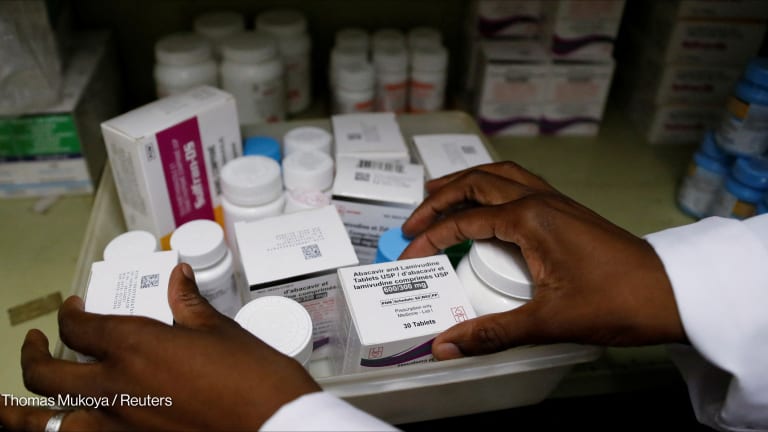
This was the massive collection of contracts known as “NextGen” — a $17 billion plan to rethink how the U.S. government coordinates the procurement and distribution of lifesaving health commodities around the world. The project would have bundled together nine different contracts, ranging in size from $50 million to $5 billion, and handling everything from condoms to laboratory supplies to HIV/AIDS medicine. It had been in the works for more than half a decade, consuming untold hours of preparatory labor, legal review, and procurement box-checking.
This story is forDevex Promembers
Unlock this story now with a 15-day free trial of Devex Pro.
With a Devex Pro subscription you'll get access to deeper analysis and exclusive insights from our reporters and analysts.
Start my free trialRequest a group subscriptionAbout the author

Michael Igoe@AlterIgoe
Michael Igoe is a Senior Reporter with Devex, based in Washington, D.C. He covers U.S. foreign aid, global health, climate change, and development finance. Prior to joining Devex, Michael researched water management and climate change adaptation in post-Soviet Central Asia, where he also wrote for EurasiaNet. Michael earned his bachelor's degree from Bowdoin College, where he majored in Russian, and his master’s degree from the University of Montana, where he studied international conservation and development.