
• News
    • Latest news
    • News search
    • Health
    • Finance
    • Food
    • Career news
    • Content series
    • Focus areas
    • Try Devex Pro
  • Jobs
    • Job search
    • Post a job
    • Employer search
    • CV Writing
    • Upcoming career events
    • Try Career Account
  • Funding
    • Funding search
    • Funding news
  • Talent
    • Candidate search
    • Devex Talent Solutions
  • Events
    • Upcoming and past events
    • Partner on an event
  • Post a job
  • About
      • About us
      • Membership
      • Newsletters
      • Advertising partnerships
      • Devex Talent Solutions
      • Contact us
Join DevexSign in
Join DevexSign in

News

  • Latest news
  • News search
  • Health
  • Finance
  • Food
  • Career news
  • Content series
  • Focus areas
  • Try Devex Pro

Jobs

  • Job search
  • Post a job
  • Employer search
  • CV Writing
  • Upcoming career events
  • Try Career Account

Funding

  • Funding search
  • Funding news

Talent

  • Candidate search
  • Devex Talent Solutions

Events

  • Upcoming and past events
  • Partner on an event
Post a job

About

  • About us
  • Membership
  • Newsletters
  • Advertising partnerships
  • Devex Talent Solutions
  • Contact us
  • My Devex
  • Update my profile % complete
  • Account & privacy settings
  • My saved jobs
  • Manage newsletters
  • Support
  • Sign out
Latest newsNews searchHealthFinanceFoodCareer newsContent seriesFocus areasTry Devex Pro
    • News
    • The future of US aid

    Exclusive: Inside the closed-door meeting on USAID’s future

    The ideas for the agency’s future were shared by Tim Meisburger, the head of USAID’s Bureau for Humanitarian Assistance, in a closed-door meeting on Wednesday.

    By Elissa Miolene // 16 March 2025
    By Sept. 30, 2025, whatever’s left of the U.S. Agency for International Development will be dissolved — and in its place, a new humanitarian assistance bureau could be embedded into the State Department. This idea for the agency’s future was shared by Tim Meisburger, the head of USAID’s Bureau for Humanitarian Assistance, in a closed-door meeting Wednesday, according to several former and current USAID staffers, including one with direct knowledge of the information. Meisburger — who returned to USAID this January — reportedly told some two dozen staff that the new bureau would have four offices: the first centered on acquisitions and assistance; the second centered on humanitarian and food assistance; the third targeting global disaster response; and the fourth focused on global health emergencies. This is the first reporting of this planning meeting and what was discussed. It’s unclear how far along the idea for this potential merger is, whether U.S. Secretary of State Marco Rubio has seen it, whether there are competing visions for USAID’s future, and whether the U.S. Congress has received an official notification of this proposed reorganization, which is required for the process. But if implemented, the approach would mean the dissolution of everything else USAID has worked on for decades — slicing away the agency’s work on democracy, governance, and human rights; economic growth and private sector engagement; and nearly all things related to development. And for Meisburger, that would mean making “lemonade out of lemons,” according to meeting notes reviewed by Devex. “Most of the madness is behind us,” said Meisburger, according to the same set of notes. The possible breakdown The bureau’s first office — that of the executive director — would be responsible for acquisitions and assistance, budget, human resource functions, risk management, vetting, and other management-level tasks. An office of humanitarian and food assistance would envelop the global programs at the State Department’s Bureau of Population, Refugees, and Migration, which focuses on countering displacement across the world. An office of global disaster response would retain USAID’s disaster assistance response teams, or DARTs — the groups of highly trained staff that for years have led the U.S. government’s emergency response within 24 to 48 hours of a disaster. It would also include some of the outbreak response teams currently embedded within USAID’s Bureau of Global Health and surge staffing through institutional support contractors. An office of global health emergencies would include longer-term health programming, such as initiatives under the President’s Emergency Plan for AIDS Relief, malaria response, and health systems strengthening. There was mention of some straggling programs, too: The idea that was floated would be for USAID’s Bureau for Conflict Prevention and Stabilization, for example, to be merged with the State Department’s Bureau of Conflict and Stabilization Operations. Those programs would then be brought into the State Department’s Bureau of International Narcotics and Law Enforcement Affairs under a different name. The potential merger The point, Meisburger told staff, was for the State Department to not take in any duplicate capacities. USAID’s regional bureaus would soon merge with those across the State Department, which would have foreign assistance offices embedded within them. Some of that foreign aid would be managed through regional hubs, he said, listing Bangkok, Nairobi, Pretoria, Dakar, San Salvador, San Jose, Manila, and Amman as potential locations. There may also be foreign assistance officers based in embassies where aid is most needed. Otherwise, Meisburger told staff that the U.S. foreign assistance footprint would be minimal. It’s unclear exactly how the State Department’s current Office of Foreign Assistance — which has long been responsible for the strategic direction of assistance through both USAID and State — could be affected by this concept. One staffer told Devex that Meisburger implied that some of those in the room would move over to the State Department, though details on who that might be — or how many would be spared — were not shared with the group. “On one level, people are finally happy to have a vision, and feel like we’re working toward something, rather than just being on the defensive and having everything cut,” said the staffer, who requested to speak anonymously for fear of retribution. “But if this is really what the vision was, couldn’t he have started there?” Neither Meisburger nor the State Department could be reached in time for comment on this story.

    Related Stories

    State Department scrambles to rebuild foreign aid workforce
    State Department scrambles to rebuild foreign aid workforce
    State Department watchdog office expands foreign aid investigations
    State Department watchdog office expands foreign aid investigations
    After USAID, Food for Peace enters a new and uncertain chapter
    After USAID, Food for Peace enters a new and uncertain chapter
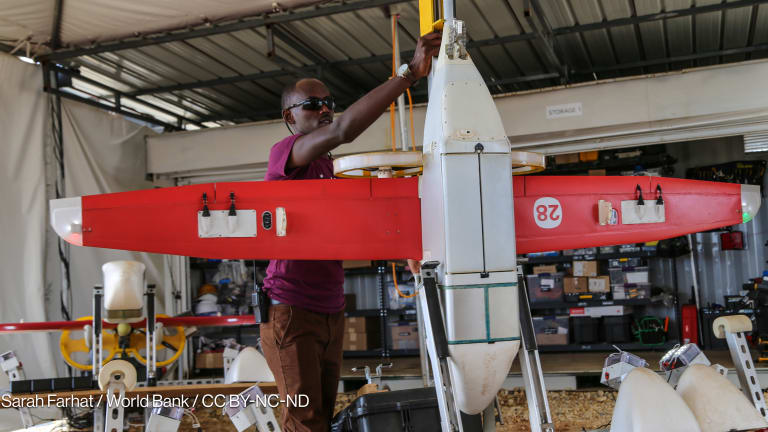
    Devex Pro Insider: Is Zipline the future of US global health assistance?
    Devex Pro Insider: Is Zipline the future of US global health assistance?

    By Sept. 30, 2025, whatever’s left of the U.S. Agency for International Development will be dissolved — and in its place, a new humanitarian assistance bureau could be embedded into the State Department.

    This idea for the agency’s future was shared by Tim Meisburger, the head of USAID’s Bureau for Humanitarian Assistance, in a closed-door meeting Wednesday, according to several former and current USAID staffers, including one with direct knowledge of the information.

    Meisburger — who returned to USAID this January — reportedly told some two dozen staff that the new bureau would have four offices: the first centered on acquisitions and assistance; the second centered on humanitarian and food assistance; the third targeting global disaster response; and the fourth focused on global health emergencies. This is the first reporting of this planning meeting and what was discussed.

    This article is free to read - just register or sign in

    Access news, newsletters, events and more.

    Join usSign in

    Read more:

    ► US Congress passes budget bill, but questions remain on foreign aid

    ► Exclusive: Inside USAID's postmortem program review

    ► 'Like a big funeral': USAID cuts leave local partners fighting to survive (Pro)

    • Democracy, Human Rights & Governance
    • Trade & Policy
    • Institutional Development
    • United States Department of State (DOS)
    • United States Agency for International Development (USAID)
    • United States
    Printing articles to share with others is a breach of our terms and conditions and copyright policy. Please use the sharing options on the left side of the article. Devex Pro members may share up to 10 articles per month using the Pro share tool ( ).

    About the author

    • Elissa Miolene

      Elissa Miolene

      Elissa Miolene reports on USAID and the U.S. government at Devex. She previously covered education at The San Jose Mercury News, and has written for outlets like The Wall Street Journal, San Francisco Chronicle, Washingtonian magazine, among others. Before shifting to journalism, Elissa led communications for humanitarian agencies in the United States, East Africa, and South Asia.

    Search for articles

    Related Stories

    The Future of US AidRelated Stories - State Department scrambles to rebuild foreign aid workforce

    State Department scrambles to rebuild foreign aid workforce

    The Future of US AidRelated Stories - State Department watchdog office expands foreign aid investigations

    State Department watchdog office expands foreign aid investigations

    The Future of US AidRelated Stories - After USAID, Food for Peace enters a new and uncertain chapter

    After USAID, Food for Peace enters a new and uncertain chapter

    Devex Pro InsiderRelated Stories - Devex Pro Insider: Is Zipline the future of US global health assistance?

    Devex Pro Insider: Is Zipline the future of US global health assistance?

    Most Read

    • 1
      Why NTDs are a prime investment for philanthropy
    • 2
      When business moves faster than politics
    • 3
      The direction of the Paris Agreement is right. The pace is not
    • 4
      Why a new partnership model is key to future of development finance
    • 5
      Devex Power 50
    • News
    • Jobs
    • Funding
    • Talent
    • Events

    Devex is the media platform for the global development community.

    A social enterprise, we connect and inform over 1.3 million development, health, humanitarian, and sustainability professionals through news, business intelligence, and funding & career opportunities so you can do more good for more people. We invite you to join us.

    • About us
    • Membership
    • Newsletters
    • Advertising partnerships
    • Devex Talent Solutions
    • Post a job
    • Careers at Devex
    • Contact us
    © Copyright 2000 - 2026 Devex|User Agreement|Privacy Statement